Plant Tomatoes After Soil Reaches 60°F: Tomato Planting for Beginners
If you want a strong first harvest, buy healthy transplants rather than starting from seed, plant them after your last frost once soil hits about 60°F, and get the depth, sun, and watering right from day one. Everything else, staking, feeding, pest watching, matters less than nailing those three basics.
TL;DR:
- Plant tomatoes only after the soil reaches about 60°F at a four-inch depth and nights stay above 50°F to 55°F to prevent transplant shock.
- Use disease-resistant hybrids for your first season and experiment with seed-starting once you know what a healthy plant looks like.
- Ensure tomatoes receive at least six to eight hours of direct sunlight daily and work compost into soil to optimize drainage and fertility.
- Water deeply and consistently with 1 to 1.5 inches per week, using drip irrigation or soaker hoses to reduce disease risk.
- Avoid planting before soil and nights are warm, skipping hardening off, and over-fertilizing with nitrogen early in the season.
Table of Contents
- Should You Start From Seed or Buy Tomato Seedlings?
- When Is the Right Time to Plant Tomatoes Outside?
- Where Should You Plant Tomatoes, and What Soil Do They Need?
- How Do You Plant a Tomato the Right Way?
- What Does Tomato Care After Planting Actually Involve?
- How Do You Prevent Pests and Disease in a Tomato Bed?
- Why Do Tomatoes Get Blossom-End Rot, Cracks, or Poor Fruit Set?
- How Viridia Helps You Follow This Guide Without Guessing
- What I’d Tell a First-Year Tomato Grower
- Try Viridia for Ongoing Tomato Care
- Where This Guide’s Facts Come From
- Sources
- FAQ
Should You Start From Seed or Buy Tomato Seedlings?
Starting tomatoes from seed gives you access to hundreds of varieties you will never find at a garden center, but it demands a six to eight week head start and some equipment. Buying transplants skips that entirely and gets you into the ground faster, which is why most first-year gardeners do better with seedlings.
If you go the seed route, sow indoors six to eight weeks before your last frost date, since seeds germinate best between 75°F and 90°F and typically emerge in six to twelve days. Without a heat mat or a warm spot near a vent, germination slows way down or fails.
A few things matter whichever path you choose:
- Seeds need bottom heat and strong light (a sunny window rarely cuts it; a grow light a few inches above the seedlings prevents legginess).
- Transplants should be short, stocky, and deep green, not tall and leggy, and definitely not already flowering.
- A plant in bloom at the nursery has already spent energy it should be putting into roots.
- Heirloom varieties reward patience with better flavor; hybrids reward beginners with disease resistance and reliability.
For a true first attempt, buying two or three transplants of a disease-resistant hybrid is the lower-risk move. You can always experiment with seed starting once you know what a healthy tomato plant is supposed to look like.
When Is the Right Time to Plant Tomatoes Outside?
Timing kills more tomato plants than pests ever will. Air temperature lies to you, soil temperature does not, and that distinction is the whole game here.
- Check soil temperature, not just the calendar. Wait until the soil sits around 60°F at a four-inch depth. Soil below that threshold causes transplant shock even when the air feels warm during the day. A five-dollar soil thermometer pays for itself the first season.
- Confirm nights are staying warm. Nights need to hold above roughly 50°F to 55°F before you transplant. A single cold night can stunt a tomato plant for weeks.
- Harden off transplants over one to two weeks. Start with an hour or two outdoors in filtered light, then add time and sun exposure daily. Cut back watering slightly during this stretch (without letting plants wilt) to toughen the stems for wind and direct sun.
- Check your local extension calendar. Frost dates vary by hundreds of miles even within one state, so a generic “plant in May” rule is often wrong for your yard.
Skipping hardening off is one of the most common beginner mistakes. A seedling raised indoors under gentle light gets sunburned and wind-battered fast when it goes straight from a windowsill to open garden.
Where Should You Plant Tomatoes, and What Soil Do They Need?
Tomatoes are sun-hungry plants. Aim for six to eight or more hours of direct sun a day, and avoid spots shaded by fences, structures, or overhanging trees for even half the afternoon. Less sun means fewer flowers, weaker stems, and a much smaller harvest.
Soil matters almost as much as light. Tomatoes want slightly acidic, well-draining soil with a pH between 6.2 and 6.8. Below this range, tomatoes struggle to take up calcium and magnesium even when both are present in the soil.
- Get a soil test through your local extension office before amending anything; guessing at pH wastes money and time.
- Work two to three inches of compost into the top six to eight inches of soil to improve both drainage and fertility.
- Heavy clay benefits from raised beds, since tomato roots hate sitting in standing water.
- Sandy soil benefits from extra organic matter to hold moisture longer between waterings.
- Avoid planting near sprinkler heads that keep foliage wet; damp leaves invite fungal disease.
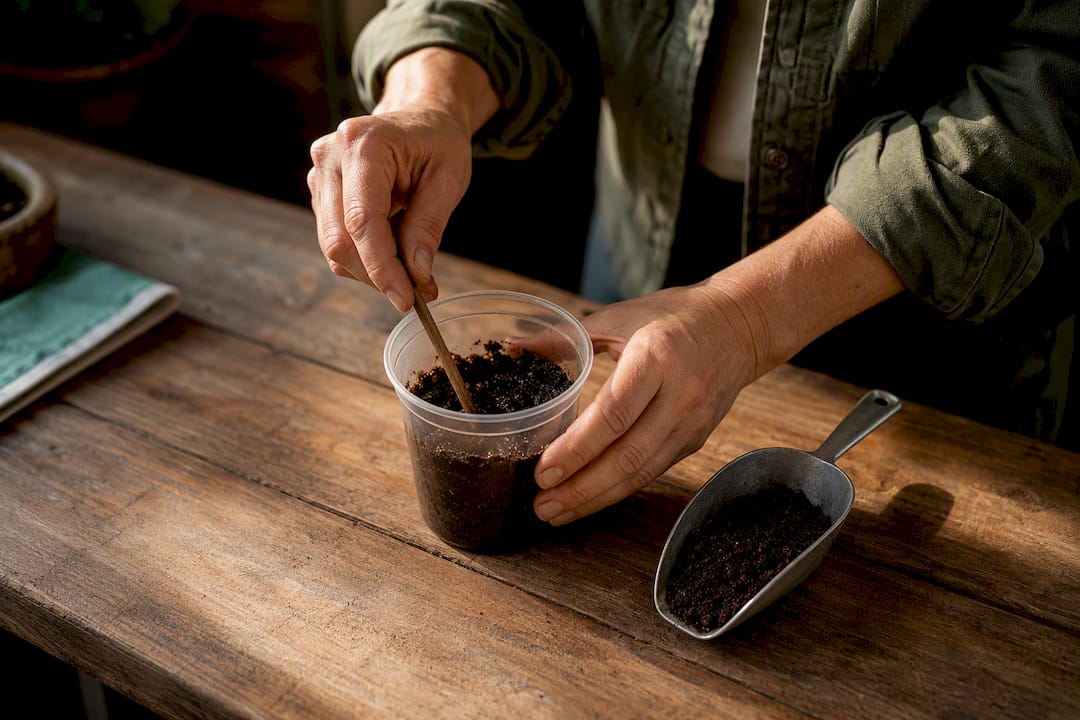
Container growers need a different approach entirely: skip garden topsoil, which compacts and drains poorly, and use a loose potting mix instead. A single tomato plant needs at least a four to five gallon container, and even then it will dry out faster than an in-ground plant.
Pro Tip: Test your soil pH the fall before you plan to plant, not the week of. Lime and sulfur, the standard tools for raising or lowering pH, take months to fully change the soil chemistry.
How Do You Plant a Tomato the Right Way?
Depth is where most beginners underplant. A tomato stem grows roots anywhere it touches soil, so burying more of the stem builds a bigger root system before the plant even starts fruiting.
- Dig a hole deep enough to bury two-thirds of the stem, right up to the first set of true leaves. Pinch off any lower leaves and branches that would end up underground.
- For leggy, indoor-grown seedlings, dig a trench instead of a hole. Lay the stem sideways a few inches under the surface and bend the top gently upward. Buried stems form adventitious roots along their length, which gives a weak-stemmed transplant a much sturdier foundation.
- Space plants correctly for the variety. Most standard varieties need roughly 24 inches between plants; sprawling indeterminate types can want more, and compact determinate bush types can go slightly tighter.
- Install stakes, cages, or trellises at planting time, not weeks later. Driving a stake through an established root system snaps roots you spent a month growing.
- Water thoroughly right after planting to settle soil around the roots and eliminate air pockets.
- Hold off on mulch until the soil has fully warmed. Mulching too early traps cold into the soil and slows root growth right when the plant needs warmth most.
Pro Tip: If you’re using peat pots, peel back or tear off the rim before planting. An exposed peat rim above soil level acts like a wick, pulling moisture out of the root ball and drying it out even when the surrounding soil is damp.
What Does Tomato Care After Planting Actually Involve?
Watering consistency, not fertilizer, drives most of what separates a mediocre tomato harvest from a great one. Tomatoes want deep, even moisture rather than frequent shallow sips. A thorough soak that reaches six to eight inches down encourages deep roots that tolerate heat and short dry spells far better than a plant watered lightly every day.
- Aim for about 1 to 1.5 inches of water per week, combining rainfall and irrigation, and push toward the higher end during heat waves.
- Drip irrigation or a soaker hose beats overhead watering because it keeps foliage dry, cutting down on fungal disease.
- Mulch once soil has warmed to lock in moisture, reduce splitting, and cut down on splash-borne disease spread from soil to leaves.
Fertilizer timing matters as much as watering. Going heavy on nitrogen early pushes leafy green growth at the expense of flowers, leaving you with a bushy plant and few tomatoes. Sidedress with roughly half a cup of balanced fertilizer per plant once fruit reaches about an inch across, and repeat again closer to harvest rather than feeding heavily every week from the start.
Pruning and support depend on the type of tomato. Indeterminate varieties keep growing and fruiting all season, so they benefit from staking, a cage, or trellising, along with pruning suckers, the small shoots that form between the main stem and branches, to keep growth manageable. Determinate varieties stay compact and bushy on their own and generally do fine with minimal pruning. Staked and pruned plants often produce larger individual fruit and can ripen about a week earlier, though sprawling, unpruned plants sometimes yield more total fruit over the season.
How Do You Prevent Pests and Disease in a Tomato Bed?
Early blight, bacterial spot, and root-knot nematodes cause the bulk of serious tomato problems, and most start small enough to catch before they spread. Yellowing lower leaves with dark concentric rings usually signal early blight. Water-soaked spots with yellow halos point to bacterial disease. Stunted, wilting plants despite adequate water can mean nematodes are damaging roots underground.
- Space plants for airflow and stake them upright; crowded, sprawling foliage stays damp and invites fungal spread.
- Clear fallen leaves and dropped fruit through the season instead of letting debris accumulate at the base of plants.
- Water at the soil line instead of overhead to keep leaves dry.
- Contact your local extension office if a problem spreads fast or you can’t identify it. Many offices will diagnose a sample for free.
Crop rotation is one of the simplest ways to break disease cycles. Avoid planting tomatoes, peppers, eggplants, or potatoes in the same spot for two to three years, since all four belong to the nightshade family and share the same soil-borne threats. If problems keep recurring in the same bed year after year, a soil test can reveal whether nematodes or a lingering pathogen are the actual cause. Gardeners looking for a broader framework on prevention over chemical treatment might find an integrated pest management approach useful, since it prioritizes the same sanitation and monitoring habits tomatoes respond to best.
Why Do Tomatoes Get Blossom-End Rot, Cracks, or Poor Fruit Set?
These three problems account for most of the “why isn’t my tomato working” questions beginners ask, and none of them are diseases. They’re physiological responses to water and temperature swings.
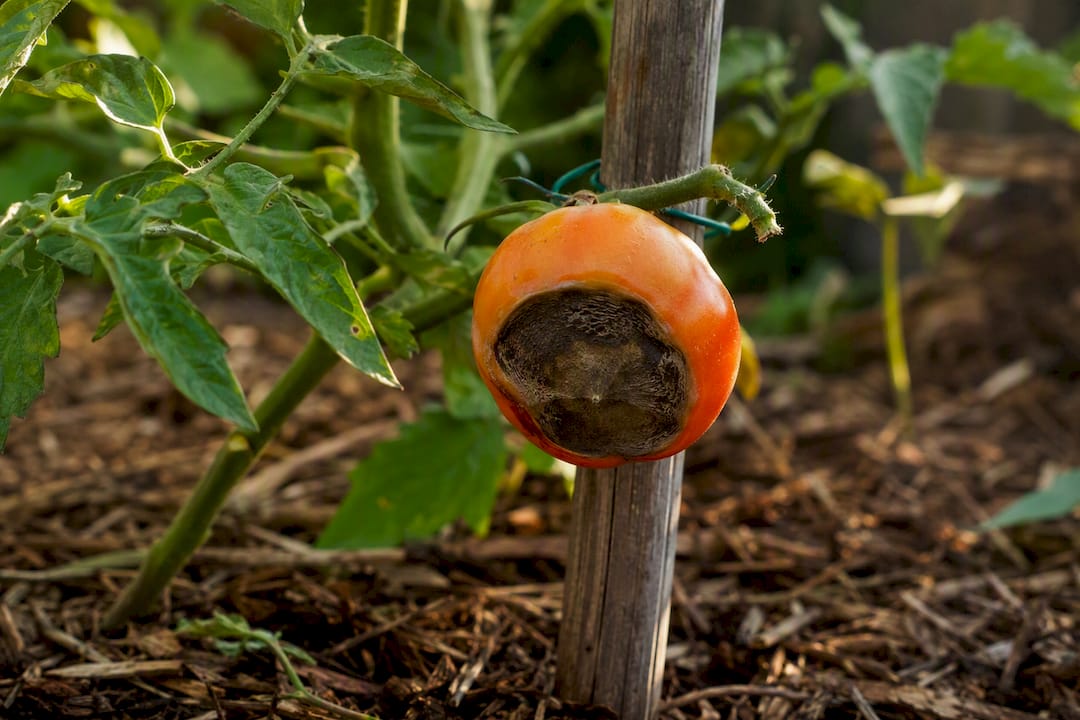
Blossom-end rot shows up as a sunken, dark, leathery patch on the bottom of the fruit. It looks like a calcium deficiency, and technically it is, but inconsistent watering is the actual root cause in most home gardens, since uneven moisture disrupts how the plant moves calcium into developing fruit. Fix the watering schedule before reaching for a calcium spray.
Cracking happens when a dry spell is followed by a sudden heavy watering or rainstorm. The fruit’s interior expands faster than the skin can stretch. Even soil moisture through mulch and a consistent watering schedule prevents most of it.
Poor fruit set usually traces back to temperature extremes, daytime heat above 90°F or nights that stay too warm can cause flowers to drop before pollination happens, or to excess nitrogen pushing leafy growth over blooms. Adjusting fertilizer timing and providing afternoon shade during heat waves both help.
How Viridia Helps You Follow This Guide Without Guessing
A guide like this one gets you through the first season. What happens after that depends on catching problems while they’re still small, and that’s where a lot of beginners lose confidence.
- Snap a photo to confirm your exact tomato variety and get a watering and feeding schedule matched to your climate and soil, instead of a generic rule of thumb.
- Use the health diagnosis feature to identify leaf spots or discoloration early and get a suggested treatment, then track whether the plant actually recovers.
- Log interventions in a garden journal so you can see what worked last season instead of relying on memory.
- Check Viridia’s tomato plant care guide for ongoing, variety-specific maintenance once your plants are established.
What I’d Tell a First-Year Tomato Grower
Most of the advice out there focuses on fertilizer brands, fancy cages, and pruning techniques, and almost none of it matters if you’re inconsistent with water. The single habit that separates a good tomato season from a frustrating one is checking soil moisture on a schedule, not when the plant looks droopy. By then you’re already reacting to damage instead of preventing it.
— Dan
Try Viridia for Ongoing Tomato Care
Viridia works as a companion to everything covered above, not a replacement for it. Once your tomatoes are in the ground, the app identifies the exact variety from a photo, builds a watering and feeding calendar around your climate and soil, and flags issues like leaf spots or blossom-end rot early enough to actually fix them.

Instead of digging through extension bulletins every time a leaf looks off, you get a diagnosis and a suggested next step in seconds, plus a recovery tracker to confirm the treatment worked. The community feature also lets you see how gardeners in your area are handling the same season’s heat and rain patterns. Start with the free tier to try plant identification and basic reminders, or head straight to the tomato care guide to see what a full care calendar looks like before you commit to Premium at Viridia.
Where This Guide’s Facts Come From
- Cornell Garden-Based Learning: sowing timing, germination temperatures, soil thermometer guidance.
- UC ANR tomato production guidance: sun requirements, soil pH, container sizing.
- NC State Extension: hardening off schedules, spacing, night temperature thresholds.
- ACES Extension: blossom-end rot causes, watering rate, peat pot handling.
Sources
- UC ANR tomato production and planting guidance
- Cornell Garden-Based Learning: Tomato growing guide
- NC State Extension: Hardening off and planting
- ACES: Blossom-end rot causes and prevention
FAQ
What Is the Correct Way to Plant Tomatoes?
Bury the transplant deep, up to the first set of true leaves, in soil that has warmed to about 60°F, then water thoroughly and add support like a stake or cage right away. Space plants roughly 24 inches apart for most standard varieties.
What Should You Avoid Doing When Growing Tomatoes?
Don’t plant before soil and night temperatures are warm enough, skip hardening off, water inconsistently, or load up on nitrogen fertilizer early. All four mistakes are common and all four are largely preventable with a schedule.
What Is the Secret to Growing Good Tomatoes?
There’s no real secret, just consistency: steady watering around 1 to 1.5 inches per week, six to eight hours of direct sun, and fertilizer timed to shift toward flowering and fruiting rather than leafy growth. An app can help you stay on a watering and feeding schedule instead of guessing.
What Month Should You Plant Tomato Plants?
It depends entirely on your local last frost date, not a fixed calendar month; check soil temperature (around 60°F) and confirm nights stay above 50°F to 55°F before transplanting outdoors. Your local extension office publishes frost date charts specific to your region.
Can You Grow Tomatoes Successfully in Containers?
Yes, with the right setup: use a loose potting mix rather than garden soil, choose a container of at least four to five gallons per plant, and expect to water more often since containers dry out faster than garden beds.