
6+ Hours Sun and Top 1 Inch Water Check for U.S. Rosemary Care

Rosemary thrives in full sun and very well-drained soil. Give it 6 or more hours of direct light, let the top inch of soil dry before you water, and never let the crown sit wet. Prune lightly after flowering, protect potted plants below freezing, and most of what goes wrong with rosemary traces back to one of those three things: not enough light, too much water, or crowded roots.
TL;DR:
- Rosemary needs at least six hours of direct sunlight daily outdoors or through a south-facing window indoors; less causes leggy, pale growth.
- Overwatering is the most common cause of failure, and soil should dry out at least an inch deep before watering again, with good drainage crucial.
- Use fast-draining, sandy or loamy soil with a pH between 6.0 and 7.0, and apply light fertilizer only after flowering or if growth appears weak.
- Prune lightly after flowering, removing no more than a third of the plant, and never cut into old, woody stems that lack green growth.
- Protect potted rosemary from freezing by bringing it indoors before the first hard frost, and ensure proper airflow to prevent fungal issues.
Table of Contents
- Quick Rosemary Care Checklist
- How Much Light Does Rosemary Need?
- Getting the Rosemary Watering Schedule Right
- What Soil and Potting Mix Work Best?
- When and How Should You Prune Rosemary?
- How Do You Propagate Rosemary From Cuttings?
- Common Rosemary Pests and Diseases
- How Do You Protect Rosemary Through Winter?
- How Viridia Helps You Stay on Top of Rosemary Care
- What Temperature and Humidity Does Rosemary Prefer?
- When and How Should You Repot Rosemary?
- How Big Does Rosemary Get and How Fast Does It Grow?
- Indoor vs. Outdoor Rosemary: What Actually Changes
- Spotting and Fixing Nutrient Deficiencies
- What Most Rosemary Advice Gets Backwards
- Sources
Quick Rosemary Care Checklist
Keep this list nearby when you’re deciding whether your plant needs attention or just needs to be left alone.
- Sun: 6+ hours of direct light daily, outdoors or through a south-facing window.
- Water: check the top 1 inch of soil first; water only when it’s dry.
- Soil: fast-draining, sandy or loamy mix, pH 6.0–7.0.
- Pruning: remove no more than a third of the plant, after flowering.
- Winter: bring potted rosemary inside before the first hard frost.
- Trouble signs: yellowing lower leaves, dry crispy tips, or a musty smell at the base all mean something’s off.
How Much Light Does Rosemary Need?
Rosemary needs a minimum of 6 hours of direct sunlight every day. Less than that, and the plant gets leggy, pale, and prone to fungal problems since it never dries out properly between waterings.
Outdoors, pick a spot that gets sun most of the day and catches some breeze. Rosemary evolved on windy Mediterranean hillsides, so airflow matters almost as much as light. Keep it away from lawn sprinklers and out of tightly packed garden beds where neighboring plants block circulation.
Indoors is trickier. A south-facing window is your best bet, but even that often falls short in winter or in homes with deep window wells. A basic grow light run for several hours a day fills the gap. If you move plants outside for summer, harden them off gradually over a week or two rather than plunging them straight into full afternoon sun, which can scorch leaves that adjusted to indoor conditions.
Getting the Rosemary Watering Schedule Right
Overwatering kills more rosemary than drought ever will. It’s the single most common cause of failure in this plant, usually showing up as root rot: mushy brown roots, limp foliage, and a base that smells sour instead of piney.
The fix is simple, if a little counterintuitive for anyone used to babying houseplants. Stick a finger into the soil before every watering. If the top inch is still damp, walk away. Water only when it’s dry to the touch. Established, ground-planted rosemary in most climates needs little to no supplemental watering once its roots settle in. Container plants dry out faster and need more frequent checks, especially in summer heat.
Drainage matters as much as your watering habits. Raised beds help in heavy clay soil, and working in coarse sand or compost loosens dense ground before you plant. In containers, skip generic potting soil and use a cactus or succulent blend instead. Avoid overhead sprinklers entirely. A soaker hose or hand watering at the base keeps the crown dry, which is where rot usually starts.
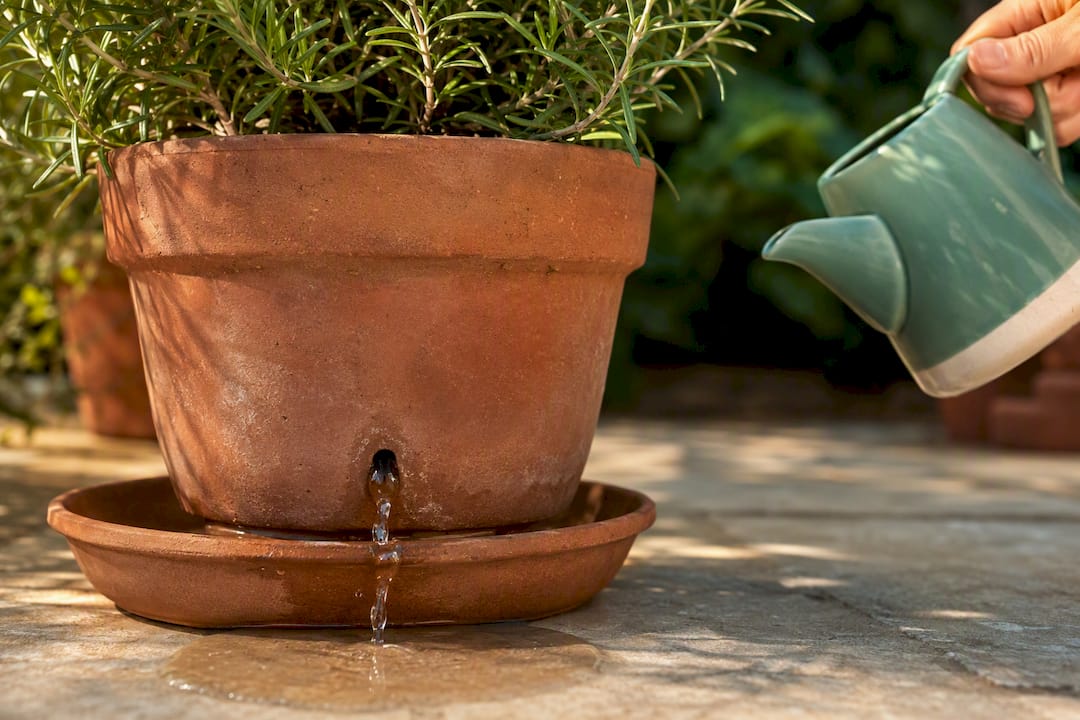
Pro Tip: A cheap moisture meter takes the guesswork out of this. Push it into the root zone before watering; if it reads “wet” or “moist,” give it a few more days.
What Soil and Potting Mix Work Best?
Rosemary wants soil in the 6.0 to 7.0 pH range, leaning sandy or loamy rather than dense and clay heavy. Heavy, moisture-retentive soil is the enemy here, no matter how fertile it looks.
For containers, a cactus or herb-specific potting mix works well straight out of the bag. If you want to build your own, a rough guide is half potting mix, a quarter coarse sand, and a quarter perlite. That combination drains fast and keeps air around the roots. Clay pots are worth the extra cost over plastic, too, since they wick moisture out through the walls and dry faster than a sealed container ever will.
Rosemary is a light feeder. Ground-planted specimens often need no fertilizer at all once established. Potted plants benefit from an occasional light feeding, ideally after flowering when the plant is pushing new growth and looking a little thin. Skip the urge to feed heavily. Over-fertilized rosemary grows soft, weak stems that pests find easier to attack.
When and How Should You Prune Rosemary?
Prune after flowering, typically in late spring, and stick to removing no more than a third of the plant at once. Cutting more than that stresses it and slows regrowth.
The one hard rule: don’t cut into old, woody stems that have no green growth left on them. Rosemary is stingy about resprouting from bare wood, so always leave a bit of green foliage on any branch you trim. Clean, sharp pruning shears make cleaner cuts than scissors and reduce the chance of tearing stems.
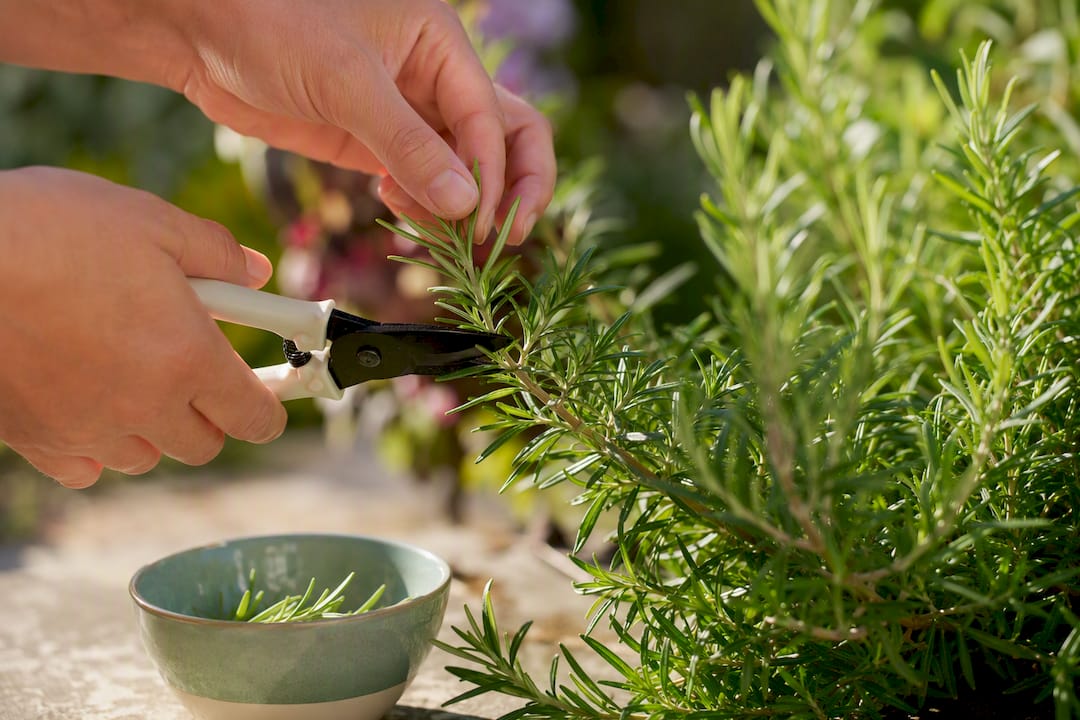
Harvesting is really just pruning with a purpose. Snip tender new growth from the tips, take only what you need, and avoid stripping any single branch bare. A few sprigs dry well hung upside down in a dark, airy spot for a week or two, or you can freeze chopped leaves in a bit of oil or water for later use.
How Do You Propagate Rosemary From Cuttings?
Rosemary grown from seed germinates slowly and named cultivars rarely come true from seed, which is why nearly every experienced grower propagates from cuttings instead.
- Snip a 4 to 6 inch piece from a healthy, non-flowering tip.
- Strip the leaves off the bottom two inches of the stem.
- Dip the cut end in rooting hormone if you have it, though it’s optional.
- Insert it into a sterile, soilless mix and keep it warm, around 65 to 75°F, and lightly humid.
- Expect roots to form within two to four weeks.
If a plant has gone woody and bare at the base with only a small tuft of green on top, don’t fight it with aggressive pruning. Take a few cuttings, root them, and start over. It’s faster than nursing an old, leggy plant back to shape.
Common Rosemary Pests and Diseases
Root rot and drought stress look similar at first glance but need opposite fixes. Rot shows up as mushy, dark roots and limp, sometimes blackened stems near the soil line. Drought stress looks dry and straggly, with crispy brown tips but a firm, healthy base. Check the roots before you decide which one you’re dealing with.
Powdery mildew, a white dusty coating on leaves, thrives in still, humid air. Since rosemary evolved in breezy coastal conditions, improving airflow and cutting back on overhead watering usually clears it up faster than any fungicide spray.
Aphids, scale, and spider mites show up occasionally, usually on stressed or overcrowded plants. A strong blast of water or a light insecticidal soap spray handles most infestations. Prune off heavily infested stems rather than treating the whole plant. If root rot has turned most of the root ball black and mushy, that plant usually isn’t worth saving. Cut healthy tip growth for propagation and start a replacement instead.
How Do You Protect Rosemary Through Winter?
Rosemary is a tender perennial in most of the country, and hardiness varies a lot by cultivar. Some varieties tolerate brief dips below freezing; others suffer real damage.
For potted rosemary, the safest move is bringing it indoors before the first hard frost, or at minimum onto a sheltered porch out of direct wind. Grouping several pots together and wrapping containers in bubble wrap or burlap adds a buffer against root freeze, since roots in a pot are far more exposed to cold than roots in the ground.
Ground-planted rosemary in borderline climates benefits from a thick layer of mulch around the base and a windbreak on the exposed side. Skip organic mulch piled against the crown, since it traps moisture right where rot starts. When spring comes and you move indoor plants back outside, harden them off over a week or two after the last frost date rather than moving them straight into full sun.
How Viridia Helps You Stay on Top of Rosemary Care
A lot of rosemary care comes down to catching small problems early, and that’s where a tool like Viridia fits into the routine. Snap a photo and the app identifies your specific rosemary variety, then pulls care tips tailored to your local climate and soil rather than generic advice.
The health diagnosis feature helps clarify ambiguous symptoms like yellowing lower growth, indicating possible causes and suggesting treatments. The app can set watering reminders and log care schedules such as fertilizing or seasonal moves indoors. For anyone managing several potted herbs alongside a rosemary plant, a digital garden journal keeps the whole schedule in one place instead of scattered notes.
What Temperature and Humidity Does Rosemary Prefer?
Rosemary is happiest in temperatures between roughly 60 and 80°F, and it tolerates heat far better than cold. It’s native to the Mediterranean, where summers run hot and dry, so a sweltering patio in July rarely bothers it as long as the roots have water when they need it.
Cold is the bigger threat. Many cultivars can handle a light frost, but sustained temperatures below freezing damage or kill unprotected plants, especially in containers where roots have almost no insulation. If you’re in a region with harsh winters, treat rosemary as a plant to move indoors or into a greenhouse rather than one you leave exposed.
Humidity is where people tend to overcorrect. Rosemary doesn’t want a steamy bathroom environment. It actually prefers relatively dry air with good circulation, mimicking the breezy hillsides it comes from naturally. High humidity combined with still air is exactly the combination that invites powdery mildew and other fungal issues. If you’re growing rosemary indoors during winter and running a humidifier for other plants, keep rosemary out of that direct airflow or give it its own spot near a window with a small fan running nearby.
Indoor growers sometimes mistake dry, papery leaf tips for a humidity problem when it’s actually a watering or light issue. Before reaching for a humidifier, rule out underwatering and insufficient light first, since those are far more common culprits than dry air alone.
When and How Should You Repot Rosemary?
Repot when roots start circling the pot’s edges, poke through drainage holes, or when growth stalls despite decent light and watering. Most container rosemary needs repotting every 12 to 18 months, faster if you started with a small nursery pot.
Choose a new container only one or two inches wider in diameter than the current one. Rosemary actually dislikes being swamped in a container that’s too large, since the extra soil holds moisture the roots don’t need and raises rot risk. Terra cotta or other unglazed clay pots remain the better choice over plastic for the same reason they help with everyday watering: they let excess moisture evaporate through the walls.
To repot, ease the plant out gently rather than yanking it by the stem. Loosen the root ball slightly with your fingers, especially if roots are tightly wound, and trim off any that look brown, mushy, or clearly dead. Set it into fresh, well-draining mix at the same depth it was growing before. Planting it deeper invites stem rot at the base.
Water lightly right after repotting, then hold off on the next watering longer than usual; disturbed roots are more vulnerable to rot in the following weeks. Skip fertilizing for at least a month afterward. The plant needs time to settle before it can use extra nutrients anyway, and a stressed root system handles fertilizer poorly.
How Big Does Rosemary Get and How Fast Does It Grow?
Rosemary’s growth habit depends heavily on variety, but most upright types reach 3 to 5 feet tall and roughly as wide when grown outdoors in the ground over several years. Some older Mediterranean specimens in warm climates get considerably larger and woodier, developing thick, almost shrub-like trunks.
Prostrate or trailing varieties behave completely differently, spreading low and wide rather than growing upward, which makes them better suited to spilling over walls or hanging planters than as an upright kitchen herb.
Growth is moderate in the first year or two, then speeds up once the root system fills its space and the plant is established. Container rosemary stays naturally smaller than its in-ground counterparts simply because pot size limits root growth, which in turn limits how large the top growth can get.
Age changes the plant’s character more than most gardeners expect. Young rosemary is soft, leafy, and easy to shape. After three or four years, lower stems turn woody and bark-like, and that part of the plant won’t resprout if you cut into it. This is exactly why the one-third pruning rule matters more as a rosemary plant ages. A young, vigorous plant recovers from harder cuts; an older, semi-woody one does not.
Indoor vs. Outdoor Rosemary: What Actually Changes
The core rules for rosemary plant care don’t change between indoor and outdoor growing. Light, drainage, and cautious watering remain the same three pillars either way. What changes is how hard you have to work to hit those targets.
Outdoors, sun is usually free and airflow takes care of itself. The main outdoor risks are heavy clay soil, overhead sprinklers, and winter cold in colder zones. Indoors, light becomes the constant struggle. Even a bright-looking window rarely delivers the intensity rosemary gets outdoors on a summer afternoon, which is why supplemental grow lights make such a difference for anyone growing rosemary indoors long term.
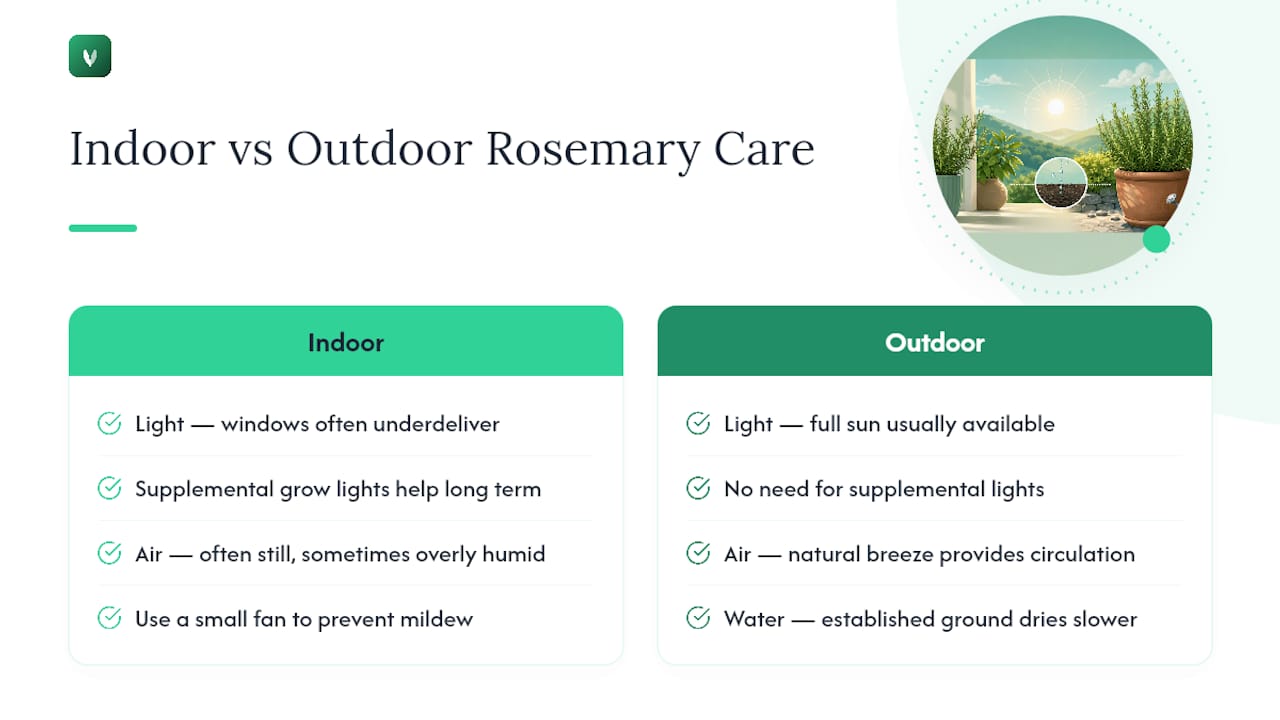
Humidity and air circulation flip too. Outdoor rosemary gets natural breeze; indoor rosemary often sits in still, sometimes overly humid air, particularly near a kitchen sink or a cluster of other houseplants. A small fan running nearby for part of the day helps prevent the powdery mildew and stagnant-air problems that indoor rosemary is more prone to than its outdoor counterpart.
Watering frequency also differs. Indoor rosemary in a container dries out on its own schedule, often faster than expected thanks to central heating in winter, and needs the top-inch check more often than an established plant in the ground. Treat indoor rosemary as a plant that needs closer, more frequent attention rather than a “set it and forget it” houseplant.
Spotting and Fixing Nutrient Deficiencies
Rosemary rarely shows dramatic deficiency symptoms the way heavy feeders like tomatoes do, since it’s adapted to lean, rocky Mediterranean soil. When something does look off, it’s usually one of a few patterns.
Yellowing that starts on older, lower leaves while new growth stays green often points to a nitrogen shortage, though it’s also just as commonly a sign of a rosemary that’s rootbound or overwatered. Check the roots and pot size before assuming it needs feeding. Pale, washed-out new growth combined with weak stems can indicate the plant simply isn’t getting enough light, which is far more common than an actual nutrient gap.
Purplish or reddish tinting on stems and leaf undersides sometimes signals a phosphorus deficiency, though it can also appear naturally in cold weather as a normal stress response, so don’t panic over color alone if temperatures have recently dropped.
The safest first move for any of these signs is checking the basics before reaching for fertilizer: light levels, watering habits, root crowding, and drainage. Since rosemary is such a light feeder, an actual nutrient deficiency is less likely than a watering or light problem wearing a nutrient deficiency’s disguise. If you’ve ruled those out and growth still looks weak, a diluted, balanced liquid fertilizer applied sparingly, once after flowering, is usually enough correction. More fertilizer is rarely the answer with this plant.
What Most Rosemary Advice Gets Backwards
Most rosemary advice treats it like a needy houseplant that requires constant attention, and that’s exactly backwards. The plants that struggle in my experience reviewing extension guidance aren’t the neglected ones. They’re the ones getting babied with daily watering and rich potting soil, both of which work against everything rosemary actually wants.
The conventional fertilizing advice deserves particular skepticism. Plenty of general herb guides recommend regular monthly feeding, but that’s guidance built for basil and parsley, not for a Mediterranean shrub adapted to nutrient-poor, rocky ground. Feed rosemary like basil and you’ll get soft, weak growth that pests target first.
If I had to pick the one thing home gardeners should prioritize above everything else, it’s drainage, not watering frequency. A gardener who nails drainage and gets the light right can be sloppy about everything else and still succeed. A gardener with perfect watering discipline but soggy, compacted soil is fighting a losing battle regardless of how carefully they check that top inch. Fix the site and the mix first. Everything else is minor tuning after that.
— Dan
Sources
- Cultural Tips for Growing Rosemary / UC Statewide IPM Program
- Easy Gardening: Rosemary (Texas A&M AgriLife Extension)
- Herb garden plants: rosemary (Penn State Extension)