
2–4 Inches of Compost to Improve Sandy Soil for Home Gardeners
The fastest way to improve sandy soil is to work in compost and change how you water. Spread 2 to 4 inches of finished compost into the top layer of new beds, as extension guidance recommends, then switch from light daily sprinkling to deep infrequent soaking. Expect visible improvement within one growing season and steady gains after that, with a soil test guiding any further amendments. A garden management tool can help track watering schedules and amendment timing along the way
TL;DR:
- Adding 2 to 4 inches of finished compost and using deep, infrequent watering will significantly improve moisture retention in sandy soil within one growing season.
- Organic matter, particularly compost, leaf mold, or well-aged manure, is more effective long-term than mineral or chemical fixes and should be incorporated annually.
- Drip irrigation tailored to your soil’s specific intake rate and thorough testing of moisture before watering prevent leaching and water waste.
- Biochar can enhance water retention at application rates of 5% to 10%, but higher amounts do not provide additional benefits and may reduce water availability.
- Regular soil testing every two to three years guides proper amendments, with focus on maintaining organic matter levels and correcting pH to optimize plant growth.
Table of Contents
- Your first month checklist for sandy soil
- Why organic matter is the real fix for sandy ground
- How to water sandy soil without wasting it
- Amendments beyond compost: what actually helps
- Cover crops and mulch that build soil in place
- Plants that tolerate sandy soil while you improve it
- When to test your soil and how results guide next steps
- Fixing common setbacks along the way
- Using Viridia to manage the routine
- Building sandy soil is maintenance, not a project
- A practical way to keep the whole plan on track
- Where these recommendations come from
- Sources
- FAQ
Your first month checklist for sandy soil
Sandy soil rewards steady, small actions more than one big fix. Work through this order and you will see moisture retention improve before the season ends.
- Get a basic soil test before buying any fertilizer, lime, or manure in bulk.
- Spread and incorporate 2 to 4 inches of finished compost when preparing new beds.
- Install drip irrigation with emitters spaced along the root zone, running long enough to soak deeply rather than often.
- Add 2 to 4 inches of mulch over exposed soil to slow evaporation and moderate temperature.
- Plan a cover crop for any bed sitting idle between seasons.
Each step builds on the last. Skipping the soil test and jumping straight to heavy fertilizing is the most common way gardeners waste money on sandy ground.
Why organic matter is the real fix for sandy ground
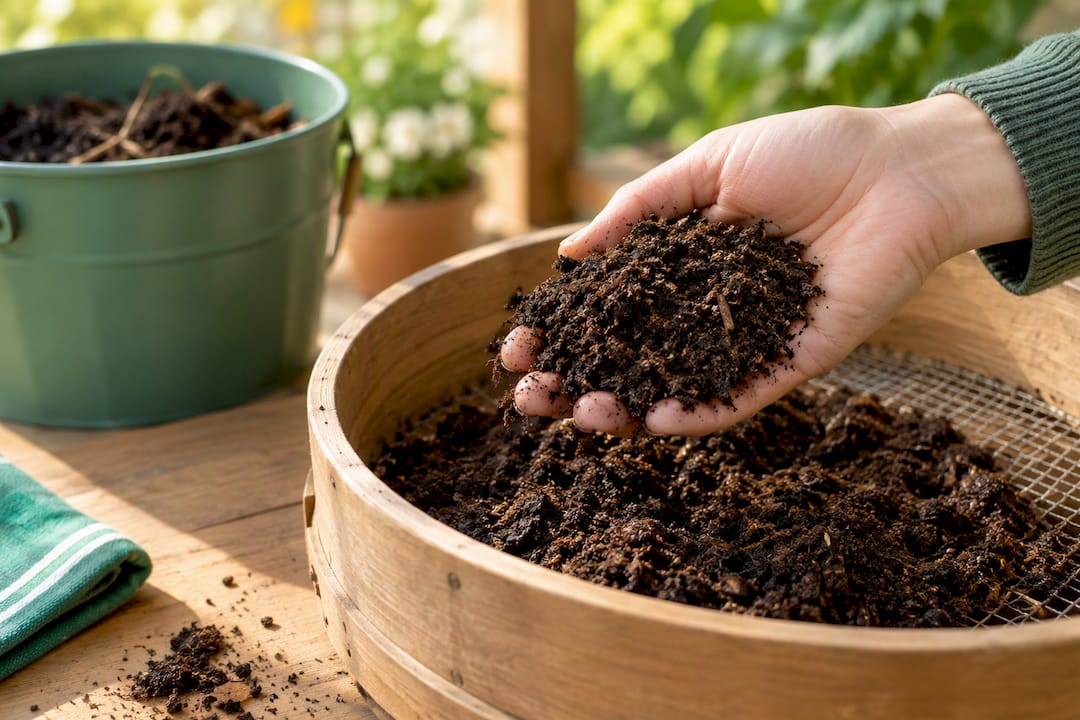
Sand particles are large and loosely packed, so water and nutrients drain through before roots can use them. Organic matter changes that by holding water in its spongy structure, giving nutrients something to cling to, and feeding the microbes that build stable soil crumbs. This is why Pender County Center guidance treats compost as the most reliable, universally recommended fix for sandy soil, ahead of any mineral or chemical shortcut.
For new beds, incorporate 2 to 4 inches of finished compost into the top layer, then topdress annually to maintain gains as older organic matter breaks down.
Good materials to use:
- Finished, dark, crumbly compost with an earthy smell.
- Leaf mold from decomposed autumn leaves.
- Well-aged manures that have composted for several months.
Materials to avoid mixing in, or to use only as surface mulch, include raw sawdust, which robs nitrogen as it breaks down, and fresh, uncomposted manure, which can burn roots and carry weed seeds.
In warm climates, organic matter decomposes faster and disappears into the soil sooner. That is a benefit for feeding microbes but means sandy soil in hot regions needs more frequent topdressing than the same bed in a cooler climate.
Pro Tip: Buy compost by the smell test first: a rich, earthy scent means it is finished; a sour or ammonia smell means it will do more harm than good.
How to water sandy soil without wasting it
Sandy soil drains fast, so how you water matters as much as how much you use. Drip irrigation placed directly over the root zone beats overhead sprinklers because it delivers water slowly, right where roots can absorb it, instead of losing it to runoff or evaporation.
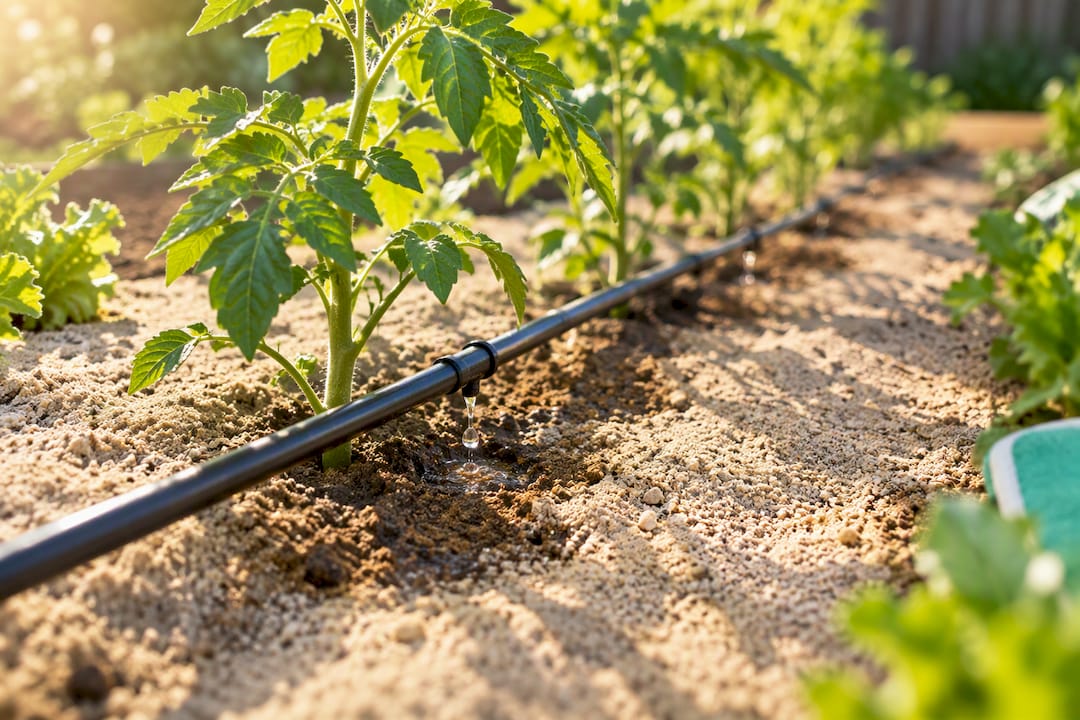
About 0.5 inches of water is needed to recharge each foot of sandy soil depth, and intake rates can run anywhere from 1 to 10 inches per hour, according to Utah State University Extension. That range means you need to test your own soil’s intake rather than copy a neighbor’s schedule.
Practical scheduling and monitoring tips:
- Water deeply and less often rather than a light daily sprinkle, which only wets the top inch and encourages shallow roots.
- Use a soak-and-wait cycle: run water until it starts to pool slightly, pause, then finish the cycle once it absorbs.
- Check moisture with a simple probe or a low-cost soil moisture sensor before assuming the bed needs more water.
Frequent shallow watering in sandy soil also speeds nutrient leaching, since dissolved fertilizer washes past the root zone with every excess pass.
Amendments beyond compost: what actually helps
Compost is the foundation, but a few other amendments can add real value when used at the right rate. Biochar is the most studied option: it improves porosity and water retention, but the benefit peaks at a specific dose. Research on biochar’s effect on sandy soils found that biochar boosts readily available water at low application rates around 5% to 10% by volume, but higher amounts do not increase benefits and may reduce water availability.
Biochar also works better paired with organic matter than alone. A long-term lysimeter study found that combining biochar, compost, and sludge cut cumulative drainage by a substantial margin compared with single amendments, showing real synergy when biochar stabilizes the organic matter added alongside it.
A few cautions worth repeating:
- Never add raw clay to sandy soil. Mismatched ratios can bake into a dense, concrete-like layer instead of improving texture.
- Compost manures fully before use; fresh manure risks root burn and weed contamination.
- Check salt content on bagged amendments, since some composts and manures carry enough salt to stress young roots.
Cover crops and mulch that build soil in place
Cover crops and mulch do the slow work of building organic matter between active growing seasons. Buckwheat and winter rye are common choices, planted after harvest and tilled in before they set seed or, for rye, before it heads out in spring.
Mulch matters just as much. A 2 to 4 inch layer of shredded bark, straw, or leaf litter slows evaporation, moderates soil temperature, and gradually breaks down into organic matter itself.
- Let cover crop roots die back in place rather than pulling them, since decaying roots feed soil life directly.
- Keep mulch topped up as it thins, rather than waiting until bare soil shows again.
- Earthworm activity increases once living roots and steady moisture are present, speeding the whole process.
Pro Tip: Chop cover crop residue into smaller pieces before turning it under; it breaks down faster and feeds microbes sooner.
Plants that tolerate sandy soil while you improve it
Some plants thrive in sandy conditions without waiting for perfect soil. Herbs like rosemary and thyme, deep-rooted vegetables like carrots and sweet potatoes, and many native grasses handle drainage well from the start.
- Choose drought-tolerant species for the first season or two while organic matter builds.
- Dig planting holes slightly deeper than usual and backfill with a compost-amended mix to give young roots a head start.
- Plant in early spring or fall to avoid establishing roots during the hottest, driest stretch of summer.
As organic matter and water retention improve over a season or two, you can shift toward more demanding vegetables and ornamentals that need steadier moisture.
When to test your soil and how results guide next steps
A standard soil test reports pH, nitrogen, phosphorus, potassium, organic matter content, and salt levels, all of which shape which amendments make sense.
- Test before any heavy manure or fertilizer application, since salt content varies widely between products.
- Retest every two to three years to track whether your organic matter additions are working.
- Use pH results to decide whether lime or sulfur is needed before adding more fertilizer, since sandy soil’s low buffering capacity means pH can swing quickly.
Fixing common setbacks along the way
Poor germination or yellowing leaves after a manure application often points to salt burn, not a lack of nutrients. Pause additional amendments and retest rather than adding more.
If plants still wilt quickly between waterings after a season of compost and mulch, check moisture with a probe before assuming the soil needs more organic matter. Sometimes the fix is a longer soak, not another bag of compost.
Using Viridia to manage the routine
Once the heavier amendment work is done, the harder part is staying consistent. Some garden apps can log soil test results, send watering reminders adjusted for climate, and flag plant stress early using health diagnosis features. Plant identification tools and community garden sharing features may also help when testing new species for a sandy bed and seeking advice.
Building sandy soil is maintenance, not a project
Improving sandy soil never really finishes. Organic matter breaks down and needs replacing every year, especially in warm climates. Start with one bed, track what works, and expand from there.
— Dan
A practical way to keep the whole plan on track
Manual notebooks and spreadsheets work, but they slip once the season gets busy. Certain garden apps give you a place to log soil test dates, watering cycles, and compost applications in one spot, with reminders tuned to your climate instead of a generic calendar.

- Identify plants by photo and get care tips matched to your soil and climate.
- Track plant health over time with diagnosis and recovery notes.
- Get reminders for watering and amendment schedules based on local conditions.
- Share your garden and swap advice with other gardeners working similar soil.
If you want a straightforward way to keep the whole program organized, Viridia’s plans start with a free tier, or you can upgrade to Viridia Premium for $48 per year for the full set of tracking and diagnosis tools.
Where these recommendations come from
These sources back the core recommendations in this guide:
- Pender County Center, N.C. Cooperative Extension: compost depth and annual topdressing guidance for sandy beds.
- Utah State University Extension: irrigation recharge rates and warnings against raw clay.
- PubMed lysimeter study: combined amendment research showing reduced drainage.
- MDPI biochar review: optimal biochar application rates for water retention.
Sources
- Improving Sandy Soils - Pender County Center | N.C. Cooperative Extension
- Gardening in Sandy Soils - Utah State University Extension
- Impact of biochar, compost, and sludge amendments on the soil water balance of a sandy soil - PubMed
- The Potential of Biochar to Enhance the Water Retention Properties of Sandy Agricultural Soils
FAQ
What is the best soil improver for sandy soils?
Finished compost is the most consistently recommended improver, since it holds water, feeds soil microbes, and gives nutrients something to bind to. Extension guidance recommends incorporating 2 to 4 inches into new beds and topdressing annually to keep the benefit going.
What are some good additives to add to sandy soil?
Finished compost, leaf mold, and well-aged manure all improve structure and water retention. Biochar can help too, but research shows benefits peak around 5% to 10% by volume, with higher rates offering little extra gain.
What is the best fertilizer to use on sandy soil?
There is no single best fertilizer for every sandy soil, since the right choice depends on what a soil test shows about existing nutrient and salt levels. Because sandy soil drains fast and leaches nutrients quickly, lighter, more frequent applications timed to plant growth tend to work better than one large dose.
How to stabilize sandy soil?
Stabilizing sandy soil means building organic matter and root structure rather than changing the sand itself. Compost, mulch, and cover crops with living roots gradually improve structure and water-holding capacity, while adding raw clay is discouraged since mismatched ratios can create a dense, unworkable layer.
How often should I test sandy soil?
A soil test every two to three years is generally enough to track pH, nutrient levels, and salt content as you add amendments. Testing before any large manure or fertilizer application helps avoid over-application and unnecessary nutrient leaching.