Stabilize Sunburned Plants in 48 Hours with Photo AI for Gardeners
Bleached patches, papery brown spots on the sun-facing side of leaves, and cracked bark are typical signs of sunburn, not disease. Get the plant into shade immediately and check whether the soil is too dry, since heat stress and drought usually strike together. Scorched tissue will not turn green again, but the rest of the plant typically recovers once shade and water are corrected.
TL;DR:
- Sunburn damage appears mainly on the exposed, south or west-facing sides of leaves, bark, or fruit, with distinct patterns that help distinguish it from disease.
- Rapid action includes moving plants into shade, checking soil moisture, avoiding fertilizer, and adding mulch to promote cooling and water retention within the first hour of damage.
- Prevention relies on gradual hardening-off, proper siting, using shade cloth, mulching, and reflective covers like kaolin clay spray to reduce heat stress and sun exposure.
- Remove only fully dead tissue after stabilization, and avoid pruning until new growth confirms recovery, to prevent additional stress or sun damage.
- Recovery typically takes several weeks for most plants, with visible new growth, while ongoing damage may signal a need for expert assessment and structural shading.
Table of Contents
- What Does Sunburn Look Like on Plants?
- What Should You Do in the First Hour?
- How Do You Stop Sunburn From Happening Again?
- When Should You Cut Off Damaged Leaves?
- How Long Does It Take a Plant to Recover From Sunburn?
- When Does Sunburn Need a Professional’s Attention?
- How Viridia Helps You Diagnose and Track Recovery
- Prevention Beats Treatment Every Time
- Try Viridia for Faster Diagnosis and Tracking
- Where to Learn More
- Sources
- FAQ
What Does Sunburn Look Like on Plants?
Sunburn, sometimes called sunscald, shows a pattern disease rarely does: damage clusters on upper leaf surfaces, the south or west side of the plant, and any branch that lost shade suddenly. That directional signature is the fastest way to rule out fungus or pests, since pathogens tend to spread randomly across a plant rather than sticking to one exposed face.
Symptoms differ by plant type. Broadleaf plants develop bleached, tan, or brown patches that look almost sunburned in the literal sense, with tissue that feels dry and papery. Succulents get pale, sunken, or corky lesions on the side facing the sun. Conifers turn a rusty brown or black along exposed needles and may drop them entirely within weeks. On woody plants, sunscald appears as bark that cracks, peels, or sinks inward, most often on young trunks with thin bark that never had a chance to toughen up.
- Bleached or brown patches on upper, south, or west-facing leaves
- Sunken, discolored lesions on the shoulder of fruit like tomatoes or apples
- Cracked, sunken, or peeling bark on young or recently exposed trunks
- Needle browning concentrated on one side of a conifer
Gardeners frequently mistake sunburn for early blight, sunscald for canker disease, or heat stress for a nutrient deficiency, which leads to unnecessary fungicide or fertilizer applications. The UC Statewide IPM Program notes that environmental damage stays confined to exposed surfaces, while disease patterns are typically scattered and don’t respect sun angle. Houseplants moved outdoors without acclimation can show scorch after as little as one to two hours of unfiltered midday sun, according to University of Maryland Extension.
What Should You Do in the First Hour?
Speed matters more than precision here. A plant sitting in full sun with dry roots is losing ground every minute, so work through these steps roughly in order.
- Move or shade it immediately. Container plants go to a spot with filtered light or full shade for at least 48 hours. For plants in the ground, rig temporary shade with a bedsheet, shade cloth, or even a patio umbrella angled to block the worst afternoon sun, since west exposure does the most damage.
- Check soil moisture before you water. Push a finger two inches into the soil. If it’s dry, water slowly and deeply at the root zone rather than misting the foliage, which can scorch wet leaves further under sun.
- Stop fertilizing. Nutrient salts increase stress on already-damaged roots and foliage. Hold off until you see new, undamaged growth.
- Leave the fruit and leaves alone for now. Don’t strip damaged tissue yet. Partially green leaves are still doing photosynthetic work the plant needs during recovery, a point Dakota County Master Gardener Volunteers emphasize in their recovery guidance.
- Add mulch. A two- to three-inch layer around the root zone cools the soil and slows moisture loss while the plant stabilizes.
Pro Tip: Water in the early morning, not midday. Wet soil under a blazing sun can actually raise root-zone temperature, working against the cooling effect you’re trying to create.
Avoid major pruning during this window. Cutting into a stressed plant now just opens more wounds and removes tissue that’s still contributing energy.
How Do You Stop Sunburn From Happening Again?
Almost every sunburn case traces back to one thing: a plant moved from a protected environment into direct, intense light too fast. The fix is a hardening-off schedule, and it’s cheap insurance.
Increase outdoor light exposure by one to two hours per day over seven to fourteen days when transitioning seedlings, houseplants, or nursery stock outdoors, a schedule recommended by University of Nebraska–Lancaster County Extension. Start in morning sun, which is cooler and less intense than afternoon light, and add afternoon exposure only in the last few days.
Siting matters just as much as timing. A plant that needs partial shade planted on a west-facing wall is going to burn no matter how well you harden it off; match the species to the light it actually tolerates.
| Prevention method | Best for | Key detail |
|---|---|---|
| Shade cloth (30-50%) | Vegetables, ornamentals in hot climates | Reduces light intensity while allowing airflow |
| Hardening off | Transplants, houseplants moving outdoors | 1-2 hours added exposure daily over 7-14 days |
| Mulch (2-3 inches) | Root zone protection for any plant | Conserves moisture, moderates soil temperature |
| Kaolin clay spray | Fruit trees, sun-sensitive crops | Reflects radiation; requires near-full coverage on fruit |
- Choose 30% shade cloth for light protection, 50 to 70% for intense heat or reflective surfaces like stucco walls and pavement
- Use companion planting or trellised crops to cast natural afternoon shade on sensitive plants
- Water deeply and less often to encourage roots to grow deep, where soil temperature stays more stable
Kaolin clay sprays deserve a specific mention because they work differently than shade. The particle film reflects sunlight and can lower fruit surface temperature by several degrees, according to a particle film research summary. Coverage needs to be thorough on fruit, close to a fine white coating, but heavy overcoating on leaves can interfere with photosynthesis, so it’s a tool best reserved for fruiting crops rather than blanket use across the garden, per VegCrops Hotline. Reflective bird tape or temporary mesh screens can also break up direct afternoon glare on vulnerable young trunks in a pinch.
Root health plays a bigger role than most gardeners assume. A plant with compromised or shallow roots struggles to pull enough water to cool itself even in moderate heat, which the UC IPM program flags as a common underlying cause of what looks like straightforward sun damage. Improving drainage and giving roots more soil volume often does more for long-term resilience than any amount of shade cloth.
When Should You Cut Off Damaged Leaves?
Necrotic tissue, the fully brown, crisp, dead parts, will never turn green again and can be trimmed once the plant has stabilized. But wait before you reach for pruners.
- Leave any leaf or fruit with partial green tissue intact; it’s still photosynthesizing
- Remove only fruit or leaves that are entirely brown, mushy, or shriveled
- Delay major pruning for at least two to three weeks after the initial damage
- Cut fertilizer to half strength or less until new, undamaged growth appears
Pruning too early exposes previously shaded interior branches to direct sun, creating a second round of sunburn on tissue that was never hardened off. If you must remove a damaged limb, do it gradually and consider temporary shading of the newly exposed area for a week or two.
How Long Does It Take a Plant to Recover From Sunburn?
New growth typically appears within several weeks for annuals and herbaceous perennials, and may take longer for shrubs and trees, though timing varies by species and severity of damage. Full canopy or fruit-quality recovery on woody plants can stretch into the following growing season.
- Good signs: new leaves emerging near damaged areas, no spread of necrosis beyond the original patches, firm (not oozing) bark around scald sites
- Warning signs: oozing or wet bark, sunken cankers that keep expanding, bark beetles or borers moving into damaged wood
Keep a simple photo log every week or two, noting which side of the plant faces the sun. That orientation record is often the single most useful clue if damage reappears, since roughly the same spots tend to burn again if the underlying siting problem never gets fixed.
When Does Sunburn Need a Professional’s Attention?
Call a certified arborist or your county extension office if you see sunken, expanding cankers on a trunk, bark that’s oozing or wet to the touch, or the same limb sunburning year after year despite your efforts. Bring photos showing the damage pattern and its orientation relative to the sun.
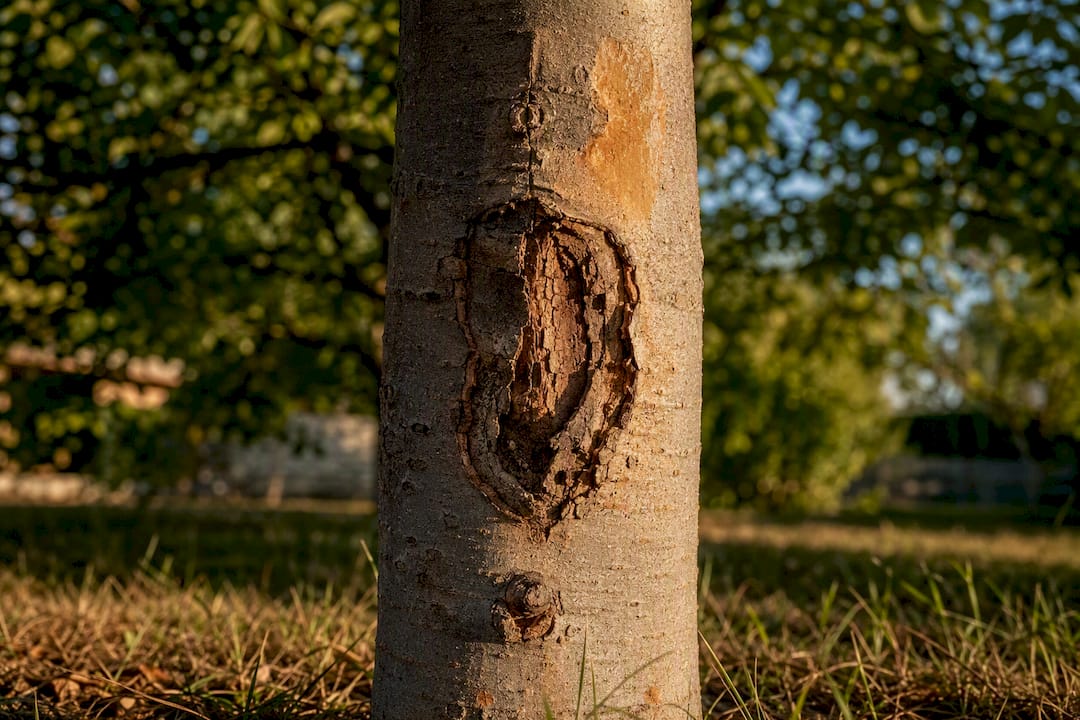
Options at that point include professional trunk wrapping for young trees, structural shade installation, or, in repeated severe cases, replanting with a species better matched to the site’s light exposure.
How Viridia Helps You Diagnose and Track Recovery
A photo tells you a lot, but knowing what you’re looking at is the hard part. An AI garden assistant can identify the species from a photo and flag patterns consistent with sunburn, then generate care steps calibrated to that plant’s climate and soil needs rather than generic advice.
- Log a photo of the damage, including which side of the plant faces the sun
- Get a tailored checklist covering shade, watering, and fertilizer adjustments
- Set a reminder to recheck the plant in seven to fourteen days
- Compare photos over time to confirm new growth is replacing damaged tissue
That last piece matters most. Recovery from sunburn is slow and easy to lose track of, and a simple timestamped photo log turns guesswork into an actual monitoring routine.
Prevention Beats Treatment Every Time
Most of the sunburn cases I’ve dug into trace back to one mismatch: a plant sited for light it was never bred to handle, moved or exposed too fast. Hotter, longer summers are making that mismatch more common and less forgiving. A gradual hardening-off schedule and honest siting decisions prevent the vast majority of cases before they start.
— Dan
Try Viridia for Faster Diagnosis and Tracking
An AI garden assistant can analyze a photo of damaged leaves, identify the plant, and flag whether the damage pattern matches sunburn, then build a care plan based on climate and soil rather than a generic checklist. If you’re dealing with a sun-stressed fruit tree, the apple care guide shows how species-specific tips work in practice, and for temporary reflective shading while you wait for new growth, a bird-deterrent reflective tape can double as a quick barrier against harsh afternoon glare.

Recovery tracking can be challenging as gardeners may check a plant once and forget to follow up, missing when recovery stalls. Automated reminders and photo comparisons can help close that gap. For a free diagnosis and tailored advice, visit the Viridia landing page.
Where to Learn More
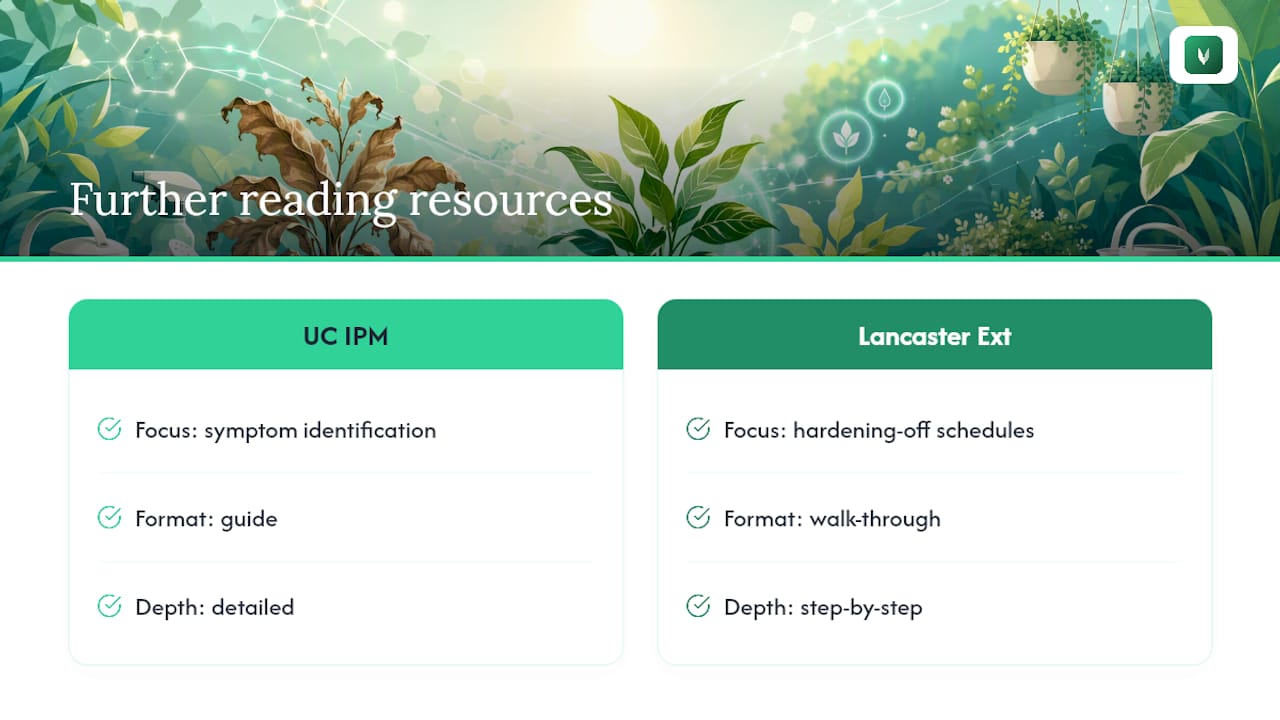
For deeper reading, the UC IPM sunburn guide covers symptom identification in detail, while Lancaster County Extension walks through hardening-off schedules step by step.
Sources
- Sunburn / Home and Landscape / UC Statewide IPM Program (UC IPM)
- Hardening transplants / University of Nebraska–Lancaster County Extension
- Sunburned plants (Dakota County Master Gardener Volunteers)
FAQ
How Do You Fix Sunburn on Plants?
Move the plant to shade, check and correct soil moisture with deep watering at the root zone, stop fertilizing, and hold off on pruning until new growth confirms the plant has stabilized.
Can a Plant Recover From Sunburn?
Yes, most plants recover once shade and consistent watering are restored, though the burned tissue itself stays damaged and never turns green again.
Should You Cut Off Sunburned Leaves?
Only remove leaves or fruit that are fully brown and dead; leave anything with partial green tissue in place since it’s still photosynthesizing and supporting recovery.
What Does a Sunburned Plant Look Like?
Look for bleached or brown patches on upper, south, or west-facing leaves, sunken lesions on fruit shoulders, or cracked bark on young trunks, with damage concentrated on the sun-exposed side of the plant.
How Can an AI Garden Assistant Help With Sunburn Damage?
An AI garden assistant can identify the species and typical sunburn pattern from a photo, generate a care plan tailored to the climate, and send reminders to track recovery over the following weeks.