Match Shade Garden Plants to Part Shade (4–6 Hours), Full or Dry Shade
The most reliable shade garden plants fall into a short list of proven categories: hostas, ferns, astilbe, heuchera, hellebores, and a handful of shade shrubs like hydrangea. The real skill isn’t finding these plants, it’s matching them to your actual light and moisture conditions, since “shade” ranges from dappled morning sun to permanent gloom under a maple. Below, you’ll find plants grouped by shade level, how to read your own site, and the care steps that keep them thriving.
TL;DR:
- Matching plant’s light and moisture needs accurately to your site’s conditions is essential for shade garden success.
- Plants like hydrangea, astilbe, and heuchera thrive in part shade with 4 to 6 hours of sunlight, while ferns and hellebores prefer full to deep shade with less than 4 hours.
- In heavy or dry shade, options narrow to epimedium, vinca minor, and wild ginger, which tolerate low light and root competition.
- Proper site observation over different seasons ensures you select plants suitable for your actual shade and moisture levels.
- Careful planting techniques, mulching, watering at soil level, and slug control are vital to maintaining shade plants long-term.
Table of Contents
- 1. Best plants grouped by shade level
- 2. How do you figure out how much shade you actually have?
- 3. Planting and care steps that keep shade plants alive
- 4. Growing vegetables and edibles in shady spots
- 5. Designing a shade garden that still looks interesting
- 6. How Viridia helps you get shade planting right
- 8. What matters most when you plant in shade
- 9. Try Viridia while you plan your shade garden
- Sources
- FAQ
1. Best plants grouped by shade level
Matching a plant’s light tolerance to your site’s real conditions matters more than any other decision you’ll make in a shade garden. Extension horticulturists consistently point out that shade gardens succeed when you prioritize foliage texture and observe moisture before choosing plants, rather than picking flowers first and hoping.
Part shade (4 to 6 hours of sun): This is the easiest shade to work with, and it supports the widest plant range.
- Hydrangea blooms best with morning sun and afternoon shade, grows 3 to 6 feet tall, and needs consistently moist soil.
- Astilbe produces plume-like flowers in early summer, tops out around 2 to 3 feet, and wants steady moisture. It struggles in dry soil.
- Heuchera (coral bells) offers colorful foliage more than showy blooms, stays compact at 8 to 18 inches, and tolerates average garden soil.
- Sun-tolerant hostas like ‘Sum and Substance’ handle more light than shade-only cultivars and reward it with bigger leaves.
Full or deep shade (under 4 hours, including areas with essentially no direct sun): Foliage carries the show here.
- Shade hostas remain the backbone groundcover, ranging from 6-inch minis to 3-foot giants depending on cultivar.
- Foamflower (Tiarella) spreads as a low groundcover with mottled leaves and small spring flowers, ideal under shrubs.
- Pulmonaria (lungwort) offers spotted foliage and early spring flowers that feed pollinators before much else blooms.
- Ferns, including Dryopteris and ostrich fern, add texture and height, with some species reaching 3 to 4 feet in moist shade.
- Hellebores bloom in late winter and early spring, hold evergreen foliage year round, and tolerate deep shade once established.
Dry shade (under mature trees, where roots pull moisture): This is the hardest condition, and the plant list shrinks accordingly. Authoritative lists for heavy shade name epimedium, pulmonaria, and Lamium among the species that handle both low light and root competition.
- Epimedium spreads slowly as a tough groundcover with heart-shaped leaves that tolerate root competition.
- Vinca minor and pachysandra both form dense, low mats that outcompete weeds once established.
- Wild ginger (Asarum canadense) hugs the ground with glossy, heart-shaped leaves and prefers rich, humus soil even in dry spots.
Under 5 percent of a typical shade garden’s plant list survives without matching moisture to shade level, according to extension guidance that treats soil moisture testing as a prerequisite to plant selection, not an afterthought.
2. How do you figure out how much shade you actually have?
Guessing at your shade level is the most common reason shade plants fail to establish. Spend a few days observing before you buy anything.
- Track direct sun hours on the planting spot at midday, midmorning, and late afternoon across a sunny day.
- Note the direction of exposure: morning sun is gentler and cooler than the same number of hours in the afternoon.
- Check soil moisture by feel a few inches down; dry, crumbly soil under a tree canopy signals root competition even if the spot looks shady and cool.
- Look for moss or standing water after rain, both signs of consistently moist shade rather than dry shade.
- Repeat the observation in different seasons, since deciduous trees let far more light through before their leaves fill in.
Extension guidance treats 4 to 6 hours as part shade and under 4 hours as full shade, with deep shade meaning essentially no direct sun at all. Once you know your hours and your moisture, the decision rule is simple: choose species whose listed light and moisture needs match what you actually measured, not what you hoped for.
3. Planting and care steps that keep shade plants alive
Shade gardens fail less often from wrong plant choice than from how they’re planted and maintained afterward.
- Plant under trees with small plugs or containers rather than digging large holes; changing the soil depth or grade around tree roots can injure the tree.
- Skip deep tilling near root zones and keep the existing soil surface intact.
- Mulch with 1 to 2 inches of compost or shredded leaves, keeping it pulled back from plant crowns and stems to avoid rot.
- Water based on soil feel, not a calendar: shade slows evaporation, but tree roots compete hard for the same moisture.
- Control slugs with beer traps, copper tape, or evening hand-picking, since damp shade is prime slug territory.
- Water at the soil line instead of overhead to reduce the fungal problems that thrive in cool, still, shaded air.
Pro Tip: Space plants a little wider than the tag suggests in shade gardens; airflow between leaves matters more when sunlight isn’t drying out morning dew.
4. Growing vegetables and edibles in shady spots
Most fruiting vegetables, tomatoes, peppers, and squash among them, need 6 to 8 or more hours of direct sun and simply won’t produce well in shade. Leafy and root crops are a different story.
- Lettuce, spinach, and chard tolerate partial or dappled shade and often taste better for it.
- Kale holds up well with 4 hours of sun and benefits from cooler afternoon conditions.
- Radishes mature quickly even with limited light, making them a good filler crop.
- Shade-tolerant herbs like mint and parsley handle less sun than most vegetables need.
Favor cool-season plantings and succession sowing, and use afternoon shade deliberately in summer to slow bolting on leafy greens.
5. Designing a shade garden that still looks interesting
Blooms are scarce in deep shade, so foliage does the design work. Extension writers note that shade gardens read best when foliage texture and repeat plantings carry the visual interest rather than flower color alone.
- Pair large, bold leaves (hosta) with fine, feathery texture (fern or astilbe) for contrast.
- Repeat the same species in drifts instead of scattering single specimens, which reads as more intentional.
- Layer vertically: groundcover at the base, perennials in the middle, small shrubs like Clethra (summersweet) for height and its fragrant summer flowers.
- Add spring bulbs like daffodils to bloom before deciduous trees leaf out and block the light.
- Use containers or raised beds where tree roots make in-ground planting difficult, choosing plants that tolerate the faster-drying conditions containers create.
6. How Viridia helps you get shade planting right
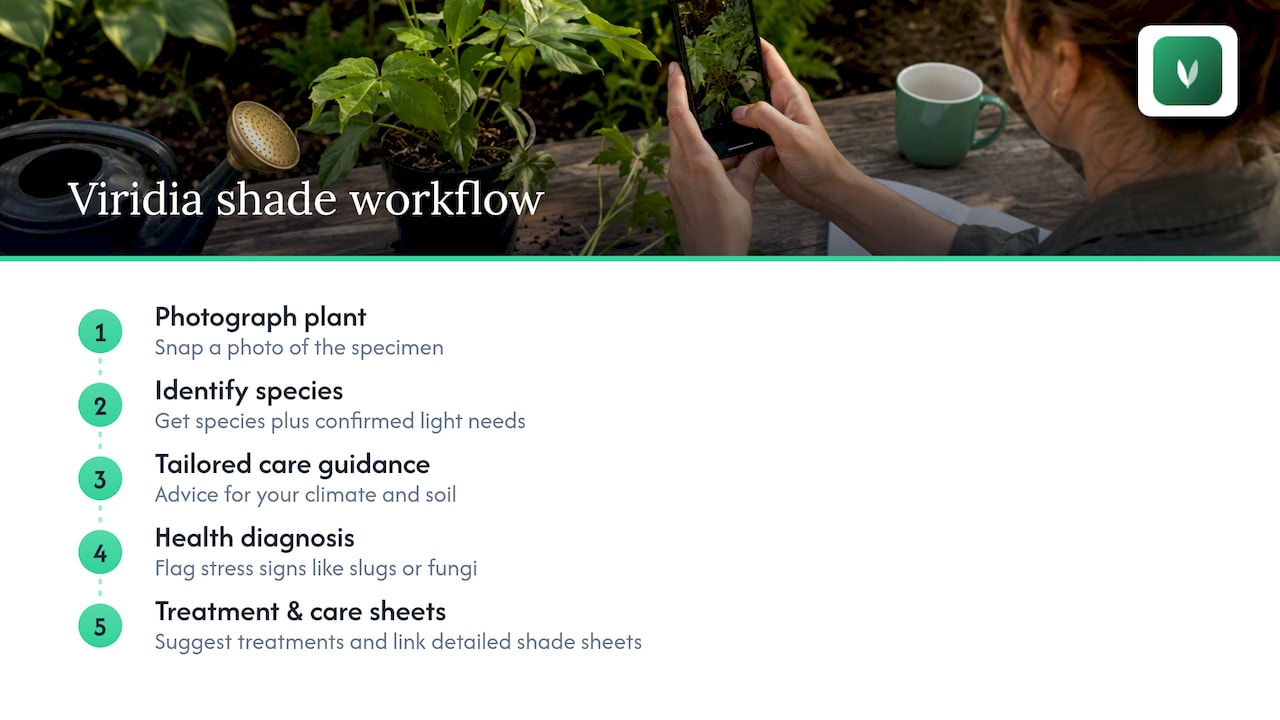
Confirming a plant’s exact species and light needs before you dig saves a season of guessing. Viridia’s photo identification lets you snap a shot of an unlabeled shade plant, or one you’re considering, and get an identification along with care guidance tailored to your climate and soil. Its health diagnosis feature can flag common shade stress signs, like slug damage or fungal spotting, and suggest treatment steps. For a deeper look at specific species, Viridia’s plant catalog includes detailed care sheets, including for shade-friendly picks like hydrangea.
8. What matters most when you plant in shade
If I had to boil down every extension guide and plant list into one habit, it would be this: protect the soil and roots that are already there before you add anything new. Matching moisture to light tolerance solves more problems than any fertilizer or pest treatment ever will, and foliage, not flowers, is what carries a shade garden through the season. Start small, observe how a few plants behave through a full year of changing light, and let that tell you what to plant next.
*— Dan
9. Try Viridia while you plan your shade garden
Once you know your shade level and moisture conditions, the next challenge is keeping track of what’s planted where and how it’s doing. Viridia’s free tier lets you identify plants from photos and get basic care tips, while Viridia Premium, at $48 per year, adds tailored care reminders based on your specific climate and soil, plus health diagnosis and recovery tracking for plants under shade stress. A one-time Founding members option is also available. Browse the plant catalog to see how detailed care guidance works before you commit to a plan.

Sources
For deeper plant lists and shade classification, the Illinois Extension’s guide beyond hostas covers foliage-first design. Colorado State’s PlantTalk shade gardening resource explains soil prep and shade categories. The Missouri Botanical Garden’s heavy shade list names specific cultivars and sizes, and Cornell CALS covers sun requirements for vegetables.
- Plants for heavy shade (Missouri Botanical Garden)
- Beyond hostas — your shade garden (Illinois Extension)
- Shade gardens and soil preparation (Colorado State PlantTalk)
- Sunlight: key to great vegetables (Cornell CALS)
FAQ
What are some good plants for a shade garden?
Hostas, astilbe, ferns, heuchera, hellebores, and pulmonaria are reliable choices, with hydrangea and Clethra as shrub options for part shade. Match each species to your actual sun hours and soil moisture rather than choosing on appearance alone.
What vegetables can grow with only 4 hours of sun?
Leafy crops like lettuce, spinach, chard, and kale tolerate around 4 hours of light, and radishes mature quickly even in limited sun. Fruiting vegetables such as tomatoes and peppers need 6 to 8 or more hours and won’t perform well with less.
Which garden plants grow well in shade?
Foliage-focused perennials like hosta, heuchera, pulmonaria, and foamflower thrive in shade, along with ferns and groundcovers like epimedium and vinca minor. Shrubs such as hydrangea and Clethra also do well in part shade with consistent moisture.
Can any plants survive in complete darkness or 100% shade?
No common garden plant thrives with zero light; even deep-shade species like hellebores and ferns need some ambient or filtered light to photosynthesize. What’s usually meant by “100% shade” is an area with no direct sun but still some daylight, which tolerant species like pulmonaria and wild ginger can handle.
How do I know if my yard has part shade or full shade?
Track direct sun hours on the spot across a full day: 4 to 6 hours is generally considered part shade, and under 4 hours is full shade. Deep shade means essentially no direct sun reaches the area at all.