Prune Roses by Bud Swell: Seasonal, Type Specific Steps with Photo AI
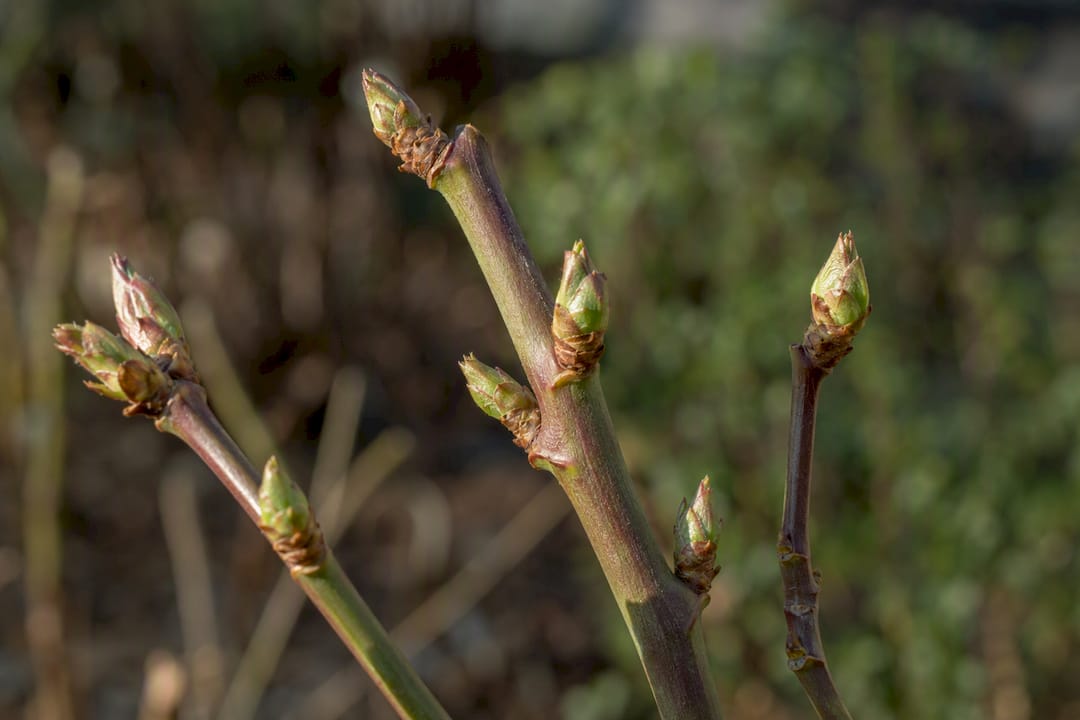
Prune most repeat-blooming roses in late winter or early spring, right when the buds start to swell. Cut the three D’s first, dead, diseased, and damaged wood, before shaping anything else. Every finishing cut should sit about a quarter inch above an outward-facing bud, sliced at a 45-degree angle so water sheds away from the bud instead of pooling on it.
TL;DR:
- Pruning should be timed based on bud swell, which varies by climate and microclimate, rather than fixed calendar dates.
- Always focus on removing dead, diseased, or damaged wood first, making cuts just above outward-facing buds at a 45-degree angle.
- Proper tools include bypass pruners, loppers for thick canes, and disinfect blades between plants to prevent disease spread.
- Different rose types require tailored pruning: hybrid teas need hard cuts, floribundas and shrub roses need lighter thinning, and climbers are trained and pruned for lateral flowering.
- AI tools can assist in identifying rose types and flagging health issues, helping improve timing and precision of pruning efforts.
Table of Contents
- Tools, Safety, and Prep Before You Cut Your Roses
- When Is the Best Time to Prune Roses?
- How to Prune Different Types of Roses
- Step-by-Step: How to Prune a Rose Bush
- Keeping Roses Blooming Through Summer
- Common Rose Pruning Mistakes and How to Fix Them
- Can AI Tools Help You Time Rose Pruning?
- Our Take: Stop Treating Rose Pruning Like a Rulebook
- A Smarter Way to Time Your Next Pruning Session
- Sources
Tools, Safety, and Prep Before You Cut Your Roses
Bypass pruners are the standard tool for rose pruning because their scissor action makes a cleaner cut than anvil-style pruners, which tend to crush stems instead of slicing them. For canes thicker than a pencil, switch to loppers; for old, woody bases, a small pruning saw handles what pruners can’t.
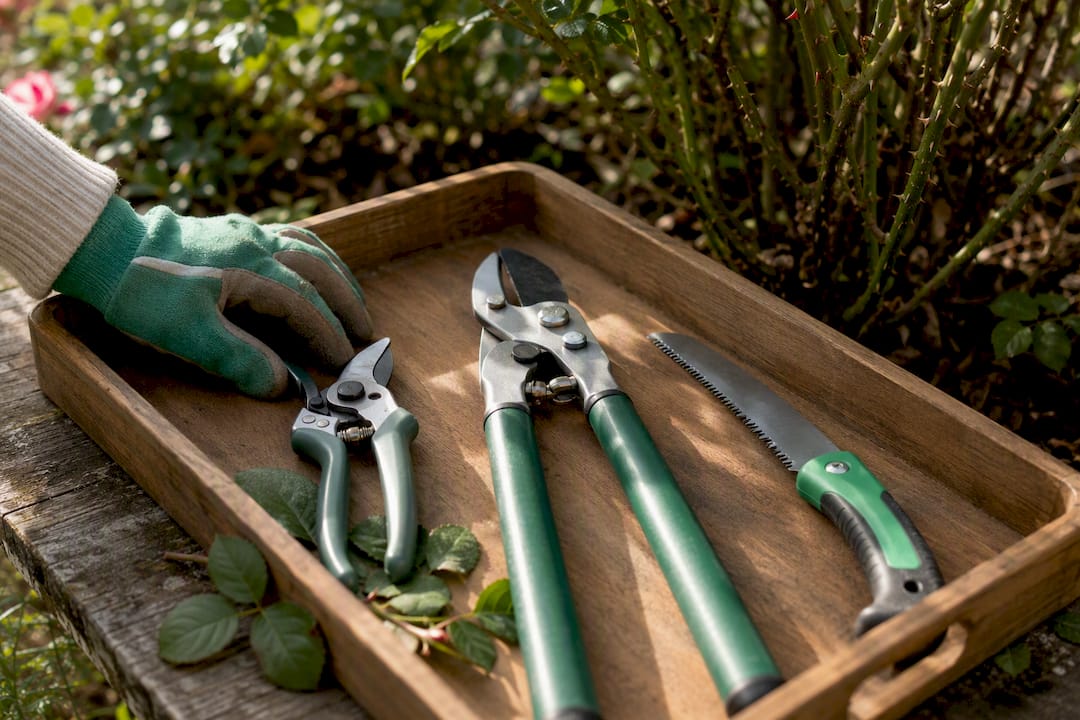
Sterilize blades between plants, not just between sessions. A quick wipe with isopropyl alcohol between roses keeps a fungal or bacterial problem on one bush from spreading to the next, an easy step to do and a costly one to skip.
Before you touch a blade, gear up and clear the ground:
- Wear thick gauntlet-style gloves and long sleeves to ensure safety, as detailed in this person-centred guide for carers on gardening for dementia. Rose thorns puncture regular garden gloves without much effort.
- Rake up last year’s fallen leaves and dropped petals around the base, since old foliage often harbors overwintering fungal spores.
- Inspect canes in daylight, not shade, so you can actually see bud color and swelling.
Pro Tip: Strip any remaining leaves from the bush about two weeks before you plan to prune. It’s a trick pulled from Oregon State University Extension’s rose guide, and it works because bare canes make swelling buds far easier to spot and cut above accurately.
When Is the Best Time to Prune Roses?
Bud swell, not a date on the calendar, is the signal that matters. A rose in a mild coastal climate might swell in late January; the same variety two states inland might not budge until March. Watching the plant beats watching the calendar, and N.C. Cooperative Extension points to forsythia bloom as a handy companion cue, since it tends to open around the same window roses start waking up.
Rough zone windows still help as a starting reference point:
- Zones 3 to 5: mid to late April
- Zones 6 to 7: March into early April
- Zones 8 to 10: late January through February
One big exception: skip hard pruning in fall entirely. Texas A&M AgriLife warns that heavy cuts in autumn push out tender new growth that winter frost then kills outright, undoing the work before spring even arrives. Light tidying, snipping obviously dead tips, is fine; a full structural cutback is not.
If you missed the ideal window and buds have already pushed past swelling into leaf, don’t panic and don’t skip the year. Prune anyway, just a little later and a little more gently than you would have at the perfect moment.
How to Prune Different Types of Roses
Rose pruning isn’t one-size-fits-all. A hybrid tea and a rambler want almost opposite treatment, and pruning them the same way is how good gardeners end up with disappointing blooms.
- Hybrid teas and grandifloras take the hardest annual cut of any rose type. Cut back to 3 to 5 sturdy canes, each roughly 12 to 18 inches tall, removing anything thinner than a pencil. This severity trades stem count for bigger, more dramatic individual blooms.
- Floribundas and shrub roses need a lighter hand. Thin out crowded interior growth to open the center to air and light, but leave more overall wood than you would on a hybrid tea, since these types bloom in clusters rather than on a few showcase stems.
- Knock Out® and other repeat-blooming landscape roses just need a moderate annual trim, cutting the whole plant back by roughly a third and clearing out weak twiggy growth. They’re bred to tolerate rough treatment, which is exactly why they’ve become a go-to for low-maintenance beds.
- Climbers get trained, not just cut. Once the main framework canes are tied to a support, prune only the side shoots coming off them, in late winter for repeat-blooming climbers. Training those canes horizontally rather than letting them run straight up encourages far more lateral flowering shoots, which is the single biggest lever for turning a sparse climber into a wall covered in blooms.
- Ramblers and old garden roses that bloom once a season get pruned right after they finish flowering, not in spring. Prune these immediately after bloom rather than in late winter, since spring cuts would remove the very wood that was about to flower.
Step-by-Step: How to Prune a Rose Bush
Once you know the type and the timing lines up, the actual cutting follows a consistent sequence.
- Cut out the three D’s first. Slice into dead or damaged canes until you hit live tissue: healthy pith is white or pale green, while dead pith looks brown and dry. Keep cutting down the cane until the color changes.
- Remove crossing and rubbing canes. Any two canes that touch will eventually wound each other through friction, so pick the stronger one and remove the other at its base.
- Choose your structural canes. Aim to keep 3 to 7 healthy canes spaced around the plant like spokes on a wheel, opening up the center so air can move through and dry the foliage after rain.
- Make the finishing cuts. Angle each cut at 30 to 45 degrees, about a quarter inch above an outward-facing bud. A cut too close scorches the bud; too far leaves a stub that dies back and invites rot.
Pro Tip: Cutting severity is a trade you’re making on purpose: hard pruning down to a few canes yields fewer, larger blooms, while lighter pruning across more wood yields a bushier plant loaded with smaller flowers. Pick the outcome you actually want before you start cutting, not after.
Keeping Roses Blooming Through Summer
Pruning doesn’t end once spring cuts are made. Deadheading, snipping spent blooms just above the first five-leaflet set, is what keeps repeat-bloomers cycling through flushes all summer instead of stalling out.
- Deadhead every week or two during peak bloom season to push the plant into producing new buds.
- Save heavy structural cuts for the dormant season; summer is for light shaping only.
- Cut out any cane showing black spot, powdery mildew, or canker the moment you spot it, and disinfect your blade immediately after.
- After a windstorm or a late cold snap, check for cracked or blackened canes and remove them individually rather than waiting for the next scheduled pruning.
Common Rose Pruning Mistakes and How to Fix Them
Under-pruning is, by a wide margin, the mistake extension offices see most often. Gardeners get nervous about cutting too much, leave old unproductive canes in place year after year, and end up with a tangled, disease-prone bush that blooms less every season. The fix is a corrective pruning pass: cut the oldest, grayest canes back to the bud union and let the plant redirect energy into fresher growth.
Over-pruning worries people more, but it rarely kills a healthy rose. Aggressive cutting usually just reduces bloom quantity for one season rather than causing lasting harm, which is exactly why the general one-third rule (never remove more than a third of a plant’s mass in one pass, outside a rejuvenation year) exists as a caution, not a rigid law.
- Frost damage after pruning: recut the affected cane back to clean, white pith once temperatures stabilize.
- Sudden dieback with no obvious cause: photograph the cane cross-section, the leaf pattern, and the whole plant, then bring those photos to a local extension office or plant clinic for a diagnosis.
Can AI Tools Help You Time Rose Pruning?
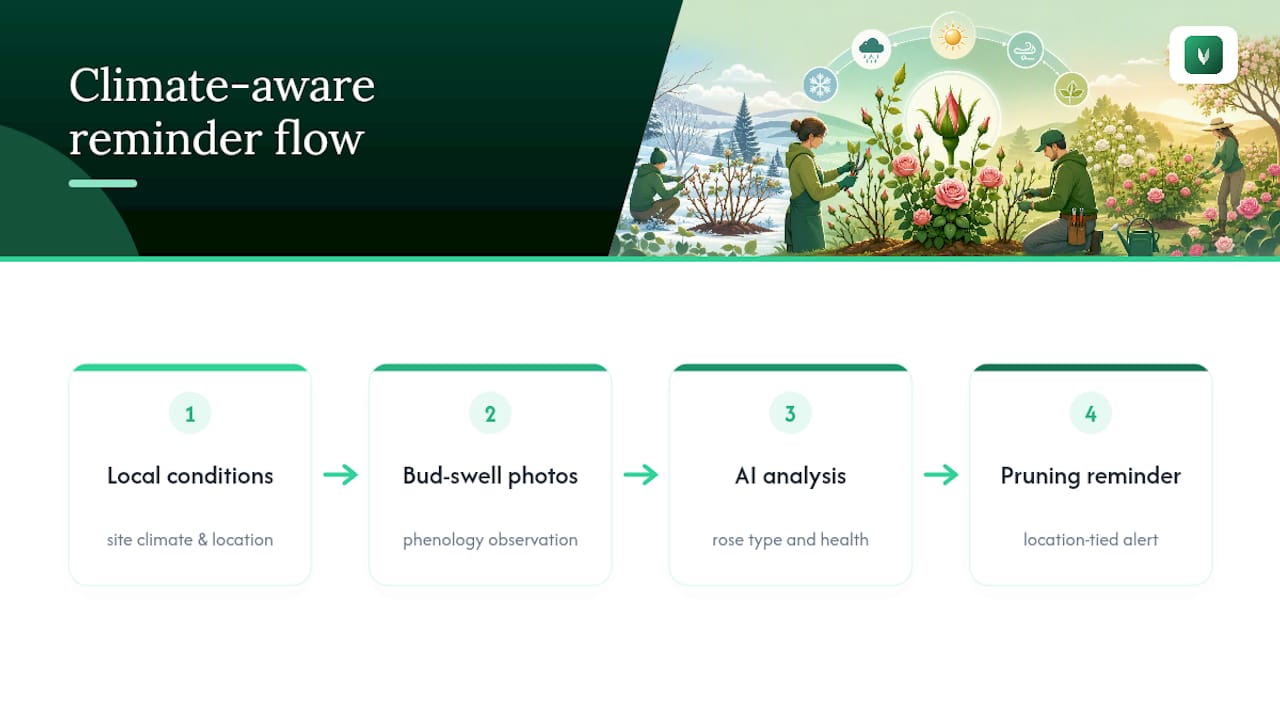
Phenology cues like bud swell are simple in theory but easy to misjudge in practice, especially for a gardener pruning their first hybrid tea. Photo-based plant identification can confirm exactly which rose type you’re working with before you decide how hard to cut, and a health diagnosis feature that flags canker or black spot on a cane photo takes some of the guesswork out of the three D’s.
Reminders tied to bud-swell conditions in your specific location, rather than a fixed date, fit the phenology-first approach extension offices already recommend. It’s a way to bring that same climate-aware timing to a phone.
Our Take: Stop Treating Rose Pruning Like a Rulebook
The conventional advice on rose pruning treats it like a math problem: cut here, at this angle, on this date. That framing misses the actual skill involved, which is reading the plant in front of you. Bud swell varies by weeks even within the same zip code depending on microclimate, sun exposure, and the particular rose variety, and no calendar accounts for that.
The bigger failure in most home gardens isn’t bad technique on the cuts themselves; it’s timidity. Gardeners leave three-year-old unproductive canes in place because removing that much wood feels destructive. It isn’t. A healthy rose tolerates aggressive correction far better than it tolerates neglect, and one underwhelming bloom season is a small price for a plant that’s actually structured to thrive for the next five.
If you take one thing from this guide, prioritize the three D’s over everything else, every single time you pick up a pruner. Get that habit right, and the type-specific rules become adjustments at the margins rather than decisions you have to relearn every spring.
— Dan
A Smarter Way to Time Your Next Pruning Session
Some apps give you phenology-based timing without asking you to track forsythia blooms or guess at your zone’s typical window. Snap a photo of your rose and an app may identify the type, then build a care calendar around your actual climate and soil rather than a generic date.

Some health diagnosis features can do double duty during pruning season by helping flag canker, black spot, or dieback before you decide what to cut. This can be useful for spotting the three D’s on a bush if you’re not fully confident reading yet, and may track recovery afterward to see whether corrective cuts worked. Beyond roses, the plant care catalog covers thousands of species if you’re managing a mixed bed. Start with a free scan on the Viridia app and see what your own roses have been trying to tell you.