Pinch Suckers Under 2 Inches: Tomato Pruning for Home Gardeners
If you grow indeterminate tomatoes, prune suckers early and often. If you grow determinate types, mostly leave them be. Remove suckers while they’re under 2 inches long, prune on dry mornings, and if you’re training two leaders, always leave the sucker just below the first flower cluster. That one distinction, indeterminate versus determinate, decides almost everything else about your pruning routine.
TL;DR:
- Pruning suckers on indeterminate tomato varieties helps manage plant size and focuses energy on larger fruit, while on determinate types, it can reduce overall yield.
- Remove suckers when they are under 2 inches long and only do so on dry mornings to prevent disease spread, sanitizing tools between each plant.
- Pinch small suckers with fingers or cut larger ones with sanitized shears, leaving a small portion if the sucker already has flowers or fruit to avoid waste.
- Pruning around four weeks before the first expected frost concentrates plant energy on ripening existing fruit and limits new flower formation.
- Over-pruning or damaging the main growth point, skipping sanitation, or removing fruit-bearing suckers are common mistakes that diminish tomato yield.
Table of Contents
- What Is a Tomato Sucker, and Does Your Variety Even Need Pruning?
- When Should You Start Pruning, and How Often Should You Check?
- How Do You Actually Remove a Tomato Sucker?
- Bigger Fruit or More Fruit: What Pruning Actually Trades Off
- The Pruning Mistakes That Cost Gardeners the Most Fruit
- My Own Weekly Routine for Keeping Suckers in Check
- Let Viridia Handle the Guesswork Between Garden Visits
- Where to Go for Diagrams and Deeper Reading
- Sources
- FAQ
What Is a Tomato Sucker, and Does Your Variety Even Need Pruning?
A sucker is the small shoot that grows in the crotch where a leaf branch meets the main stem, called the leaf axil. Left alone, that shoot becomes a full second stem with its own leaves, flowers, and fruit. Look closely at any young tomato plant and you’ll see them forming in the V-shaped joint between stem and branch, usually starting when the plant is still under a foot tall.
Whether you should remove them depends entirely on what kind of tomato you’re growing.
- Indeterminate varieties (most cherry tomatoes, Brandywine, Sungold, Big Beef) keep growing and setting fruit all season. Pruning suckers redirects energy and keeps the plant manageable on a stake or trellis.
- Determinate varieties (Roma, many paste tomatoes, some bush types) grow to a set size, flower in a short window, and stop. Removing suckers on determinate plants can actually cut your total yield, because you’re stripping away the stems that were going to produce fruit anyway.
There’s a middle case worth knowing: if a determinate plant is unusually dense or its lowest suckers are sprawling on damp soil, selectively removing just those low, ground-touching shoots reduces disease risk without hurting yield. That’s targeted cleanup, not routine pruning.
When Should You Start Pruning, and How Often Should You Check?
Timing matters almost as much as technique. Start too early and you stress a plant that hasn’t established roots yet. Wait too long and you’re cutting thick, woody suckers that leave bigger wounds.
- Begin once plants reach 1 to 2 feet tall, typically after the first flower clusters have formed. University of Vermont Extension recommends this window because the plant has enough structure to handle it without setting back growth.
- Check every 3 to 7 days during peak growing season. Suckers can go from unnoticeable to a foot long in under a week once summer heat kicks in.
- Remove suckers while they’re still small, under 2 inches, whenever you can catch them at that stage. Small suckers snap off clean and heal fast; big ones don’t.
- Prune on dry mornings. Wet foliage spreads bacterial and fungal pathogens far more easily than dry leaves do, so skip pruning right after rain or heavy dew.
- About four weeks before your first expected frost, consider topping the plant by pinching out the growing tip. That stops new flowers from forming and pushes the plant’s energy into ripening the fruit already on the vine instead of starting fruit that won’t mature in time.
Missing a week here or there isn’t a disaster. But a two-week gap during July heat usually means you’re removing suckers the size of your thumb instead of your fingertip.
How Do You Actually Remove a Tomato Sucker?
Technique changes with size. A sucker you caught early takes seconds; one you missed for two weeks takes more care.
For small suckers (under 2 inches): Pinch between your thumb and forefinger, right at the base where it meets the main stem, and snap it sideways. A clean snap leaves a small, dry wound that closes quickly. No tool needed.
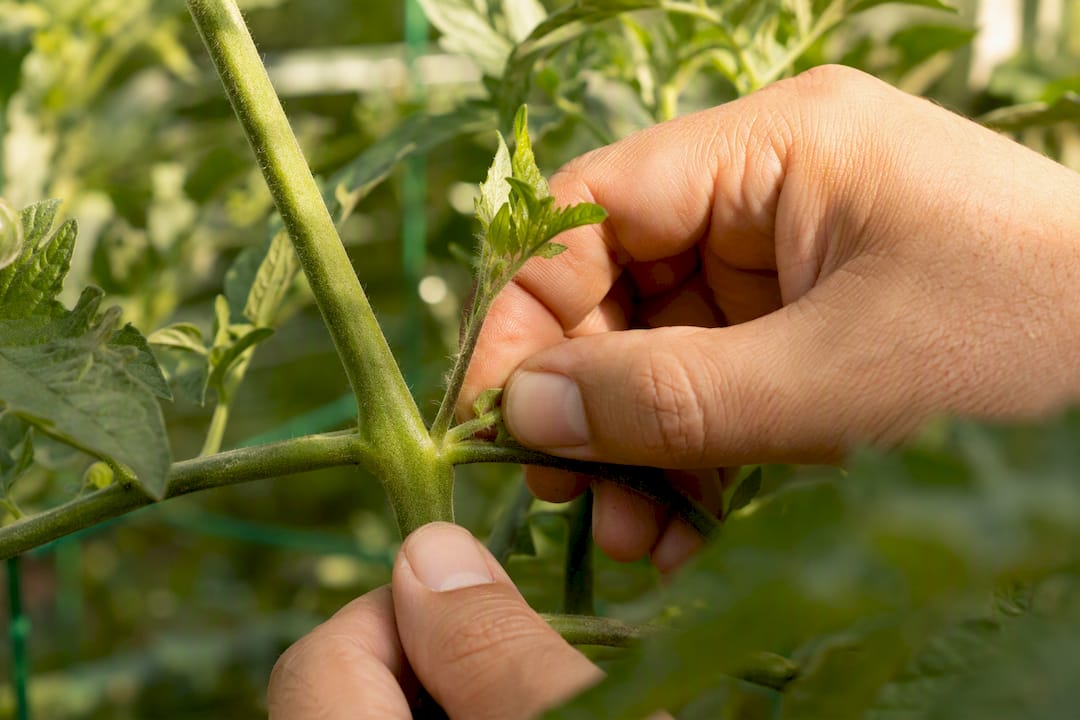
For larger suckers you can’t pinch cleanly: Switch to sharp, sanitized pruning shears or snips. Cut close to the stem but don’t gouge into the main stalk itself, a clean angled cut heals faster than a ragged one.
For big, thick suckers already several inches long: Use Missouri pruning instead of removing the whole thing. Pinch out just the growing tip of the sucker and leave one or two leaves behind. This preserves leaf area for photosynthesis and creates a much smaller wound than cutting the sucker off at the base, which matters a lot if that sucker got away from you while you were on vacation.
Sanitize between every plant. Wipe your fingers or shears with 70% isopropyl alcohol and hold contact for at least 30 seconds before moving to the next plant. A quick soap and water rinse is the bare minimum if alcohol isn’t handy. Tomatoes are notoriously susceptible to bacterial diseases that spread on tool blades, and one infected plant can contaminate your whole row through a single unwashed pair of shears.
- Pinch suckers under 2 inches with clean fingers.
- Cut larger suckers with sanitized shears, angled, not flush against the stem.
- Use Missouri pruning on woody suckers to limit wound size.
- Sanitize hands and tools between every single plant, not just at the end of the session.
Pro Tip: If a sucker already has small flowers or tiny fruit on it, leave it. The plant has already invested resources into that growth, and removing it wastes more than it saves unless overcrowding or disease forces your hand.
Bigger Fruit or More Fruit: What Pruning Actually Trades Off
Pruning is an energy allocation decision, not a universal improvement. Every sucker you remove sends the sugars that shoot would have used toward the fruit already growing on your main stems instead.
That trade cuts both ways:
- Pruned, staked plants tend to produce larger fruit and ripen it 2 to 3 weeks earlier than sprawling, unpruned plants, because energy concentrates in fewer fruit clusters.
- Leaving suckers alone gives you more total tomatoes, just smaller ones, and a bushier plant that needs sturdier staking or caging to hold the extra weight.
- Better airflow from pruning reduces foliar disease, since leaves dry out faster after rain or watering. That’s a real advantage in humid climates prone to blight.
- Over-pruning in hot regions raises sunscald risk. Strip away too much leaf canopy and developing fruit gets direct sun exposure it isn’t built for, leading to pale, leathery patches on the shoulders of the fruit.
If you want a middle path, the two-leader method splits the difference: let one sucker below the lowest flower cluster grow into a second main stem, then prune everything else. You get more fruit than strict single-stem pruning without the tangled mess of leaving every sucker in place.
The Pruning Mistakes That Cost Gardeners the Most Fruit
The single most common mistake is pinching the apical tip, the very top growing point, by accident while going after suckers nearby. Do that and you’ve stopped that stem from growing taller for the rest of the season. Only top a plant on purpose, and only late in the season.
A few other patterns show up constantly in home gardens:
- Cutting a large sucker flush against the main stem instead of using Missouri pruning, which leaves an oversized wound that invites infection.
- Stripping too much lower foliage in the name of “cleaning up,” which exposes ripening fruit to sunscald and stresses the plant.
- Skipping sanitation between plants, then wondering why blight spread down the whole row within a week.
- Removing a sucker that already has flowers or fruit on it, sacrificing fruit that was nearly ready to size up.
If you do spot disease symptoms after pruning, wet, dark lesions or sudden wilting, isolate your tools immediately, sterilize with alcohol before touching another plant, and hold off on further pruning until the outbreak is under control.
My Own Weekly Routine for Keeping Suckers in Check
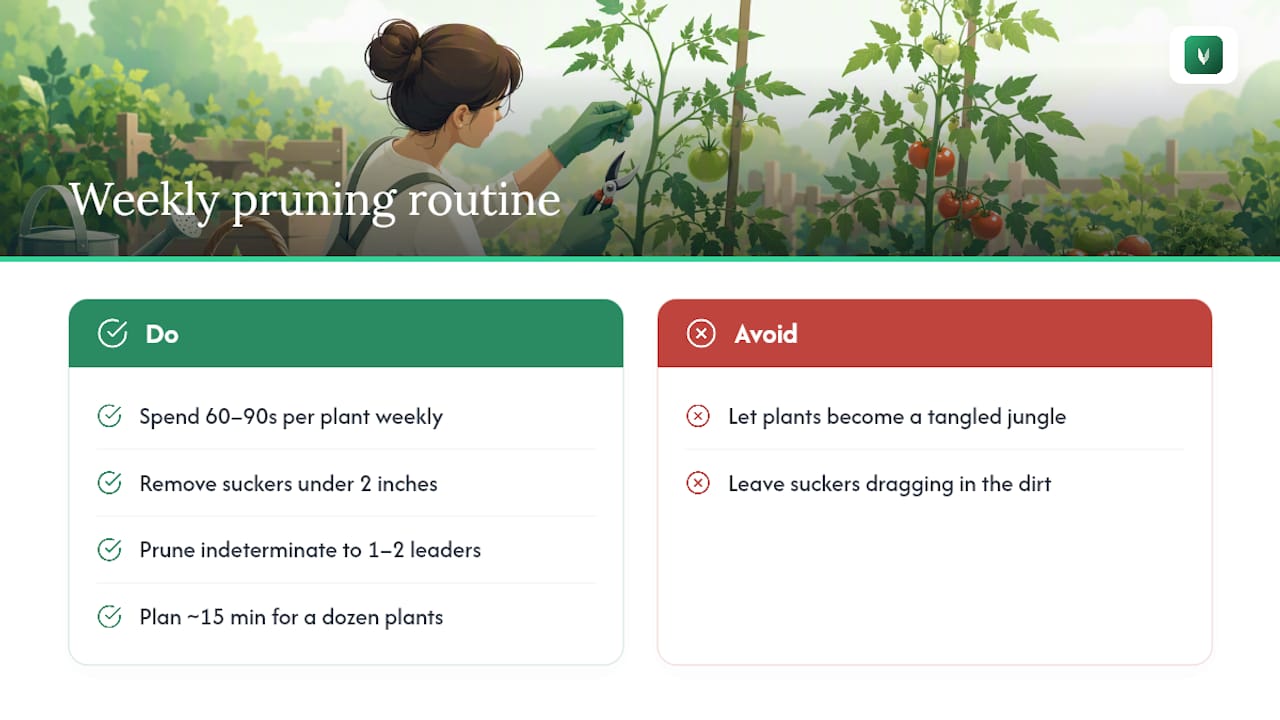
Every plant gets 60 to 90 seconds during a Sunday walk-through: eyes down the main stem, thumb and forefinger ready for anything under 2 inches. Indeterminate plants get pruned to one or two leaders on a stake; determinate plants get left alone unless a sucker is dragging in the dirt.
For a dozen plants, that’s fifteen minutes a week. Compared to the alternative, a tangled jungle that’s harder to water, harder to spray, and harder to harvest, it’s time well spent for anyone growing more than a plant or two.
— Dan
Let Viridia Handle the Guesswork Between Garden Visits
An AI garden assistant app can help identify whether a shoot is a sucker, a flower truss, or something else entirely, and indicate if the variety might benefit from pruning.

Because Viridia already knows your plant’s growth stage and your local climate, it can send pruning reminders timed for when suckers are still small and easy to snap off, rather than after they’ve turned into thumb-thick stems. Pair that with the app’s garden journal, where you log each pruning session and track how your plants respond, and you get a record of what actually worked in your specific garden last season instead of relying on memory. It’s not a replacement for getting your hands on the plant. It’s the nudge that gets you out there before the sucker gets away from you. Open the Viridia app and add your tomato plants to start getting timed reminders this season.
Where to Go for Diagrams and Deeper Reading
For visual, step-by-step diagrams of exactly where to pinch, the Wisconsin Horticulture tomato pruning guide and UNH Extension’s fact sheet are two of the clearest illustrated references available.
Sources
- Pruning tomato plants (UNH Extension)
- Tomato pruning (Wisconsin Horticulture)
- How to prune tomato plants (UVM Extension)
- How to clean and disinfect gardening tools and containers (UMN Extension)
- Pruning, training, and supporting tomatoes (CT Agricultural Experiment Station)
FAQ
Should I Cut Side Shoots off Tomato Plants?
Yes, if you’re growing indeterminate varieties, since removing side shoots, or suckers, redirects energy into fewer, larger fruit clusters. Skip routine removal on determinate varieties, since taking suckers off those plants can reduce your total harvest.
What Mistakes Do People Make Most Often When Pruning Tomatoes?
The biggest one is accidentally pinching the main growing tip while reaching for a nearby sucker, which stops that stem’s upward growth for the season. Close behind that: cutting large suckers flush against the stem instead of using Missouri pruning, and skipping tool sanitation between plants.
How Late in the Season Is Too Late to Prune Tomatoes?
About four weeks before your first expected frost is the natural cutoff for major pruning, since that’s when topping the plant makes sense to push energy into ripening existing fruit. Pruning much closer to frost offers little benefit since there isn’t enough growing season left for the plant to use the redirected energy.
Which Branches Should I Actually Cut off a Tomato Plant?
Cut the suckers growing in the leaf axils, the joints between the main stem and side branches, while they’re still under 2 inches long. If you’re training two leaders, leave the one sucker growing just below your lowest flower cluster alone, since that’s the shoot meant to become your second main stem.