15–20 Minutes’ Warning? Home Gardeners: Protect Plants From Hail Fast
If hail is on the way, move potted plants under any hard shelter first, then flip buckets, pots, or laundry baskets over vulnerable beds and weigh them down. Suspend pre-stored hail netting over hoops or stakes rather than laying it flat, and anchor everything against wind. Skip pruning until you see fresh growth start.
TL;DR:
- Hail netting, especially heavy-duty knitted polyethylene, is highly recommended for regions with frequent hail, as it offers durable, long-term protection against larger hailstones.
- Using proper frames such as hoops, peaked roofs, or tensioned tension netting helps keep the covers taut and prevents sagging that can crush plants during a storm.
- Quick protection methods include moving containers under shelters and covering non-movable plants with weighted-up buckets, baskets, or tarps secured tightly against wind.
- Once hail passes, assess plants carefully, prune only fully broken foliage, and support recovery with consistent watering and feeding to maximize plant resilience.
- Digital tools like weather alerts and plant identification apps can assist gardeners in deploying protection promptly and in managing post-storm recovery more effectively.
Table of Contents
- How Do You Protect Plants From Hail on Short Notice?
- Is Hail Netting Worth the Investment?
- What Materials Actually Work for DIY Covers?
- Can Garden Layout Reduce Hail Damage?
- How Do You Help Plants Recover After Hail?
- Why Localized Care Beats Generic Advice After a Storm
- Let Viridia Handle the Guesswork Between Storms
- Where to Read the Original Guidance
- Sources
- FAQ
How Do You Protect Plants From Hail on Short Notice?
Hail rarely gives more than 15 to 20 minutes of warning once a severe thunderstorm watch flips to a warning, so your first moves have to be automatic. Start with the plants you can’t replace easily.
- Move containers first. Drag pots under porches, garages, carports, or deep eaves. A patio table flipped on its side or left standing can shelter a surprising number of pots underneath in one trip.
- Cover what you can’t move. Overturned buckets, laundry baskets, and large pots work well for individual plants or seedlings, especially when you weigh them down with a brick or rock so wind doesn’t send them tumbling. This is one of the most common short-notice tactics home gardeners rely on, according to SDSU Extension.
- Prop, don’t drape. Set a tomato cage, a few stakes, or a scrap board over the plant before you throw a blanket or tarp on top. Fabric resting directly on foliage will bruise stems just as badly as hail once wet material starts pressing down.
- Lock everything down. Clip or tie tarps and blankets with rope, spring clamps, or clothespins, and close any gaps where wind can get underneath and rip the cover free.
Keep an emergency kit near the door during hail season so you’re not hunting for supplies while the sky turns green: a couple of tarps, bricks or sandbags, clips, rope, spare buckets, a rolled length of hail netting, and gloves for handling wet, torn covers afterward.
Pro Tip: Store your netting pre-cut to the size of your main beds. Digging through a shed for scissors during a hail warning costs you the minutes you actually need.
Is Hail Netting Worth the Investment?
For anyone gardening in a region that sees hail more than once a season, yes. Hail netting is the most durable fix available to home gardeners, and it’s the one piece of equipment that saves you from doing emergency cover drills every single storm.
Hail cloth comes in a few grades. Light mesh handles pea-sized hail and mostly protects against wind and sun scald. Standard grade covers marble-sized stones, which is what most home gardens actually face. Heavy-duty knitted polyethylene, the kind Sandia Seed recommends for golf-ball-sized hail, costs more but lets 85 to 90% of light through while still deflecting real impact.
Building a frame to hold it doesn’t need to be complicated:
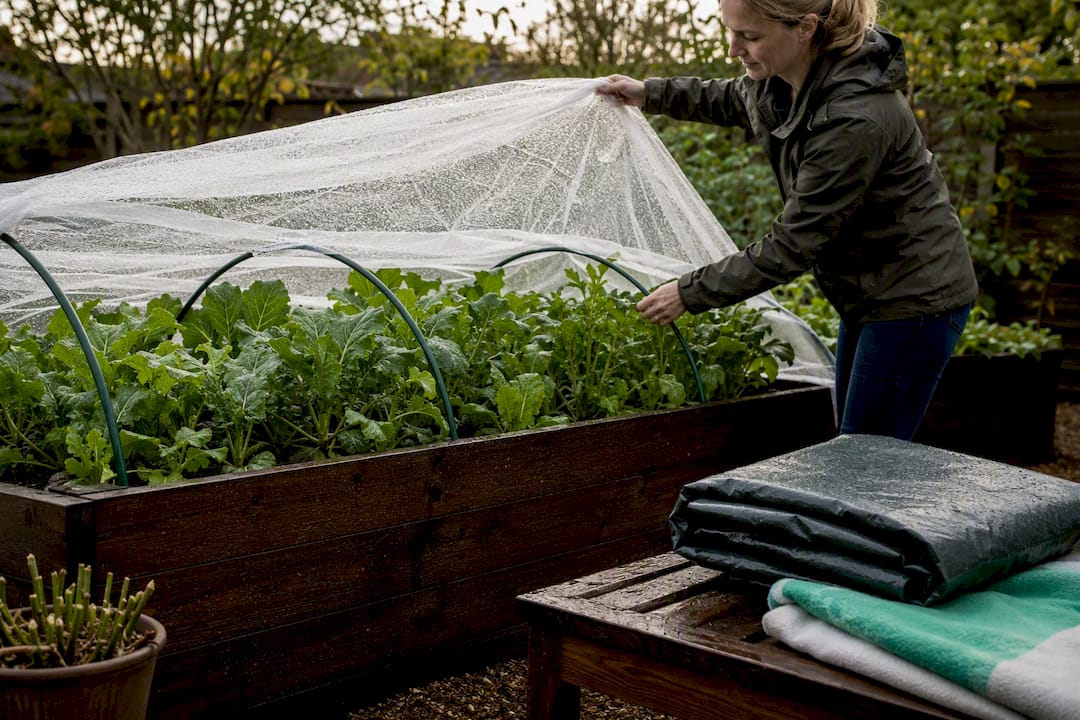
- Hoop frames: bend metal conduit into arches over a raised bed. Conduit costs more up front than PVC but won’t sag, crack in UV light, or flatten out under repeated wind and hail.
- A-frame or peaked roofs: for walk-in structures, set posts every 8 to 10 feet and pitch the roof so hail sheds off instead of pooling on flat netting.
- Tension matters: pull netting taut and secure every edge. A loose net sags under accumulated hail and can crush the exact stems it’s meant to protect.
Whatever frame you choose, leave an air gap between the netting and the plant canopy. Barnyards & Backyards notes that gardeners in hail-prone regions often leave insect netting up all season for exactly this reason: once it’s tensioned and anchored, there’s no daily setup, just instant protection whenever a storm rolls through. Check anchors each spring, patch small tears before they spread, and expect a quality knitted net to last several seasons if you store it out of direct winter sun.
What Materials Actually Work for DIY Covers?
The right material depends on how long the cover needs to last and how much wind it has to survive.
- Bucket cloches: an upturned 5-gallon bucket over a seedling, held down with a rock on top or a stake through the handle into the soil.
- Laundry basket row covers: flip a basket over a short row of lettuce or herbs; the holes let light and rain through even while it’s deflecting hail.
- Tomato-cage socks: slip a lightweight sheet or row cover fabric over an inverted tomato cage set atop a taller plant, giving you an instant suspended dome without touching the leaves.
- PVC hoops: cheap and fast for a single storm or a season of light protection, but they flex under weight and wind. SDSU Extension suggests reinforcing PVC with a straight crossbar or center rod if you’re relying on it more than once or twice.
- Metal conduit or wood: heavier to build but holds tension and survives repeated storms without warping, which matters if your region gets hail more than once a summer.
Anchoring is where most emergency covers fail. Stakes driven at an angle hold tarps better than straight-down stakes. Bricks and sandbags beat loose rocks, which wind can roll away. U-bolts secure netting to metal frames permanently, and bungee cords give you fast, adjustable tension on temporary setups.
Pro Tip: Never let a tarp or blanket rest flush against wet leaves overnight. GrowOrganic’s growers report that trapped moisture under solid covers invites fungal problems faster than the hail damage would have. GrowOrganic recommends pulling solid covers off as soon as the storm passes and switching to breathable netting for anything left standing longer.
Can Garden Layout Reduce Hail Damage?
Design decisions made months before a storm often matter more than anything you do in the 15 minutes you get once one arrives.
- Cluster your soft targets. Group tomatoes, peppers, and tender annuals into one or two beds instead of scattering them across the yard, so one tarp or netting run covers everything at once.
- Pick tougher varieties where you can. Compact, sturdy-stemmed cultivars shrug off hits that snap leggy, top-heavy plants, and staggering planting dates spreads your risk across the season instead of exposing everything on the same vulnerable week.
- Use hedges and shrubs as buffers. A dense hedge or row of shrubs on the storm-facing side of the garden knocks down wind speed and intercepts some hail before it reaches smaller plants behind it.
- Stake early, not during the emergency. Sandia Seed recommends staking or caging top-heavy plants weeks before hail season peaks, since a plant already tied to a support is far less likely to snap at the base when wind and hail hit together.
Keep vulnerable potted plants near the exact spot you’ll drag them to under stress. A pot that has to travel 40 feet to reach shelter is a pot that gets left behind when hail starts in earnest.
How Do You Help Plants Recover After Hail?
- Walk the garden and assess before touching anything. Note which leaves are shredded versus just bruised, and count how much functional leaf area each plant has left.
- Prune only what’s fully broken. Leave torn but attached foliage in place. SDSU Extension points out that even shredded leaves keep photosynthesizing, so cutting them off too early just slows recovery.
- Clear debris promptly. Shredded leaves and broken stems left on the soil invite rot and disease; clearing them, staking survivors upright, and improving airflow between plants all lower that risk.
- Wait for new growth before a second pruning pass. Once you see fresh leaves emerging, go back and cut away the dead material selectively.
- Feed and water consistently. A diluted kelp or fish emulsion feed supports regrowth, and steady watering keeps stressed plants from compounding hail damage with drought stress. Watch for fungal spotting on damaged tissue and treat with fungicide if it appears.
Most plants that keep even a third of their leaf area recover fully within a few weeks. Total defoliation is a different story, and that’s where patience matters more than intervention.
Why Localized Care Beats Generic Advice After a Storm
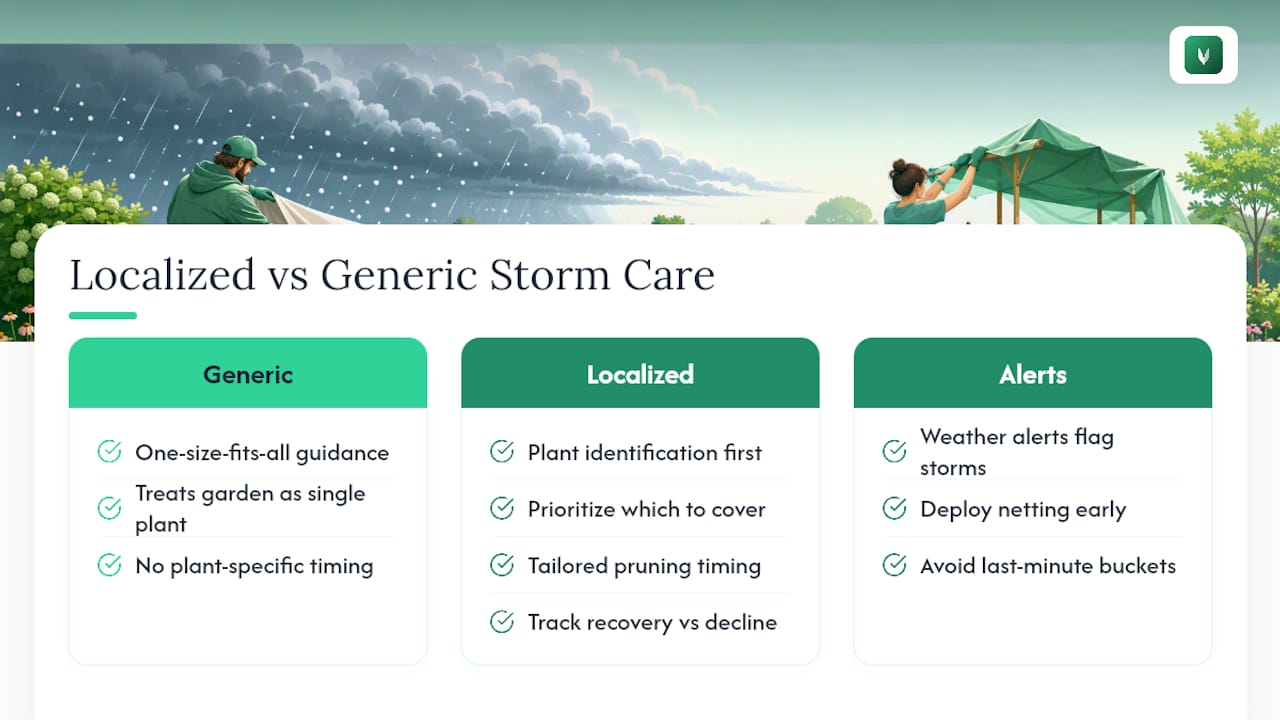
Every hail guide tells you to “assess damage and prune when new growth appears,” but new growth looks different on a pepper plant than it does on a rose bush, and the timeline is different again for a young hydrangea. That’s the gap most hail advice leaves open: it treats the garden as one plant instead of dozens.
Plant identification and localized care tips can help you determine what to cover first when you have only a few minutes. Weather-based alerts may flag a storm early enough to deploy netting instead of scrambling for buckets. After the hail passes, health diagnosis features can track whether a plant is recovering or declining, assisting decisions about pruning timing.
— Dan
Let Viridia Handle the Guesswork Between Storms
Digital gardening assistants can help at every step in this guide: photos identify plants, weather alerts signal when to act, and recovery tracking shows if aftercare is effective. This combination is useful for gardeners managing many species with different tolerances, as it helps prioritize which plants to protect.

The free tier covers plant identification and basic alerts if you want to test it before a storm season starts. Viridia Premium runs $48 per year and unlocks the full care-plan and recovery-tracking tools, or you can join as a Founding member for a one-time $99 payment. If you’ve got a hydrangea or another storm-sensitive plant in the ground right now, pull up its care profile and set alerts before the next front rolls in.
Where to Read the Original Guidance
For the full extension research behind these methods, read SDSU Extension’s hail damage guide, the UWyo Barnyards & Backyards writeup, Sandia Seed’s netting breakdown, and GrowOrganic’s cover comparison. Your local university extension office can also give advice tuned to your specific hail season and soil.
Sources
- Preventing and Dealing with Hail Damage in the Garden — SDSU Extension
- What the hail? — UWyo Barnyards & Backyards
- Hail protection for garden — Sandia Seed (blog)
- Preventing hail damage — GrowOrganic
FAQ
What Is the Fastest Way to Protect Plants From Hail?
Move potted plants under a porch or garage, then cover ground plants with overturned buckets, baskets, or pots weighted down against wind. If you have hail netting already mounted on hoops, that beats scrambling for makeshift covers every time.
Does Hail Netting Block Sunlight or Rain?
Quality knitted hail netting lets roughly 85 to 90% of light through and allows rain to pass, so plants underneath keep growing normally between storms. Solid tarps block both and should only stay on during the storm itself.
Should I Prune Hail-Damaged Plants Right Away?
No. SDSU Extension advises leaving torn but attached foliage in place because it still photosynthesizes, and pruning too early slows recovery. Wait until new growth appears, then remove only fully broken stems.
Can Viridia Help Me Prepare for Hail Season?
Viridia’s weather-based alerts flag storms early, and its plant identification tool helps you figure out which species in your yard are most vulnerable. The free tier covers basic alerts and identification, while Premium at $48 per year adds recovery tracking to monitor how plants heal afterward.
How Do I Anchor a Tarp or Cover in High Wind?
Angled stakes hold better than straight ones, bricks and sandbags outperform loose rocks, and bungee cords give quick, adjustable tension on temporary covers. Close any gaps at the edges, since wind getting underneath a tarp is what usually tears it loose.