
Treat Powdery Mildew Early: Reapply Every 7–10 Days for Home Gardeners

If you spot the telltale white or gray powder on your plants, act fast: remove the worst-affected leaves, thin out crowded growth to boost airflow, and apply a proven contact treatment like an EPA-registered potassium bicarbonate product or horticultural oil. These options work best early, since fungicides mostly protect healthy tissue rather than cure damaged leaves, and pantry remedies tend to lag behind labeled products in reliability.
TL;DR:
- Early detection through weekly scouting of leaves, especially undersides and stem joints, is crucial for effective powdery mildew control.
- Preventive measures like resistant varieties, proper spacing, and avoiding overhead watering are more effective than fungicides in the long term.
- Potassium bicarbonate and horticultural oils are proven to prevent and slow mildew spread when applied early and with complete leaf coverage.
- Home remedies such as milk and baking soda sprays are unpredictable and should only be used on plants of low value or minimal infection.
- Fungicides are protectants, not cures, requiring timely reapplications and rotation between different modes of action to prevent resistance.
Table of Contents
- What powdery mildew is and what to expect
- Catching it early: how and when to scout your plants
- Prevention first: cultural habits that keep powdery mildew away
- Treatment options that actually work
- Home remedies and their real limits
- Getting the application right without hurting your plants
- Deciding whether to salvage, treat, or remove a plant
- How a garden app can help you time treatment right
- What the guides get wrong about powdery mildew
- See problems sooner with Viridia
- Sources
- FAQ
What powdery mildew is and what to expect
Powdery mildew shows up as a white or grayish, flour-like coating on leaves, stems, and sometimes flowers. It affects a huge range of plants, from roses and squash to lilacs and cucumbers, and it thrives without needing standing water on the leaf surface. The fungus feeds through tiny structures called haustoria that tap into plant cells just below the surface, and it spreads through airborne spores that travel easily between plants and even across yards.
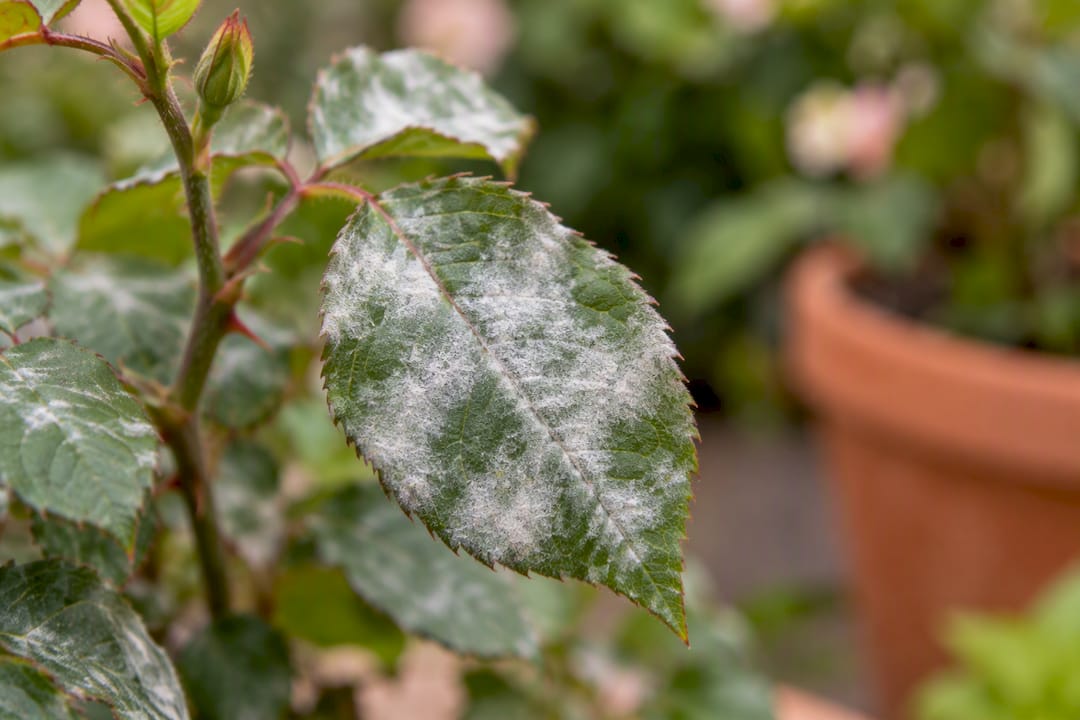
Because the infection sits on and just under the leaf surface, treating it does not repair the tissue that is already damaged. Leaves that are heavily coated will stay scarred or discolored for the rest of the season. The good news is that new growth can come in clean if you lower the overall disease pressure around the plant.
Here is what typically happens as an infection progresses:
- Small white spots appear on upper leaf surfaces, often on the oldest or most shaded leaves first.
- Spots expand and merge into a dusty coating that can cover entire leaves, stems, and buds.
- Heavily infected leaves may yellow, curl, or drop, and flower and fruit production can decline.
- New leaves that emerge after treatment can stay healthy if humidity and crowding are addressed.
Catching it early: how and when to scout your plants
Waiting until powdery mildew is obvious across a plant is the most common mistake home gardeners make. By the time the coating is easy to see from a few feet away, an infection may already be established on many leaves, and protectant sprays lose most of their value. Scouting weekly, especially in the exact stretch of the season when your plants are most susceptible, gives you the window to act early.
- Walk your garden once a week and check mature, older leaves first since they tend to show symptoms sooner.
- Turn a few leaves over to check the undersides, and look closely at buds and stem joints where mildew often hides.
- Note any single leaf spot you find. That first spot is your signal, not something to wait out.
- Mark or photograph affected plants so you can track whether the problem is spreading or staying contained.
- Recheck marked plants every few days until you are confident the situation is stable.
Scouting weekly and starting treatment at the first sign of infection improves control substantially, according to guidance on powdery mildew of cucurbits from UMN Extension, which notes that once many leaves are infected, control becomes far more difficult.
Pro Tip: Keep a simple garden journal or phone note with the date and location of the first spot you find. It makes the next season’s prevention plan much easier to prepare.
Prevention first: cultural habits that keep powdery mildew away
Spraying is a backup plan. The real control happens earlier, in how you plant, space, and care for your garden throughout the season. According to guidance on powdery mildew on fruits and berries from UC IPM, prevention through resistant varieties, proper spacing, sanitation, and avoiding overhead irrigation is the most effective way to manage this disease, ahead of any fungicide.
- Choose resistant or tolerant varieties when you buy seeds or transplants. Many rose, cucumber, and squash cultivars are bred specifically for mildew resistance, and it is listed right on the tag or seed packet.
- Space plants so air moves freely between them. Crowded plantings trap the humid, still air that mildew spores love.
- Prune to open up dense canopies, especially on roses, lilacs, and vining crops where interior leaves rarely dry out.
- Water at the base of the plant, ideally in the morning, and avoid overhead sprinklers at night, which leave foliage damp for hours.
- Go easy on nitrogen fertilizer. Lush, fast, tender growth is exactly what powdery mildew prefers, so a balanced feeding schedule beats heavy nitrogen boosts.
- Clean up fallen leaves and prune out infected stems at the end of the season, since the fungus can overwinter on plant debris.
These habits do double duty because they also reduce the humid, crowded conditions that let other fungal diseases take hold. Warm days paired with cool, humid nights are the classic setup for an outbreak, and shaded, poorly ventilated corners of a garden tend to be repeat offenders year after year.
Pro Tip: If one spot in your yard gets powdery mildew every summer, treat it as a sign to redesign that bed rather than just spraying it again.
Treatment options that actually work
Once mildew shows up, a handful of low-toxicity materials have real backing from extension research and label data. None of them work like a cure. All of them work best as protectants applied early and with full leaf coverage.
- Potassium bicarbonate: an EPA-registered contact fungicide that disrupts fungal cells on contact. Products like BI-CARB formulations are labeled for roses, vegetables, fruit trees, and many ornamentals, and label rates and reapplication instructions must be followed exactly, per EPA registration documents for these products.
- Horticultural oils and neem oil: useful because they have some eradicant activity against existing mildew, not just prevention. Never apply oil when temperatures are high or plants are drought stressed, since both raise the risk of leaf burn.
- Sulfur: works best as a preventive spray rather than a rescue treatment, and some ornamental cultivars are sensitive to it. Avoid using sulfur in hot weather for the same phytotoxicity reasons that apply to oils.
- Biological fungicides (Bacillus subtilis): generally weaker against established mildew than oils or sulfur, but useful as a low-risk preventive layer in an overall program.
- Hydrogen peroxide: a method some gardeners use as a contact treatment, commonly diluted from standard 3% household hydrogen peroxide, though extension sources still favor registered, labeled products for consistent results.
Potassium bicarbonate products can act as an eradicant on existing powdery mildew when applied with thorough coverage, according to EPA label documentation, though some formulations can injure already-infected tissue if applied too aggressively.
For roses, potassium bicarbonate and sulfur are common choices. For vegetables like squash and cucumbers, oils and potassium bicarbonate tend to fit better into a harvest schedule. For woody ornamentals, sulfur applied early in the season often does the most good.
Home remedies and their real limits
Milk and baking soda sprays are popular because they are cheap and already in the kitchen, and gardeners report mixed but sometimes real results with both. That said, neither has the consistency or regulatory backing of labeled fungicides, and it is worth knowing the difference before relying on them for a plant you care about.
- Milk sprays: typically diluted around one part milk to two or three parts water and sprayed on affected foliage, with anecdotal reports of reducing mildew spread, though results vary widely and there is no standardized labeled product.
- Baking soda (sodium bicarbonate): chemically different from potassium bicarbonate, and repeated use of baking soda recipes can build up sodium in soil and cause leaf burn on sensitive plants.
- Potassium bicarbonate versus baking soda: potassium bicarbonate is the EPA-registered, tested option, while household baking soda lacks the same consistent efficacy, according to guidance on powdery mildew in the flower garden from UMN Extension.
- When DIY is reasonable: light, cosmetic infections on plants you are not depending on for harvest or show, where a milk or baking soda spray is low risk if it fails.
- When to skip DIY: roses you are showing, vegetables close to harvest, or any plant with heavy infection, where a registered product gives you a much better shot at actually stopping the spread.
Extension experts note that home remedies often lack regulatory approval and consistent efficacy, and recommend testing any new spray on a few leaves first, according to UMN Extension guidance on flowers and vining vegetables.
Getting the application right without hurting your plants
Even a good product fails if it goes on wrong. Fungicides for powdery mildew are contact treatments, which means they only protect the leaf surface they actually touch.
- Start spraying at the very first spot you find, not after the infection has spread across the plant.
- Cover both the tops and undersides of every leaf, since mildew spores land and germinate on both surfaces.
- Reapply roughly every 7 to 10 days as a general rule, but always follow the specific product label, and shorten the interval in cool, damp weather when disease pressure is higher.
- Rotate between different modes of action rather than using the same product repeatedly, since repeated use of one chemistry encourages resistant mildew populations, a concern outlined by Clemson HGIC’s powdery mildew guidance.
- Wear the protective gear the label calls for, and never spray above about 90°F or mix oil and sulfur within a two-week window of each other.
Pro Tip: Set a recurring reminder for your spray schedule instead of relying on memory. Missed intervals are one of the most common reasons treatments seem to “stop working.”
Deciding whether to salvage, treat, or remove a plant
Leaves that are already coated and damaged by powdery mildew will not turn green and healthy again, no matter what you spray. What you are protecting with treatment is the growth that has not been infected yet, which is why timing matters so much more than the product you choose.
- Keep treating and pruning if the plant is otherwise healthy and only part of it shows infection, since new growth can come in clean.
- Consider removing the plant if infection is severe, if it is a vining vegetable near the end of its productive season anyway, or if the same plant fails to mildew year after year despite good care.
- Bag or trash heavily infected debris rather than composting it in a home pile, since backyard compost often does not get hot enough to kill fungal spores reliably.
- Clean up all fallen leaves and prune out infected canes at the end of the season to cut down on spores that overwinter and restart the cycle next year.
How a garden app can help you time treatment right
Timing is the hardest part of powdery mildew control, and it is where most home gardeners lose the fight. Photo-based plant identification and health diagnosis features in some garden apps can let you catch that first leaf spot and get a read on what you are dealing with without guessing from memory or old photos online.
Some garden apps tailor care tips to your specific climate and soil conditions, so the treatment suggestions can account for the humidity and temperature patterns that influence mildew risk. Reminders can help you stick to the reapplication windows that make contact treatments effective, and recovery tracking features can let you see, plant by plant, whether a given spray actually slowed the spread before you commit to using it again.
What the guides get wrong about powdery mildew
Most advice on this topic treats spraying as the main event. It is not. The gardeners who deal with powdery mildew least are the ones who fixed airflow, spacing, and watering habits years ago, and they barely think about fungicides at all.
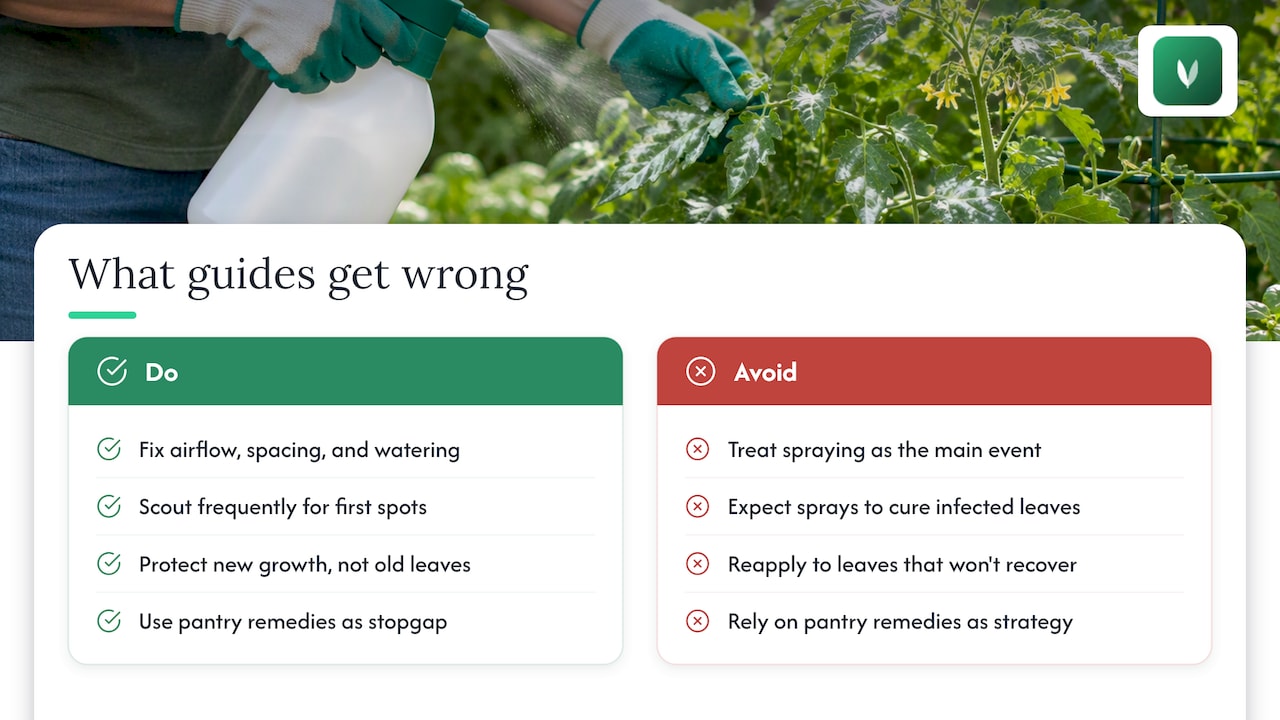
The conventional advice also oversells cures. Sprays are protectants, not rescues, and no product will turn a coated leaf back to solid green. Readers waste time and money reapplying treatments to leaves that were never going to recover, instead of protecting the new growth that actually matters.
If you take one thing from this guide, prioritize scouting over shopping. Finding that first spot before it spreads matters more than which product sits on your shelf. Pantry remedies have a real, if limited, place for low-stakes plants, but treat them as a stopgap, not a strategy, for anything you actually care about keeping.
— Dan
See problems sooner with Viridia
Catching powdery mildew before it spreads starts with actually noticing it, and that is where a lot of home gardens fall behind. Viridia lets you photograph a suspicious leaf and get a plant identification and health read tailored to your own climate and soil, so you are not guessing whether that white haze is mildew or something else entirely.

The free tier gives you a taste of photo-based diagnosis, and Viridia Premium adds expanded treatment reminders and recovery tracking so you can see whether a spray schedule is actually working.
| Plan | Price | Best for |
|---|---|---|
| Free | No published price | Trying photo ID and basic care tips |
| Viridia Premium | $48 per year | Ongoing diagnosis, reminders, and recovery tracking |
| Founding members | $99 one-off | One-time access to premium features long term |
Check your garden’s health and get started at Viridia.
Sources
- Powdery mildew on fruits and berries | UC IPM
- EPA registration / product label excerpt (potassium bicarbonate product)
- Powdery mildew | HGIC Clemson
- Powdery mildew of cucurbits | UMN Extension
FAQ
How to get rid of powdery mildew fast?
Remove the worst-affected leaves right away, improve airflow around the plant, and apply a contact treatment like potassium bicarbonate or horticultural oil to protect the remaining healthy tissue. There is no instant cure for leaves already coated, but catching new spots early and reapplying on schedule slows the spread quickly.
What is the most effective way to get rid of powdery mildew?
Prevention through resistant varieties, good spacing, and sanitation is the most effective long-term strategy, paired with early fungicide application at the first sign of infection, according to UC IPM guidance. Potassium bicarbonate and horticultural oil are reliable contact options once mildew appears.
Can plants recover from powdery mildew?
Leaves that are already coated with mildew stay damaged and will not turn green again, but new growth can come in healthy once you lower disease pressure through pruning, spacing, and treatment. Whole plants generally recover well if only part of the foliage was affected and the underlying growing conditions improve.
Is baking soda or milk better for powdery mildew?
Neither is as reliable as registered products like potassium bicarbonate, and both have real limits: baking soda can cause leaf burn or soil salinity issues with repeated use, while milk sprays produce inconsistent results, according to UMN Extension guidance. Either can be worth trying on a low-stakes plant with a light infection, but a labeled product is the safer bet for anything you value.