Gardeners: Stop Plants Falling Over in 60 Seconds with Simple Fixes
Most falling plants result from common issues such as insufficient light causing weak stems, fungal diseases like damping-off, root health problems due to overwatering, or plants being too top-heavy without support. Squeeze the soil near the stem base and check the stem itself for softness or discoloration right now. Do that first, and most plants and seedlings are still salvageable.
TL;DR:
- Overwatering, poor drainage, and root rot can cause plants to topple, even if above-ground appearance looks healthy, so root inspection is crucial.
- Etiolation from insufficient light prolongs stems and causes plants to flop over, making close light proximity and rotation key preventative measures.
- Damping-off fungi thrive in wet, poorly ventilated soil, leading to seedling collapse at the soil line, making removal and sterilization essential for control.
- Top-heavy growth from excessive nitrogen or lack of mechanical stimulation weakens stems, which can be remedied by early support, proper watering, and balanced fertilization.
- Temperature extremes, pests, and soil compaction also contribute to plant instability, requiring specific environmental, pest control, and soil improvements for long-term stability.
Table of Contents
- Quick Checks: 6 Things To Look At Before You Do Anything Else
- What Actually Causes Plants To Tip Over
- How Do You Diagnose Why Your Plant Fell Over?
- Step-By-Step Fixes For Each Cause
- Building A Routine That Stops This From Happening Again
- When To Stop Trying To Save It
- How AI Diagnosis Shortens The Guesswork
- Does Soil Quality Affect How Well A Plant Stands Up?
- Can Heat Or Cold Stress Make A Plant Fall Over?
- Can Pests Cause A Plant To Fall Over?
- Where To Learn More About Plant Support And Diagnosis
- Rescue Now, Prevent Later
- Sources
Quick Checks: 6 Things To Look At Before You Do Anything Else
Before you repot, stake, or panic, run through this 60 second triage. It tells you which section below to read next.
- Squeeze the soil. Wet and heavy means overwatering; bone dry means the roots may have shrunk away from the pot walls, losing grip.
- Pinch the stem at soil level. Mushy, brown, or pinched thin? That points to damping-off or rot, not a mechanical problem.
- Check the stem length between leaves. Long gaps and pale, sparse foliage mean the plant has been stretching for light, a process called etiolation.
- Look for fuzzy white or gray growth at the base. That is a classic sign of soil-borne fungus, especially in trays of seedlings.
- Lift the plant slightly and look at the roots if it slides out easily. Black, slimy, or foul-smelling roots signal rot; white and firm roots mean the problem is above ground.
- Weigh the pot heaviness and the plant’s top growth. A recently fertilized plant loaded with flowers or fruit can simply be too heavy for its stem, no disease involved.
What Actually Causes Plants To Tip Over
Plants fall over for mechanical reasons, biological ones, or both at once, and the fix is different for each.
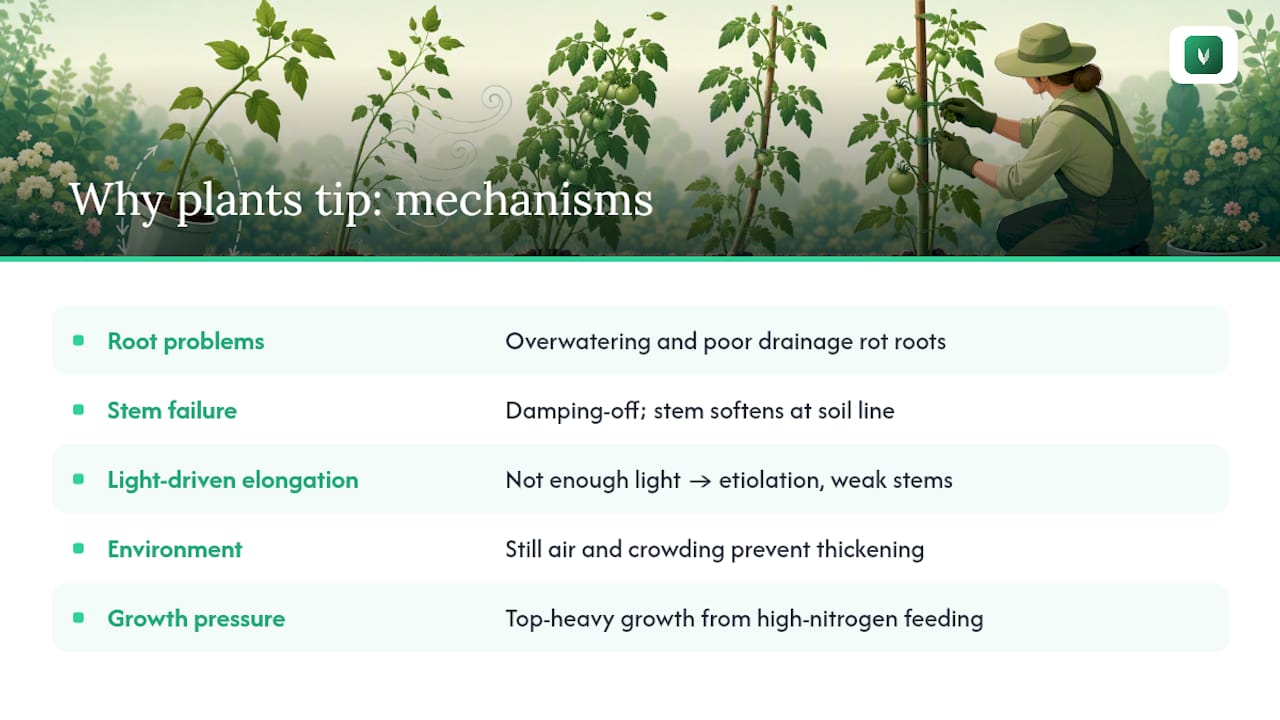
Not enough light is the most common cause in houseplants and indoor seedlings. Starved for light, a plant produces extra auxin, a growth hormone, on its shaded side. That triggers rapid cell elongation, and the stem grows long and thin faster than it can build the cellular density needed to hold itself up. This is etiolation, and it explains why a windowsill seedling can look fine one week and be flopped over the next.
Damping-off is the seedling killer nobody warns you about until it happens. Soil-borne fungi like Pythium and Rhizoctonia thrive in cool, wet, poorly ventilated trays, and they attack right at the soil line. The stem softens, darkens, and the seedling collapses within a day or two, often with fuzzy fungal growth visible at the base.
Overwatering and poor drainage rot the roots that anchor the plant. Once roots suffocate and decay, they simply cannot hold the plant upright, which is why houseplants like snake plants can suddenly topple over even though nothing above ground looks obviously wrong.
Still air matters more than most gardeners realize. Wind and gentle brushing trigger a stress response called thigmomorphogenesis that thickens stems. Seedlings grown in a closed, breezeless room stay thin and floppy because they never get that mechanical trigger.
Crowding forces seedlings to compete for light, so they stretch upward instead of bulking up. And top-heavy growth, especially from high-nitrogen fertilizer, produces lush leaves and heavy blooms on stems that were never built to carry that load. Michigan State University Extension notes that rich soil and heavy nitrogen feeding often create exactly this mismatch, which is why staking large-flowered plants early matters more than it sounds like it should.
How Do You Diagnose Why Your Plant Fell Over?
Work through these checks in order. Each one rules something in or out before you move to the next.
- Assess the light first. Note which direction the plant leans, and whether stems are unusually long with pale, spaced-out leaves. If yes, light is likely a factor even if something else is happening too.
- Do the finger test on soil moisture. Push a finger an inch into the soil. Consistently soggy soil across multiple checks over a few days points toward overwatering.
- Lift the plant and inspect the roots. Firm, white or tan roots mean the root system is healthy and the problem is mechanical or light-related. Mushy, dark, or foul-smelling roots confirm rot.
- Inspect the stem base closely. A pinched, brown, or water-soaked collar at the soil line is damping-off. A thick but weak-looking stem with no discoloration usually means top-heavy growth or lack of mechanical stimulation instead.
- Isolate anything that looks diseased immediately. Damping-off spreads fast through shared trays, so separate affected seedlings before diagnosing the rest.
- Photograph anything ambiguous. A clear photo of the stem base and root ball, sent to a plant identification app or a university extension service, resolves cases where the visual signs overlap.
Step-By-Step Fixes For Each Cause
Once you know the cause, the fix is usually straightforward. Here is what to actually do.
- Fix etiolation by adding light, not just moving the pot. Get the plant within 6 to 12 inches of a grow light for seedlings, or closer to a bright window and rotate the pot a quarter turn every few days so it stops leaning toward one light source. Prune back the weakest stretched growth once new, thicker growth appears near the base.
- Treat damping-off by removing, not treating. Pull any seedling showing softness or fuzz and discard the surrounding soil, since the fungus lives in the medium. Sterilize trays with a diluted bleach solution, start remaining seeds in fresh sterile mix, and add a small fan to keep air moving across the surface.
- Fix overwatering by trimming roots and changing the mix. Lift the plant, cut away any mushy or blackened roots with clean scissors, and repot into a fresh, fast-draining mix. Water only when the top inch of soil is dry going forward, and confirm the pot actually has drainage holes.
- Strengthen weak stems with movement, not just time. Run a small oscillating fan on low for an hour or two daily, or brush your hand across seedlings once a day. Add a temporary support, like a toothpick or thin bamboo skewer, until the stem thickens on its own.
- Prevent top-heavy lodging with support installed early. Cages, stakes, or a heavier pot should go in before flowering or fruiting starts, not after the plant has already flopped, since vegetable plants like tomatoes and peppers rarely regain their original upright posture once they lodge. Cut back on nitrogen and let the plant harden into sturdier tissue.
For a single fallen seedling that still looks otherwise healthy, the rescue is simple. Gently replant it slightly deeper if the stem allows, press soil firmly around the base, and insert a toothpick or matchstick as a splint, tying the stem loosely with a thread. Keep it out of direct harsh light for a day, then move it back to bright, indirect light and check daily for 7 to 14 days. New upright growth at the tip is the sign it took.
Pro Tip: Don’t yank a leaning seedling straight up to “fix” the angle. If the root hair connections have already broken loose, you’ll do more damage than the fall itself did. Replant at the new angle instead and let it grow itself upright.
Building A Routine That Stops This From Happening Again
Prevention is mostly a scheduling problem, not a skill problem.
- Rotate every pot a quarter turn every 3 to 5 days. Small, repeatable rotations keep growth balanced without the shock of moving a plant to a totally new spot.
- Keep grow lights close. Seedlings need a light source 2 to 4 inches above the leaf canopy; mature houseplants generally do well with a light 12 to 24 inches away, adjusted based on the fixture’s intensity.
- Water by finger test, not by calendar. Stick a finger an inch into the soil and only water when it comes out dry, then choose a mix with real drainage, like one cut with perlite or coarse sand.
- Give seedlings a breeze. A few minutes of fan time or a daily brush of the hand builds stem strength before you ever move them outdoors.
- Go easy on nitrogen. A balanced fertilizer with adequate potassium builds structural tissue instead of just soft, fast leaf growth that flops under its own weight.
- Choose heavier pots for top-heavy species. A wide, weighted base beats a tall skinny pot for anything that gets top-heavy with age, like sunflowers or full-grown peppers.
Pro Tip: Set a recurring phone reminder for pot rotation. It sounds too simple to matter, but forgetting this one habit is the single most common reason houseplants end up leaning hard toward the window within a few months.
When To Stop Trying To Save It
Some plants are past saving, and knowing when to quit spares you weeks of false hope.
- A soft, collapsed root plate with a rotten smell means the anchoring structure is gone; no amount of staking fixes that, since anchorage depends on the root and soil plate itself, not the visible stem.
- Systemic wilting paired with visible mold across most of the plant, not just one stem, usually means the fungal or bacterial problem has spread too far to isolate.
- Widespread stem collapse across an entire seedling tray calls for starting over with sterilized trays rather than nursing survivors individually.
If the plant is done but has healthy tissue left, take stem cuttings from unaffected growth and root them in water or moist perlite. Succulents can regrow from a single healthy leaf left to callous over for a day or two before placing on soil. Discard any diseased plant material in the trash, not the compost pile, since damping-off fungi and other soil pathogens can survive composting and reinfect future batches.
How AI Diagnosis Shortens The Guesswork
Telling etiolation, damping-off, and a nutrient problem apart from a phone photo used to take a trained eye. A photo-based health diagnosis compares stem color, leaf spacing, and soil-line symptoms against a plant care catalog, then suggests a likely cause and next step instead of leaving you to guess between three possible fixes. Recovery tracking logs whether a fix actually worked over the following days.. Use an app for a fast first read and use university extension guidance for anything with symptoms that don’t match a clean pattern or when you need an authoritative regional opinion.
Does Soil Quality Affect How Well A Plant Stands Up?
Poor soil is a slower version of the same problem as root rot: weak roots, weak anchorage, weak stems, as shown in many landscaping projects in Tucson, AZ. Compacted soil restricts root spread, so a plant develops a shallow, stubby root system instead of the wide network needed to resist toppling in wind or under its own top growth. Nutrient deficiencies compound this. A plant short on potassium or calcium tends to grow cell walls that are thinner and less rigid, even if nitrogen levels are fine, and nitrogen deficiency alone can produce pale, weak stems that bend under normal leaf weight.
The fix rarely requires anything exotic. Working aged compost into garden beds improves both structure and nutrient balance, breaking up compaction while feeding the soil biology that keeps roots healthy. For potted plants, a soil test kit or even a simple observation, are leaves pale and stems noticeably thin despite decent light, points toward a feeding schedule adjustment rather than a light or water fix. Balanced fertilizers that include potassium alongside nitrogen tend to build sturdier tissue than nitrogen-heavy blends marketed for fast green growth. Trees and shrubs planted in compacted or heavily disturbed soil are especially prone to this, since their root plates never fully establish the spread they need for long-term stability.
Can Heat Or Cold Stress Make A Plant Fall Over?
Temperature extremes weaken plants in ways that show up as physical collapse days later, not immediately. Cold stress slows water uptake even when soil moisture is adequate, because cold roots move water more slowly than warm ones. Cell walls lose rigidity as a result, and a plant that looked upright the night before can appear limp and floppy after a cold snap, even without frost damage.
Heat stress works differently but ends the same way. High temperatures push a plant to lose water through its leaves faster than roots can replace it, and the stem itself can lose turgor pressure, the internal water pressure that keeps herbaceous stems rigid. A wilted, flopped-over tomato plant on a 95 degree afternoon often perks back up by evening once temperatures drop and water uptake catches up, which is a useful diagnostic clue: heat wilt reverses on its own, while rot and disease do not.
Repeated temperature swings do lasting damage even when a plant recovers each time. Stems weakened by heat stress one week are more vulnerable to lodging under normal wind or rain the next, since the tissue never fully rebuilds before the next stress event hits. Moving containers out of direct afternoon sun during heat waves, and providing frost cloth or moving pots indoors during cold snaps, protects the stem tissue itself, not just the leaves.
Can Pests Cause A Plant To Fall Over?
Yes, and root and stem pests are easy to miss because the damage happens underground or inside the stem itself. Stem borers, the larvae of certain moths and beetles, tunnel into stalks and hollow them out from the inside, so a plant can look healthy right up until the weakened stem snaps in a light wind. Squash vine borers are a classic garden example: the first visible sign is often a wilted vine that was fine the day before.
Root-feeding pests do the same damage from below. Grubs, root aphids, and nematodes chew through the fine root hairs a plant depends on for both water uptake and anchorage. A plant with pest-damaged roots often shows the same symptoms as root rot, wilting, instability, easy toppling, without any of the mushy, foul-smelling tissue that points to fungal decay. That overlap is exactly why lifting the root ball for a visual check matters during diagnosis: healthy-looking soil combined with chewed, stubby roots points to pests rather than overwatering.
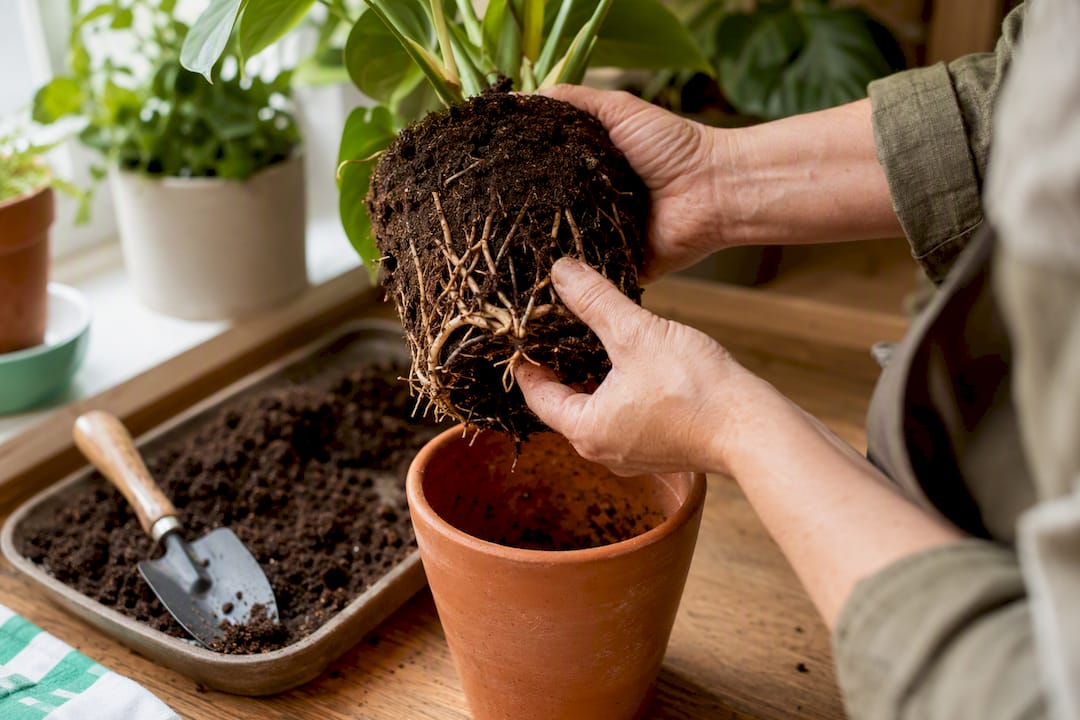
Checking for pests means looking for small holes near the stem base, sawdust-like frass, or visible insects when you disturb the topsoil. Beneficial nematodes, floating row covers over vulnerable young plants, and rotating garden beds each season reduce most pest pressure without reaching for a broad insecticide first.
Where To Learn More About Plant Support And Diagnosis
The University of Maryland Extension and University of Missouri Extension both publish practical, regionally tested staking guidance for home vegetable gardens. Colorado State University’s extension service covers root and soil diagnostics in more technical depth, while Ask Extension answers specific reader questions, including succulent stretching, directly.
Rescue Now, Prevent Later
The conventional advice on falling plants treats every case the same way: stake it and move on. That misses the point entirely. A stake fixes a top-heavy tomato plant. It does nothing for root rot, and it actively hides a damping-off outbreak until it has already spread through the whole seed tray. The research here is consistent on one thing: anchorage is a root problem first, and a stem problem second. Fix the roots, and the stem usually follows.
Where most gardeners go wrong is treating diagnosis as optional. They stake first and diagnose never, which works fine until the actual cause was overwatering, and now there’s a support stick jammed into a pot of rotting roots. Squeeze the soil and check the stem base before you touch anything else. That thirty second habit prevents more losses than any product on a garden center shelf.
If there’s one thing worth prioritizing above all else, it’s catching etiolation and damping-off early, since both compound fast and both are nearly always reversible if caught in the first few days. A photo-based tool like Viridia can shortcut that early window by flagging the likely cause before symptoms get worse, which matters more for a fungal problem racing through a seed tray than for a houseplant that’s simply leaning toward the window.
— Dan
Sources
- Tom’s Guide — Snake plant falling over: what’s wrong and how to fix it
- Michigan State University — Stake large, heavy flowers for best appearance
- Colorado State University extension — Diagnosing root and soil disorders on landscape trees
- University of Maryland Extension — Vegetable plants fall over or stems are broken