One Card to 40 Pots: Build a Plant Watering Log With Photo History
A plant watering log is a dated record of when, how much, and how you watered each plant, plus notes on drainage and health. The fastest way to start: print a one-page card for your trickiest plant and log the last time you watered it, or open a free digital plant profile and enter that same event right now. History and photos beat any fixed calendar.
TL;DR:
- A detailed watering log should include date, plant identifier, amount or method, drainage result, and health notes to track patterns over time.
- Printable logs are best for small collections, while digital tools support larger, more complex plant care involving photos, environment data, and reminders.
- Consistency is key; irregular logging and vague notes reduce a log’s usefulness, especially when troubleshooting plant health issues.
- Adjust your logging approach for different plant types, such as soil dryness for succulents, humidity for tropicals, and bloom stages for flowering plants.
- Combining watering, fertilizing, and pruning records into one system improves understanding of how care actions interact and affects plant health.
Table of Contents
- What Are the Best Plant Watering Log Templates?
- What Fields Belong in a Watering Log Entry?
- How Do You Build a Simple Printable Watering Log?
- Digital Logging vs Printable: When Should You Switch?
- How Do You Manage Watering When You’re Away?
- Pro Logging Tips From an Experienced Gardener
- What Mistakes Ruin a Watering Log?
- How Should a Watering Log Change for Succulents, Tropicals, and Flowering Plants?
- How Do You Combine Watering Logs With Fertilizing and Pruning Records?
- A Small Log, A Noticeably Healthier Plant
- Get a Digital Plant Watering Log Built Into Your Garden Journal
- Sources
What Are the Best Plant Watering Log Templates?
Most watering log templates fall into a handful of formats, and picking the right one depends less on style and more on how many plants you own and whether you want photos attached to your entries.
- US Letter or A4 PDFs: clean, printable pages sized for standard printers, ideal for a binder or clipboard near your plant shelf.
- PNG or JPG printables: image-based cards you can print at a photo kiosk or paste into a notes app.
- Google Sheets or CSV templates: spreadsheet-based logs that support formulas for next-due dates and sorting by plant.
- Notion-style templates: databases with tags, filters, and embedded photos for people who already organize life in Notion.
- App-based plant profiles: digital records tied to reminders and photo history, no printing required.
If you have fewer than ten plants and like seeing your log taped to the shelf, go printable. If you’re managing forty pots across three rooms, a spreadsheet or app saves you from flipping pages. Start with a single-plant printable card. One card, one plant, one habit. Once logging feels automatic, expand to a full plant maintenance log or move the whole system digital.
What Fields Belong in a Watering Log Entry?
A watering log only works if it captures enough detail to explain a plant’s condition weeks later, not just whether you watered on a given Tuesday.
The non-negotiable fields:
- Date and time of the watering event.
- Plant identifier — name, ID number, or room location.
- Amount or method — cups poured, bottom-watered, misted, etc.
- Drainage result — did water actually run through the drain hole?
- Health note — one short line: “new growth,” “yellow tip,” “no change.”
Fields that add depth without adding much time:
- Photo, ideally from the same angle each time.
- Pot size and soil mix.
- Last repotting date.
- Light exposure and humidity notes.
- Fertilizer or treatment applied.
Each field earns its place by revealing a pattern later. A run of frequent, shallow waterings lining up with brown leaf edges tells you the plant is thirsty more often than the schedule assumes. A missing drainage check for weeks in a row often explains root rot nobody saw coming.
Pro Tip: Log the miss, not just the win. Writing “forgot to water, soil bone dry” is more useful six months from now than skipping the entry entirely.
How Do You Build a Simple Printable Watering Log?
A one-page layout works for a single prized plant; a grid works once your collection grows past four or five pots.
- Header row: plant name, species if known, and the date you acquired it.
- Photo box: a small square in the corner for a printed or taped-in photo.
- Entry rows: six to twelve dated rows, each with columns for amount/method and a short note.
- Drainage checkbox: a simple box to mark “drained” or “overflow” per entry.
- Multi-plant grid (once you outgrow single cards): rows by plant, columns for last-watered, next-due, and notes, formatted as a weekly checklist.
For sizing, US Letter and A4 both print fine; just keep margins at half an inch and font size at 11 or 12 point so handwriting fits in the boxes. Export as PDF for crisp printing, or PNG if you want to drop the card into a phone gallery for quick reference at the store.
Digital Logging vs Printable: When Should You Switch?
Printable cards win on simplicity. Tape one to the plant shelf, and anyone in the house can water on schedule without opening an app. There’s no login, no learning curve, and a sitter can read it in five seconds.
Digital plant care trackers pull ahead once your collection or your travel schedule gets complicated. Weather-aware reminders, searchable history, and pattern detection across dozens of plants are hard to replicate on paper. Attaching photos to a timestamped entry, rather than taping a printed photo to a card, also makes it far easier to compare a leaf’s color three months apart.
- Choose digital if you own more than ten plants, travel often, or want a photo history you can scroll through.
- Choose printable if your collection is small and you want zero friction between watering and logging.
- Migrate gradually: keep the printable card for now-plants, and start new arrivals directly in a digital plant care journal.
Because no universal watering schedule exists and needs shift with light, humidity, pot size, and season, logging actual events (not following a fixed calendar) is what actually reveals your home’s rhythm.
How Do You Manage Watering When You’re Away?
For trips of a few days to about two weeks, water thoroughly right before leaving, then rely on watering globes or capillary mats as backup. Leave a printed log with plain instructions for whoever checks in.
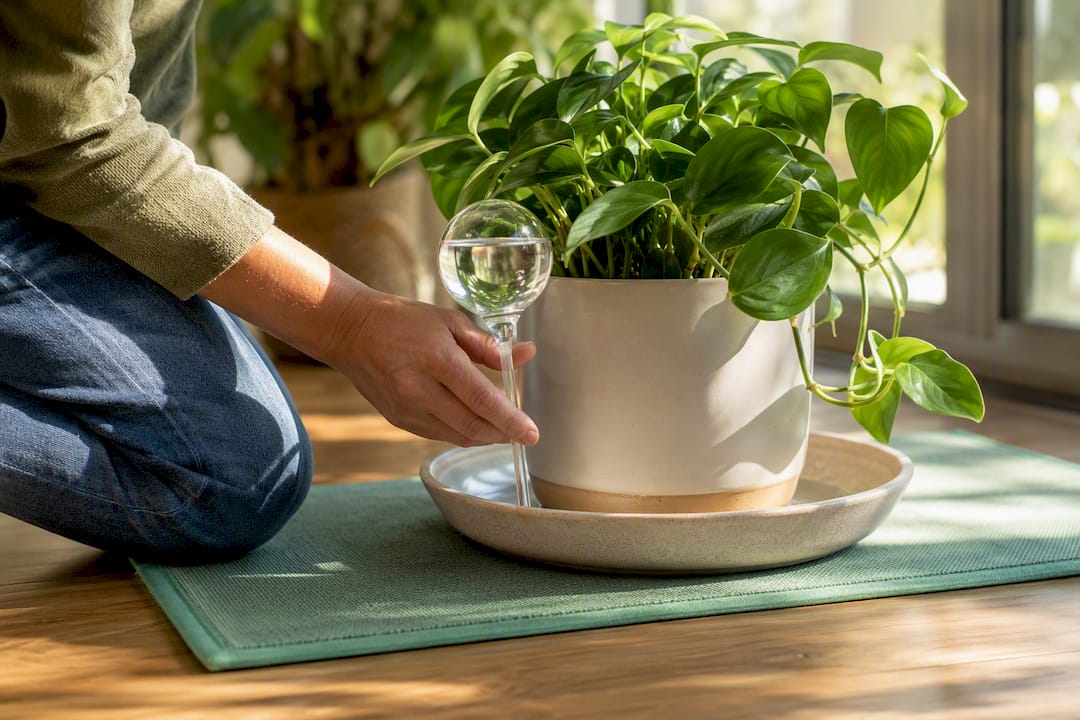
For longer absences, lasting several weeks or months, don’t count on a log and a globe to carry the load. Watering globes help short term but aren’t reliable over long unattended stretches; an automated drip system, a plant-sitting arrangement, or moving pots to a friend’s care is the safer call.
Whichever route you choose, hand-off notes matter more than the watering method itself:
- The exact watering method and amount, not just “water it.”
- What normal drainage looks like for that pot.
- A photo of the plant looking healthy, for comparison.
- An emergency contact in case something goes wrong.
Concise logs paired with a photo consistently produce better outcomes for sitters than a hastily scribbled note on the counter.
Pro Logging Tips From an Experienced Gardener
Attach a photo to every entry, and shoot it from the same angle each time. Side-by-side comparisons only work when the lighting and framing stay consistent, and that consistency is what turns a folder of snapshots into an actual diagnostic tool.
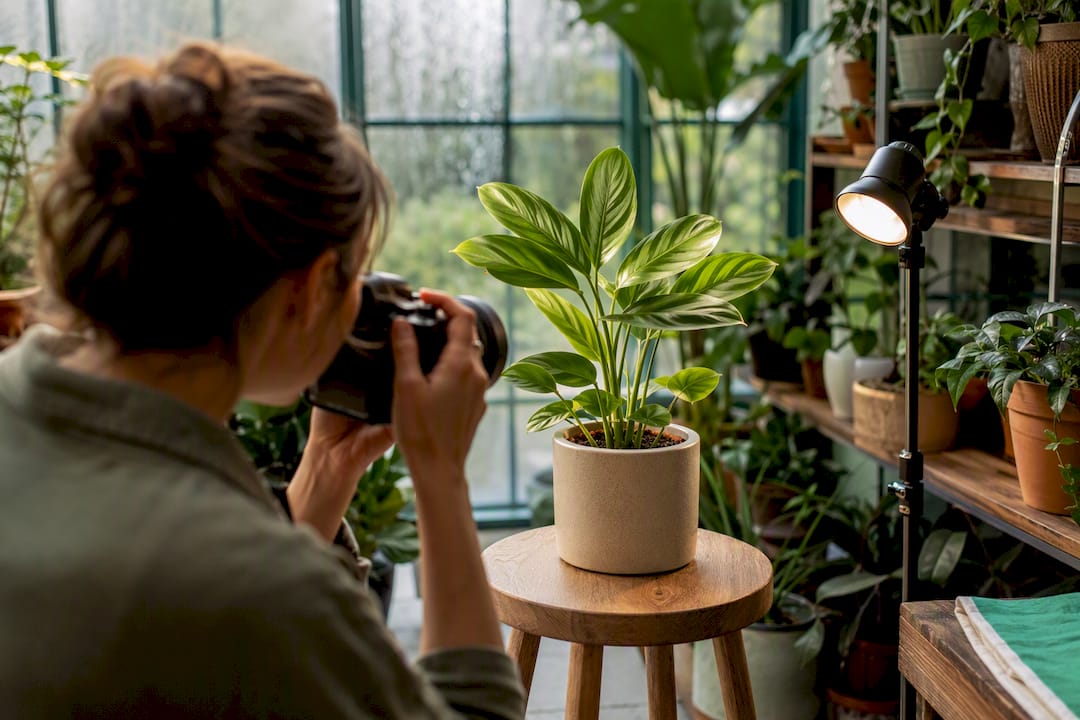
Log environmental context too: which shelf, which window direction, how humid the room runs. A date-stamped timeline with consistent photo angles lets you isolate whether a symptom followed a move, a watering change, or a repotting, instead of guessing after the fact.
Keep reminders and history in one system. Splitting “what I’m supposed to do” from “what I actually did” is how logs quietly stop getting updated. Viridia’s plant identification and health diagnosis tools centralize both sides: a photo-tethered garden journal that logs the event and a diagnosis feature that flags what the photo actually shows.
Combine photos, timestamped actions, and environment notes so the log becomes a transferable database, not just a diary entry.
Pro Tip: If you only have five minutes a week for logging, spend it on the plants that already look off. A thriving pothos doesn’t need a paragraph.
What Mistakes Ruin a Watering Log?
The most common failure is inconsistency: logging religiously for two weeks, then abandoning the habit the moment life gets busy. A log with gaps is far less useful than a sparse log kept honestly, because gaps hide exactly the period when a problem likely started.
The second mistake is logging the action without the outcome. Writing “watered” tells you nothing if you don’t also note whether water actually drained through the pot. A plant getting frequent small pours that never reach the roots looks identical, on paper, to one being watered correctly, unless you record drainage.
Vague notes are the third trap. “Plant looks bad” six weeks in a row gives you nothing to work with. “Lower leaves yellow, new growth fine” at least tells you where to look.
People also tend to log only the good plants and skip the struggling ones, because it’s less satisfying to write down failure. That’s backward. Struggling plants are exactly where a detailed history pays off.
Finally, many logs die because they were too ambitious from day one, tracking twelve fields for forty plants before the habit even formed. Start small. A five-field card for one plant, logged consistently, beats an elaborate spreadsheet abandoned after a week. Add fields once the habit sticks, not before.
How Should a Watering Log Change for Succulents, Tropicals, and Flowering Plants?
A single template rarely fits every plant type well, because the fields that matter shift with the plant’s biology.
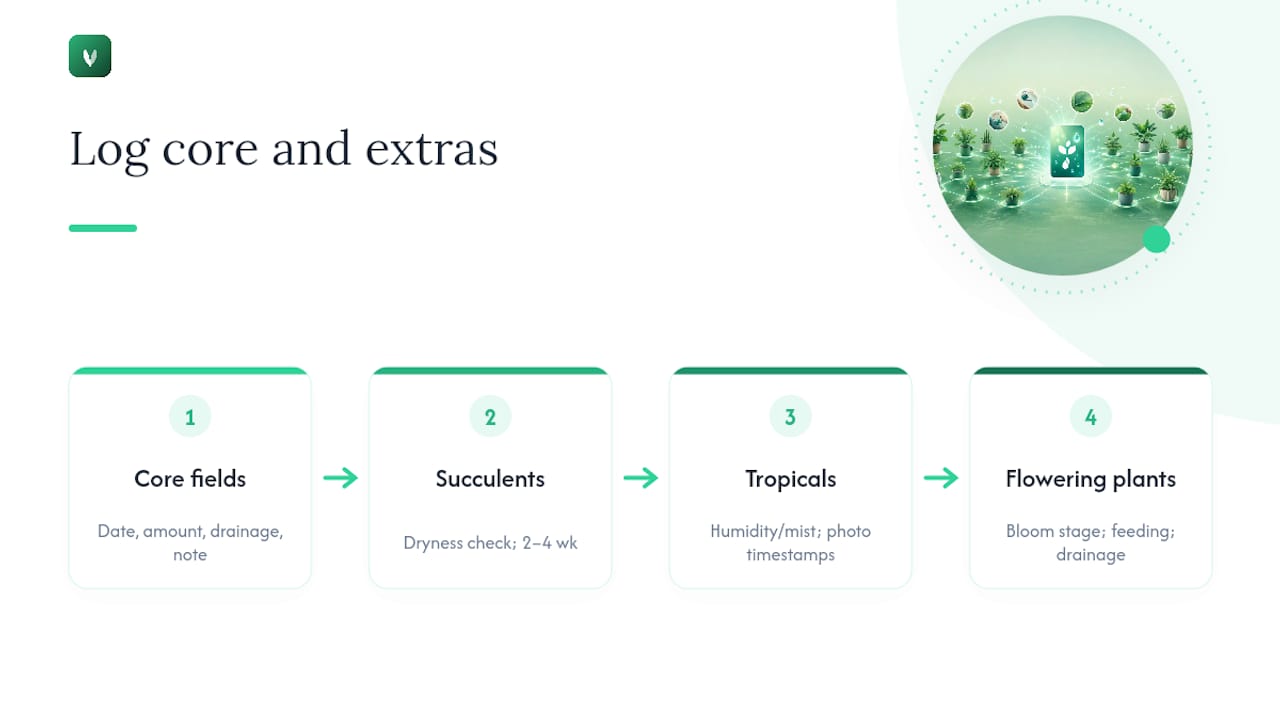
Succulents and cacti need a log built around restraint. The key field isn’t “when did I water” but “how long has the soil stayed completely dry.” Add a column for soil dryness confirmation before each watering, and expect intervals of two to four weeks rather than days. A health note here is usually about wrinkling (thirsty) versus soft, translucent leaves (overwatered).
Tropicals, like monstera or pothos, care more about humidity and light than strict dryness. Their logs benefit from a humidity or misting column alongside the watering entry, plus notes on new leaf unfurling as a positive signal. Digital tools that tie photos to timestamped care actions work especially well here, since tropical growth spurts are easiest to spot in side-by-side images.
Flowering plants, such as African violets or orchids, need a log that separates watering from feeding, since bloom cycles depend heavily on fertilizer timing. Add a bloom-stage column (“budding,” “in bloom,” “dormant”) next to the watering entry, so you can later correlate feeding schedule with flowering. Orchids in particular benefit from a drainage checkbox every single time, since their roots rot fast in standing water.
The shared thread across all three: the base fields (date, amount, drainage, note) stay the same. What changes is which extra column earns a permanent spot on the page.
How Do You Combine Watering Logs With Fertilizing and Pruning Records?
Keeping watering, fertilizing, and pruning in three separate notebooks guarantees you’ll eventually lose track of how they interact, and interaction is exactly what matters. A plant that’s wilting might be underwatered, or it might be overfed and burning at the roots. You can’t tell the difference without both records in view.
The simplest fix is a shared plant identifier and a shared timeline. If your watering entries and fertilizing entries both reference the same plant ID and appear on the same date axis, whether that’s one spreadsheet with a “type” column or one digital plant profile, you can scan a month at a glance and see every action taken.
Add a single “action type” field (water, fertilize, prune, repot) rather than building separate logs for each. This does two things: it keeps you from forgetting to log fertilizer because it’s not “watering day,” and it makes cause and effect visible. Pruned back hard in March, then a slow bounce in April with no new fertilizer? That tells you something different than pruning followed immediately by a feed and a growth spurt.
For pruning specifically, note what was cut and why (dead growth, shaping, disease removal), since pruning right before or after a fertilizer application changes how a plant responds to both. A combined log turns three habits into one five-minute weekly check instead of three separate chores you’re more likely to skip.
A Small Log, A Noticeably Healthier Plant
One neglected fiddle-leaf fig turned around after three weeks of logging: date, amount, a quick photo. The pattern was obvious once written down. It was getting watered every four days regardless of soil dryness, and half those waterings never drained. Spacing waterings out and confirming drainage each time fixed the drooping within a month. Log one plant today. You’ll see the pattern faster than you expect.
— Dan
Get a Digital Plant Watering Log Built Into Your Garden Journal
Viridia turns the printable card into a living record. Snap a photo to identify the plant, log the watering, and the health diagnosis feature flags issues like root rot or nutrient deficiency before they show up as wilted leaves. Weather-aware reminders adjust for the season instead of assuming a fixed schedule, and every entry, photo, and diagnosis lands in one plant profile instead of scattered across notebooks and camera rolls.
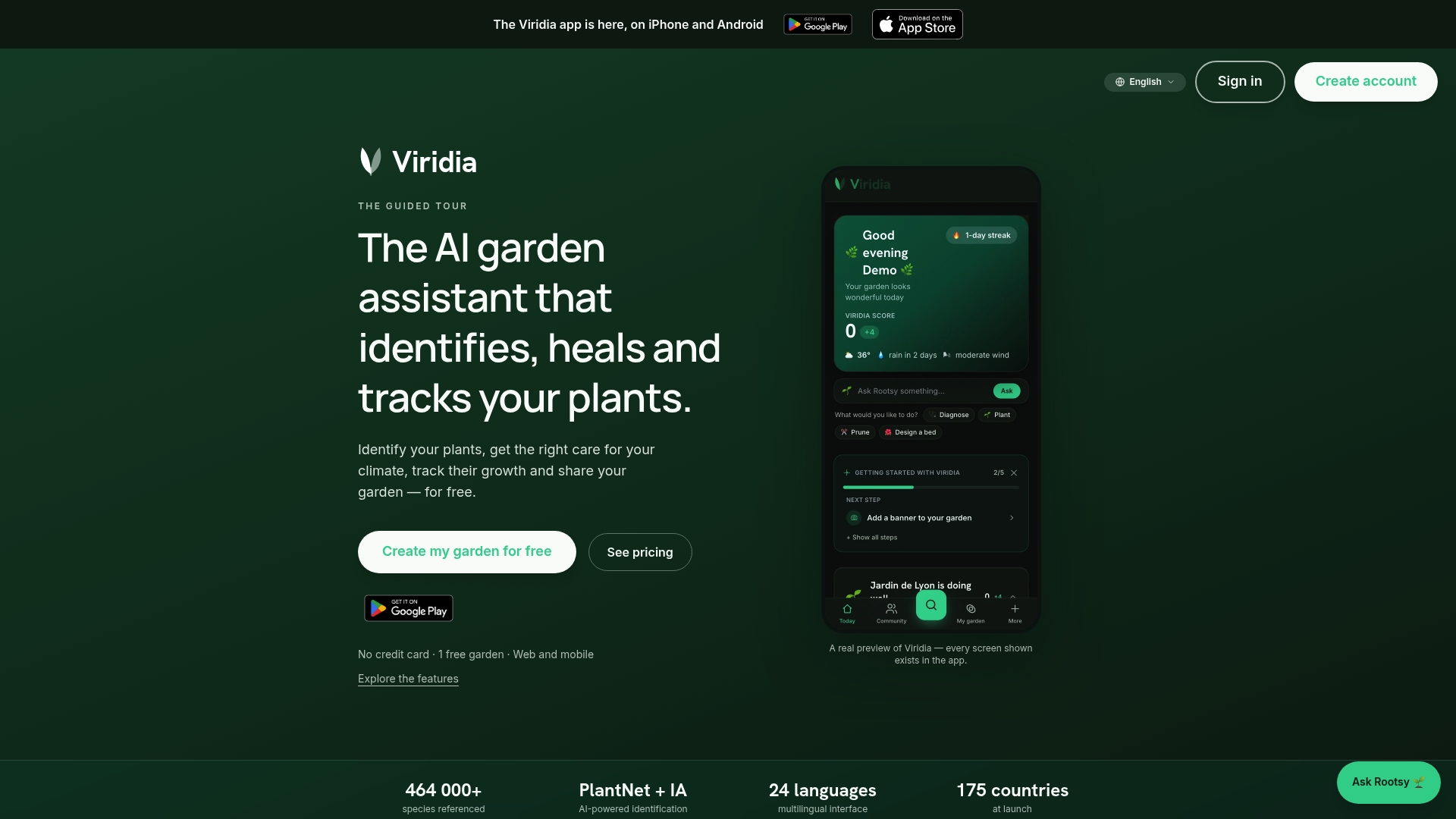
The free tier lets you build a digital garden journal for a handful of plants and try the identification and diagnosis tools before committing to anything. If you already grow something like a hydrangea or a boxwood, its species page shows exactly how watering guidance and your own logged history sit side by side. Start a free plant profile on Viridia and log your next watering there instead of on a scrap of paper.