12 ASPCA-Backed Pet-Safe Houseplants With Placement and Care Notes
Spider plant, peperomia, and money tree top the list of reliable pet safe houseplants, easy to grow and confirmed non-toxic to cats and dogs. The one rule that matters more than any list: verify a plant’s scientific name against the ASPCA’s toxic and non-toxic plants database before you buy, and call ASPCA Animal Poison Control at 888-426-4435 or your vet immediately if a pet eats something you’re unsure about. Even “non-toxic” plants can cause vomiting or loose stools if your pet eats enough of them.
TL;DR:
- Plant identification tools like Viridia can prevent accidental toxin exposure by verifying species before purchase or placement.
- Even pet-safe plants like spider plants can cause vomiting if chewed excessively, requiring strategic placement to minimize risks.
- Avoid high-risk plants such as lilies, sago palms, and oleander, especially during peak seasons like spring and holidays when they are more likely to be present.
- Proper plant care, including well-draining pots and correct watering, reduces stress that might make plants more attractive or tempting for pets to chew.
- Immediate veterinary contact is critical if pets show symptoms like vomiting, drooling, or lethargy after chewing or ingesting houseplants.
Table of Contents
- Pet Safe Houseplants: A Curated List You Can Actually Trust
- Common Toxic Houseplants to Avoid or Manage Around Pets
- How to Choose and Place Plants in a Pet Household
- Care Basics That Keep Safe Plants Healthy (and Less Chewed)
- If Your Pet Eats a Plant: Signs to Watch and What to Do Immediately
- Tips on Training Pets to Avoid Chewing Plants
- Alternative Safe Decor Options for Pet Owners Who Want Greenery
- Seasonal Considerations for Pet Safe Houseplants
- Why Plant Identification Technology Changes the Safety Equation
- Try Viridia: Identify Plants and Set Pet Safety Reminders
- Sources
Pet Safe Houseplants: A Curated List You Can Actually Trust
Building a plant collection around cats or dogs doesn’t mean settling for bare shelves. It means choosing species the ASPCA has evaluated and confirmed safe, then pairing each one with placement that suits how your specific pet behaves. Extension horticulturists at Clemson’s Home & Garden Information Center point to a short list of forgiving, widely available plants as the smartest starting point for anyone building a pet-friendly indoor garden. Here are the picks worth building around.
1. Spider Plant (Chlorophytum comosum)
This is the plant most vets and shelters recommend first, and for good reason. It tolerates low light, irregular watering, and beginner mistakes without complaint. The catch: cats find something genuinely appealing about its long, grass-like leaves, and repeated chewing can shred the foliage even though the plant itself poses no toxic risk. Hang it in a basket or set it on a high shelf if your cat treats it like a snack rather than decor.
2. Peperomia (Peperomia spp.)
Watermelon peperomia, with its striped, succulent-like leaves, handles bright indirect light and the kind of inconsistent watering most apartment dwellers are guilty of. It’s compact enough for a windowsill and rarely grows large enough to tempt serious chewing. Water only when the top inch of soil dries out.
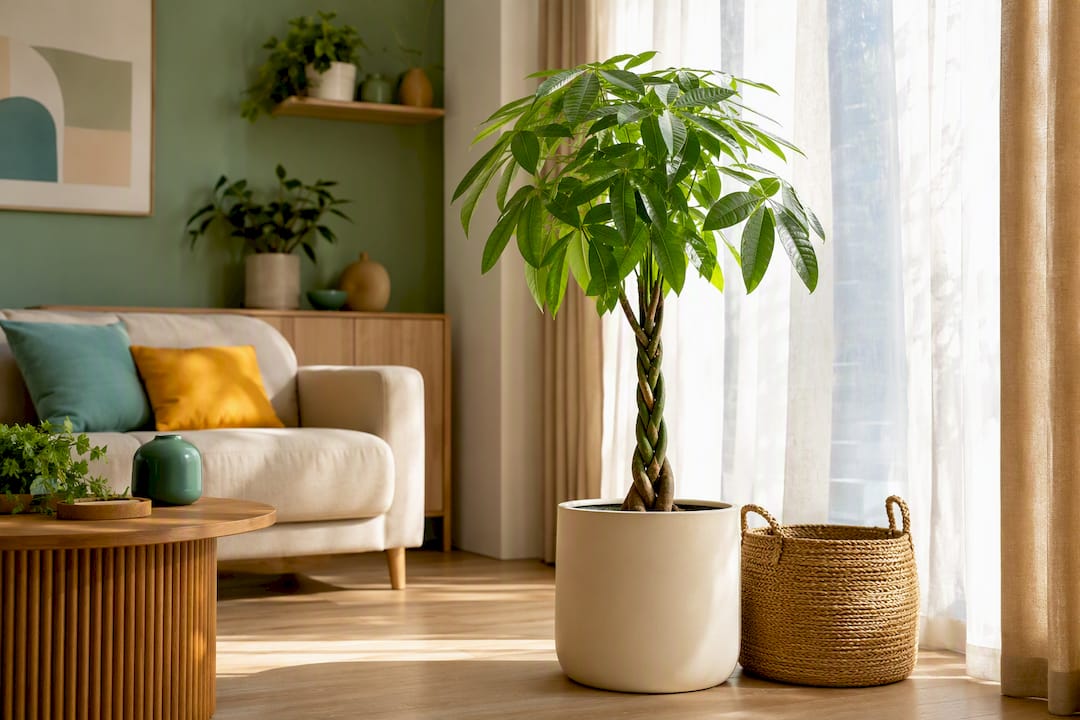
3. Money Tree (Pachira aquatica)
It’s braided trunk and glossy leaves make it look far more demanding than it is. Money trees like bright, indirect light and a thorough soak followed by a dry spell, mimicking the tropical wet-dry cycles they evolved with. Because it grows tall and sturdy, it works well as a floor plant in homes with dogs that might otherwise nose through smaller pots.
4. Calathea (Calathea spp.)
Calathea’s painted, patterned leaves make it one of the most striking pet safe houseplants you can put on a coffee table. It wants consistent humidity and will let you know with curling leaves if the air gets too dry. Skip cold drafts and direct sun, both of which scorch or bleach the foliage fast.
5. Parlor Palm (Chamaedorea elegans)
A slow grower that thrives on neglect, the parlor palm tolerates the low light of a north-facing room better than almost anything else on this list. Its narrow fronds don’t offer much surface area for chewing, which helps in households with a determined dog. Keep soil evenly moist but never soggy.
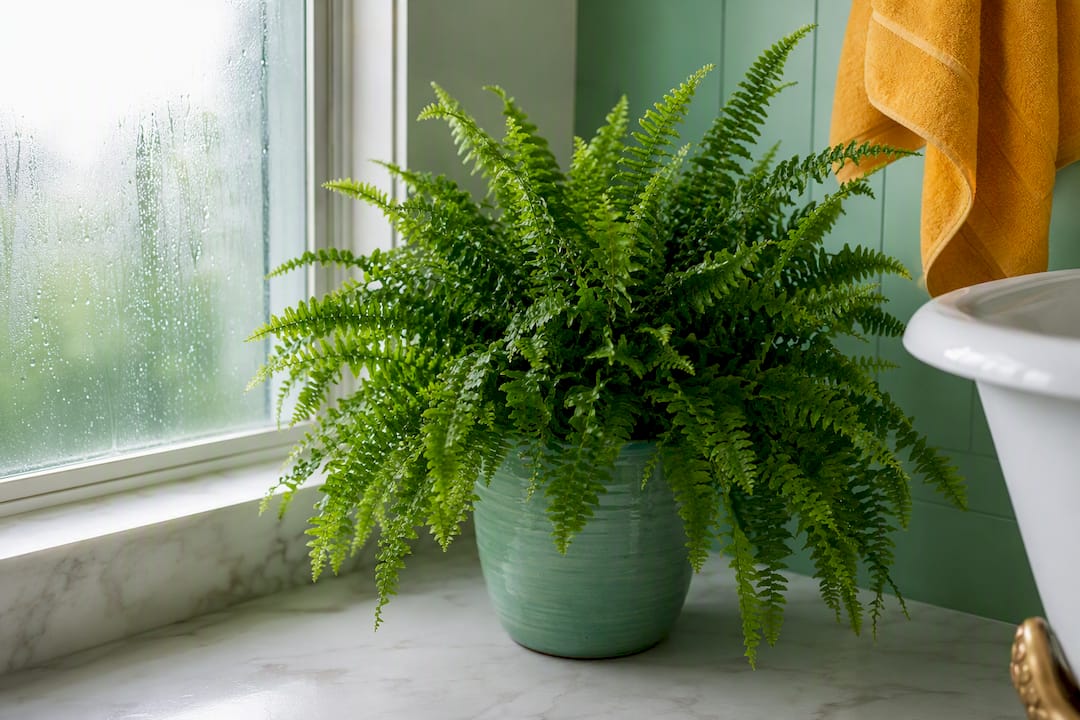
6. Boston Fern (Nephrolepis exaltata)
Feathery, lush, and one of the ASPCA’s named picks for pet-friendly greenery, the Boston fern craves humidity most homes don’t naturally provide. A bathroom with a window or a spot near a humidifier keeps it from browning at the edges. Its dense fronds tend to discourage nibbling simply because there’s no single leaf to grab.
7. Christmas Cactus (Schlumbergera spp.)
Despite the name, this is a forest cactus with flat, segmented pads instead of spines, and it blooms with vivid pink or red flowers in winter. It’s forgiving of missed waterings and prefers bright, indirect light over harsh sun. Its thick, waxy segments hold up well against curious sniffing.
8. African Violet (Saintpaulia)
Compact and low to the ground, African violets fit neatly on a windowsill out of a dog’s reach but squarely within a cat’s jumping range. Water from the bottom to avoid wetting the fuzzy leaves, which can spot if splashed. They bloom repeatedly under bright, indirect light.
9. Phalaenopsis Orchid (Phalaenopsis spp.)
Orchids have a reputation for being fussy, but the moth orchid is one of the easier varieties, tolerating the kind of medium indirect light most living rooms already provide. Ice cubes placed on the growing medium once a week deliver a slow, steady water release that mimics their natural rainfall pattern. The leathery leaves rarely tempt pets the way soft foliage does.
10. Areca Palm (Dypsis lutescens)
A larger statement plant for homes with the floor space to support it, areca palm brings a soft, feathery texture without the toxicity risk of some tropical look-alikes. It likes bright, filtered light and consistent moisture, and its height keeps most of the foliage above a cat’s easy reach.
11. Ponytail Palm (Beaucarnea recurvata)
Not a true palm, but a succulent with a bulbous base that stores water for weeks at a time. It’s close to indestructible and forgives owners who forget to water for a stretch. Its cascading, strap-like leaves grow from a central point well above most pets’ interest level.
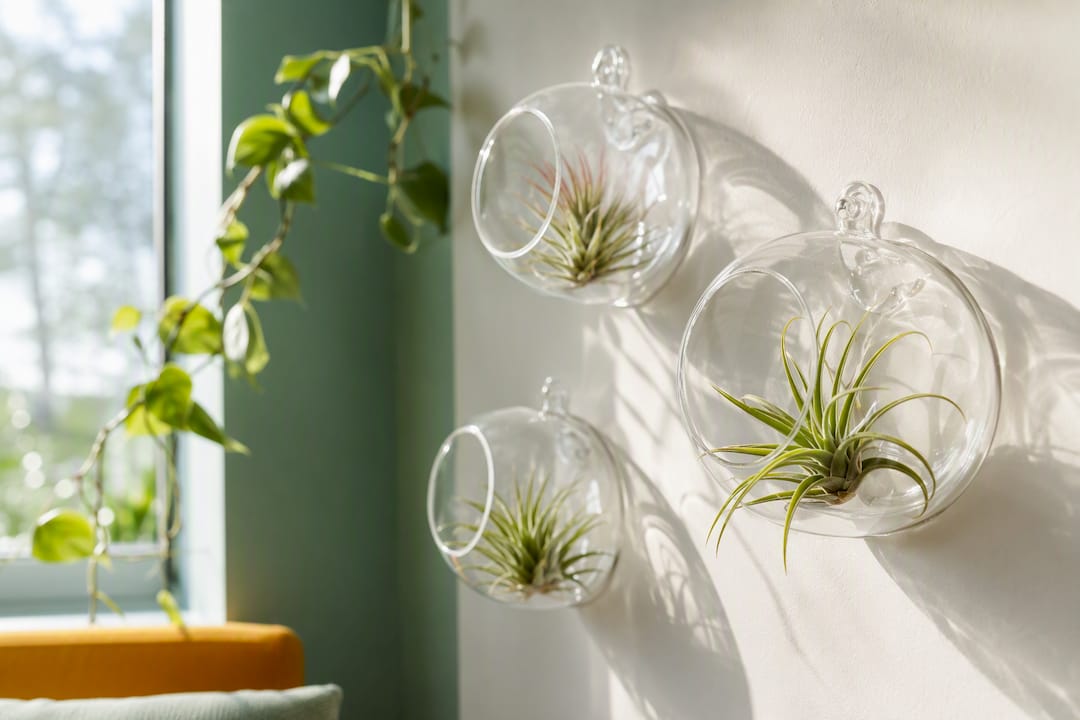
12. Air Plants (Tillandsia spp.)
No soil, no pot, no chewing hazard from potting mix. Air plants absorb moisture through their leaves and need only a weekly soak or misting. Their small size makes them easy to display in glass terrariums or mounted displays completely out of paw’s reach.
Common Toxic Houseplants to Avoid or Manage Around Pets
Some houseplants pose so little risk that mild stomach upset is the worst outcome. Others send pets to the emergency clinic. Knowing which is which changes how you shop.
True lilies (Lilium spp.) are the single most dangerous common houseplant for cats. Every part of the plant, including pollen and even the water in a vase, can trigger acute kidney failure within days. This isn’t a “watch and wait” situation. It’s a veterinary emergency the moment you suspect exposure.
Other high-risk plants deserve the same caution:
- Sago palm (Cycas revoluta): every part is toxic, but the seeds carry the highest concentration and can cause liver failure in dogs and cats.
- Oleander: contains cardiac glycosides that affect heart rhythm in both cats and dogs, even in small amounts.
- Cycads generally: related to sago palm and carry similarly severe liver toxicity risks.
- Pothos, philodendron, and monstera: contain insoluble calcium oxalate crystals that cause intense oral pain, drooling, and vomiting when chewed, though they rarely cause organ failure.
- Peace lily: despite the name, it’s not a true lily and doesn’t cause kidney failure, but its oxalate crystals cause the same painful mouth irritation as pothos.
- Dieffenbachia: another oxalate-crystal plant, often called “dumb cane” because chewing it can temporarily impair speech and swallowing in humans, and causes similar oral swelling in pets.
The symptom pattern splits along these toxicity types. Oxalate-crystal plants cause immediate, visible distress: drooling, head shaking, pawing at the mouth. Lily and sago palm exposures often look deceptively mild at first, sometimes just lethargy or reduced appetite, before organ damage becomes apparent days later. That delay is exactly why any suspected lily or sago exposure needs a same-day vet visit, not a wait-and-watch approach.
If you already own a toxic plant and aren’t ready to part with it, move it to a room your pets can’t access, or swap it for a safer look-alike; a Boston fern makes a reasonable stand-in for a peace lily’s texture, and a money tree can fill the visual space a toxic ficus once held.
How to Choose and Place Plants in a Pet Household
Picking a safe species solves half the problem. Placement and household habits solve the rest, and extension horticulturists specifically recommend combining both rather than relying on plant choice alone.
- Check the scientific name against the ASPCA database, not just the common name. Nursery tags are notoriously unreliable, and multiple unrelated plants often share the same nickname.
- Match the plant’s light requirements to the room you actually have available, not the room you wish had better light. A parlor palm in a dim hallway will thrive; a Christmas cactus there will sulk and drop buds.
- Choose durable, upright varieties if you have a determined chewer. Money tree and ponytail palm hold up better against a bored dog than a delicate fern.
- Favor smaller, easily hung plants for curious cats who treat every surface as a climbing challenge. Air plants and trailing peperomia varieties work well in suspended displays.
- Use hanging baskets, tall plant stands, or dedicated shelving to put tempting foliage above typical jump height, especially for cats.
- Close off single rooms as plant sanctuaries if you keep any higher-risk species, and use pet gates or closed doors rather than trusting good intentions.
- Add physical deterrents like decorative rocks over soil, citrus-scented sprays, or double-sided tape on pot rims for pets that dig rather than chew.
Before buying anything, ask three quick questions: does this room get the light this plant needs, does my pet chew out of boredom or genuine curiosity, and do I have a backup plan if this particular plant doesn’t work out?
Pro Tip: Snap a photo of any plant before you buy it and run it through a plant identification tool to confirm the exact species. Nursery labels get mixed up more often than you’d think, and a five-second check beats a midnight emergency call.
Care Basics That Keep Safe Plants Healthy (and Less Chewed)
A stressed, pest-ridden plant is a more likely chew target than a thriving one, since damaged or wilting foliage tends to draw more attention from curious pets than healthy leaves do. Keeping your pet safe houseplants in good condition isn’t just about aesthetics.
A few universal rules apply across almost every plant on this list:
- Use pots with drainage holes; standing water rots roots and creates the kind of stress that makes plants look sickly and, oddly, more appealing to chew.
- Water based on soil dryness, not a fixed calendar. Stick a finger an inch into the soil before deciding.
- Group humidity-loving plants like calathea and Boston fern together, or near a bathroom, rather than trying to raise humidity for your whole home.
- Wipe dust off broad leaves monthly; clean foliage photosynthesizes better and looks less droopy.
Spider plants and peperomia need bright, indirect light and forgive missed waterings. Calathea and Boston fern need the opposite: consistent moisture and higher humidity. Orchids do best with a weekly ice cube or occasional soak rather than a daily splash.
One often-overlooked risk sits in the products you use on these plants, not the plants themselves. Fertilizers, systemic pesticides, and certain potting soils containing perlite or fertilizer pellets can cause their own stomach upset or worse if a pet digs in the pot and eats the topsoil. Keep bagged soil and fertilizer sealed and stored somewhere pets can’t reach.
If Your Pet Eats a Plant: Signs to Watch and What to Do Immediately
Watch for vomiting, excessive drooling, tremors, seizures, unusual lethargy, or, in cats specifically, a drop in urination that can signal kidney distress. Any of these symptoms after suspected plant exposure warrants an urgent call, not a wait-and-see approach.
Move fast if you catch a pet chewing on something questionable:
- Remove the plant or pet from the area immediately to stop further ingestion.
- Call your veterinarian or ASPCA Animal Poison Control at 888-426-4435 right away; there may be a consultation fee, but it’s worth every dollar.
- Bring a sample, cutting, or clear photo of the plant with you, since identifying the exact species speeds up treatment decisions dramatically.
- Note the time of exposure and how much you think was eaten, since both details shape how urgently your vet responds.
Speed matters most with lily and sago palm exposures specifically, since both can cause organ failure that becomes irreversible within a narrow window after ingestion. A cat that seems fine six hours after eating lily pollen can be in kidney failure by the next morning.
Tips on Training Pets to Avoid Chewing Plants
Behavioral fixes go further than any single plant choice. Extension research points to boredom and curiosity, not hunger, as the main drivers behind pets chewing houseplants, which means the solution often has nothing to do with the plant itself.
Give cats and dogs an approved outlet before they find their own. Cat grass or wheatgrass planted in its own pot satisfies the urge to graze that drives a lot of houseplant damage in the first place. A dedicated chew toy rotation works similarly for dogs who gnaw out of boredom rather than hunger.
Consistent correction helps too. A firm, calm “no” paired with immediately redirecting your pet toward their own plant or toy teaches the boundary faster than yelling after the fact. Bitter-apple spray or citrus-scented deterrents applied to leaves discourage taste-testing without harming the plant, though you’ll need to reapply after watering.
Environmental enrichment matters as much as direct training. Cats left alone all day with nothing to do will find entertainment somewhere, and a swaying spider plant leaf is an easy target. Puzzle feeders, window perches, and rotating toy access reduce the boredom that turns your ponytail palm into a chew toy in the first place.
Consistency across every household member counts too. If one person allows plant nibbling as a cute quirk while another scolds it, pets never learn a clear rule.
Alternative Safe Decor Options for Pet Owners Who Want Greenery
Sometimes the safest plant is a beautiful fake. High-quality artificial plants have improved enough that many pass for real from across a room, and they eliminate ingestion risk entirely, aside from a curious pet occasionally batting at fake leaves.
Preserved moss walls and dried botanical arrangements offer texture and visual warmth without any watering schedule or toxicity concern, though dried materials should still be kept out of reach since dogs sometimes chew dried plant matter out of curiosity. Terrariums with a secure glass lid let you display genuinely toxic plants, like certain succulents, safely behind a barrier your pet can’t breach.
Pressed botanical art, framed and hung on walls, brings a natural element into a room with zero risk. Living moss in closed glass containers needs almost no maintenance and creates a striking visual anchor for a shelf or table.
For pet owners who want the real experience of tending something living without any toxicity math, air plants displayed in wall-mounted glass globes split the difference nicely: real, low-maintenance, and confirmed safe.
Seasonal Considerations for Pet Safe Houseplants
Plant risk shifts with the seasons in ways that catch a lot of owners off guard. Holiday season brings poinsettias, mistletoe, and, worst of all, true lilies into homes as gifts and centerpieces, right when foot traffic and distraction are both at their peak.
Deciduous houseplants that drop leaves seasonally create an ongoing cleanup task, since fallen leaf litter on the floor is far easier for a pet to eat than foliage still attached to the plant. Ficus and certain palms shed more than others; if your dog treats the floor like a snack bar, lean toward evergreen varieties like parlor palm or ponytail palm that hold their leaves year-round.
Winter’s dry indoor heating also stresses humidity-loving plants like calathea and Boston fern, and a stressed plant drops more leaf litter than a healthy one. Running a small humidifier near these plants during heating season keeps foliage intact and reduces the debris pets might otherwise investigate.
Spring repotting season is worth flagging too: fresh potting soil and loose perlite sitting out during a repot is exactly the kind of thing a curious puppy or kitten will dig into. Repot when pets are occupied elsewhere, and clean up spilled soil immediately rather than leaving it for later.
Why Plant Identification Technology Changes the Safety Equation
Most plant poisoning incidents don’t start with a reckless purchase. They start with a mislabeled nursery tag, a cutting from a neighbor with no name attached, or a “mystery plant” someone’s been meaning to look up for months. That gap between owning a plant and actually knowing what it is happens to be the single biggest blind spot in pet-plant safety, and it’s one most articles on this topic never address directly.
Viridia’s photo identification feature closes that gap in seconds: point a phone camera at any plant, get the confirmed species name, and cross-reference it against the ASPCA’s toxic and non-toxic database before it ever becomes a problem instead of after. That single step, done consistently, would prevent a meaningful share of the accidental exposures vets see every year.
The health diagnosis feature adds a second layer that’s easy to overlook. Since stressed or pest-damaged plants draw more chewing attention from bored or curious pets, catching a spider mite infestation or a nutrient deficiency early keeps the plant in the kind of healthy condition that’s simply less tempting to gnaw on. Weather-based care reminders handle the part most pet owners actually fail at: consistent watering. A dying, wilting calathea sitting in a corner is a far bigger chew magnet than one that’s thriving on a proper schedule.
None of this replaces a vet’s judgment or the ASPCA’s poison control line in an actual emergency. It just means fewer emergencies happen in the first place.
— Dan
Try Viridia: Identify Plants and Set Pet Safety Reminders
Viridia gives you the tool that most pet-plant safety guides assume you already have: a fast, reliable way to know exactly what’s growing in your home. Snap a photo, get the species confirmed, and check it against toxicity guidance before it ever sits on a shelf your cat can reach. The app then builds a care calendar around your specific climate, so plants like calathea or Boston fern get the humidity and watering schedule that keeps them healthy, and less likely to end up half-chewed on your living room floor.

The health diagnosis feature flags pest problems and stress signals before a plant declines into the kind of ragged, appealing mess a bored dog can’t resist. None of this replaces your vet or the ASPCA poison control line for an actual emergency; it’s a layer that reduces how often you need to make that call. Browse the full plant catalog to check species you already own, or start with Viridia and identify your first plant today.