
1 Teaspoon Per Quart: Apply Neem Oil for Plants the IPM Way
Yes, neem oil works, but only within limits worth knowing before you mix a batch. It controls many soft-bodied insects and a handful of fungal diseases when you catch problems early and apply it correctly. It won’t rescue a plant from a heavy, established infestation, and it works best on immature pests. Always follow label directions, and time sprays to protect bees.
TL;DR:
- Neem oil controls soft-bodied insects like aphids and whiteflies effectively when applied early on their immature stages, but is ineffective against mature, hard-shelled pests.
- Its efficacy depends on correct timing, thorough coverage, and repeated applications every 5 to 7 days, especially for pests like spider mites and mealybugs.
- Mixing requires precise dilution, use of surfactants for suspension, and application during early morning or evening to prevent foliage scorch.
- Neem breaks down quickly on leaves, persisting longer in soil and water, so reapplication is necessary, and it should be used cautiously around blooming pollinator activity.
- It functions best as part of an integrated pest management routine, relying on accurate pest diagnosis and monitoring rather than as a universal cure.
Table of Contents
- What Neem Oil for Plants Is and How It Works
- Which Pests and Diseases Does Neem Oil Actually Control?
- How to Mix and Apply Neem Oil Safely
- Is Neem Oil Safe for People, Pets, and Pollinators?
- When Should You Avoid Using Neem Oil on Plants?
- Building Neem Into a Real IPM Plan
- Why Neem Oil Disappoints Some Gardeners
- A Cautious, Diagnosis-First Take on Neem Oil
- Identify the Problem Before You Spray
- Sources
What Neem Oil for Plants Is and How It Works
Neem oil comes from the seeds of the neem tree, Azadirachta indica, and contains two active components that do very different jobs. Azadirachtin is the hormone disruptor. It interferes with an insect’s molting and reproductive cycles, so nymphs and larvae stop developing and eventually die without ever reaching adulthood. Clarified hydrophobic neem oil is the physical component. It coats soft-bodied insects and blocks their spiracles, essentially suffocating them on contact.
That two-pronged action explains why timing matters so much. A fully grown adult beetle with a hardened exoskeleton shrugs off both mechanisms far more easily than a soft, newly hatched nymph. Spraying mature insects is often a waste of a perfectly good bottle.
Neem also breaks down fast in the environment, which is part of its appeal for organic gardening.
Azadirachtin breaks down quickly on leaf surfaces, though it can persist longer in soil (3 to 44 days) and varies widely in water (48 minutes to 4 days), according to the National Pesticide Information Center. That short leaf life is good news for reducing residue, but it also means reapplication is part of the deal, not a sign you did something wrong.
Which Pests and Diseases Does Neem Oil Actually Control?
Neem earns its reputation on soft-bodied insects and a short list of fungal issues. It falls flat on hard-shelled, fast-moving, or fully mature pests, so matching the tool to the target saves you time and product.
Extension research and practical field use point to consistent results against:
- Aphids — highly effective, especially on nymphs clustered on new growth
- Whiteflies — effective when sprayed on the undersides of leaves where they cluster
- Spider mites — effective with repeat applications every 5 to 7 days
- Mealybugs — effective, though thorough coverage into leaf crevices matters
- Thrips — moderately effective, best on larval stages
- Powdery mildew and rust — neem can slow fungal spore germination when applied preventively
Neem is a poor match for squash bugs, grasshoppers, Japanese beetle adults, and most mature, hard-bodied insects. University of New Hampshire Extension notes it performs better as prevention or early intervention than as a cure for an infestation that’s already out of control. Always check the product label to confirm your target pest is actually listed.
How to Mix and Apply Neem Oil Safely
Getting the dilution right is where most gardeners go wrong. Residential label rates typically fall around 0.5%, which works out to about 1 teaspoon of neem oil concentrate per quart of water. Larger-scale agricultural use under EPA-registered neem oil labels commonly lists rates between 0.5% and 1.1%, along with specific foliar and soil drench instructions.
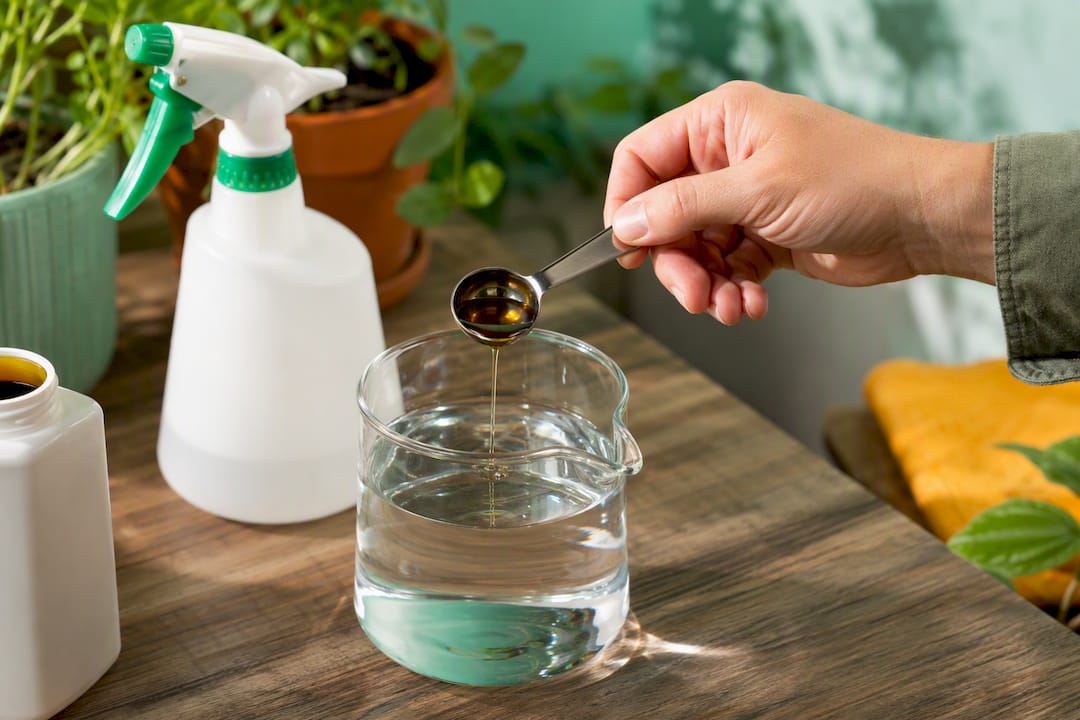
Neem oil doesn’t mix into water on its own. You need a surfactant, an emulsifying agent that breaks the oil into fine droplets so it stays suspended in the spray tank instead of floating on top. Many EPA-registered concentrates already include one; if yours doesn’t, a mild insecticidal soap or a labeled horticultural surfactant works better than an improvised dish soap recipe, which can vary wildly in strength and burn foliage unpredictably.
For application:
- Shake or agitate the sprayer frequently. Neem separates fast.
- Cover leaf undersides, stems, and crevices. Most pests hide there.
- Spray early morning or evening. Midday sun plus wet leaves is a recipe for scorch.
- Reapply every 7 to 10 days, or per label, and after heavy rain washes off coverage.
Pro Tip: Mix only what you’ll use that session. Diluted neem loses potency within hours and doesn’t store well once combined with water.
Is Neem Oil Safe for People, Pets, and Pollinators?
Neem oil has a favorable safety profile compared to many synthetic pesticides, but “low toxicity” doesn’t mean zero caution. The NPIC fact sheet classifies it as practically non-toxic to birds and mammals, with slight toxicity to fish, meaning runoff into ponds or streams still deserves attention.
Bees are the bigger concern. Spray early morning or late evening when foraging activity is low, and avoid blooming flowers where pollinators are actively working. If a plant like Buddleja is in flower and swarming with bees, treat foliage away from the blossoms or wait until bloom passes.
- Keep pets off treated foliage until the spray dries completely.
- Diluted neem is generally not harmful to pets once dry, but concentrated ingestion can cause irritation or sickness, so store concentrate out of reach.
- Wear the gloves and eye protection your product label specifies. PPE requirements aren’t a suggestion; they’re part of the legal label.
When Should You Avoid Using Neem Oil on Plants?
Neem oil can scorch foliage under the wrong conditions, and some plants are simply poor candidates.
- Skip recently transplanted or drought-stressed plants. Stressed tissue burns more easily than healthy, well-watered growth.
- Spot test first. Spray a small section, wait 24 to 48 hours, and check for yellowing, spotting, or a burned look before treating the whole plant.
- Watch fuzzy-leaved species closely. Plants with hairy or fine-textured foliage tend to hold spray longer and react more.
If you see burn, rinse the foliage with plain water, stop treatments for a week or two, and let the plant recover before trying again at a lighter dilution.
Building Neem Into a Real IPM Plan
Neem oil earns its place inside a real integrated pest management routine, not as a stand-alone fix. The workflow is simple: identify the pest, scout for life stage, choose the right control, apply it correctly, then monitor results.
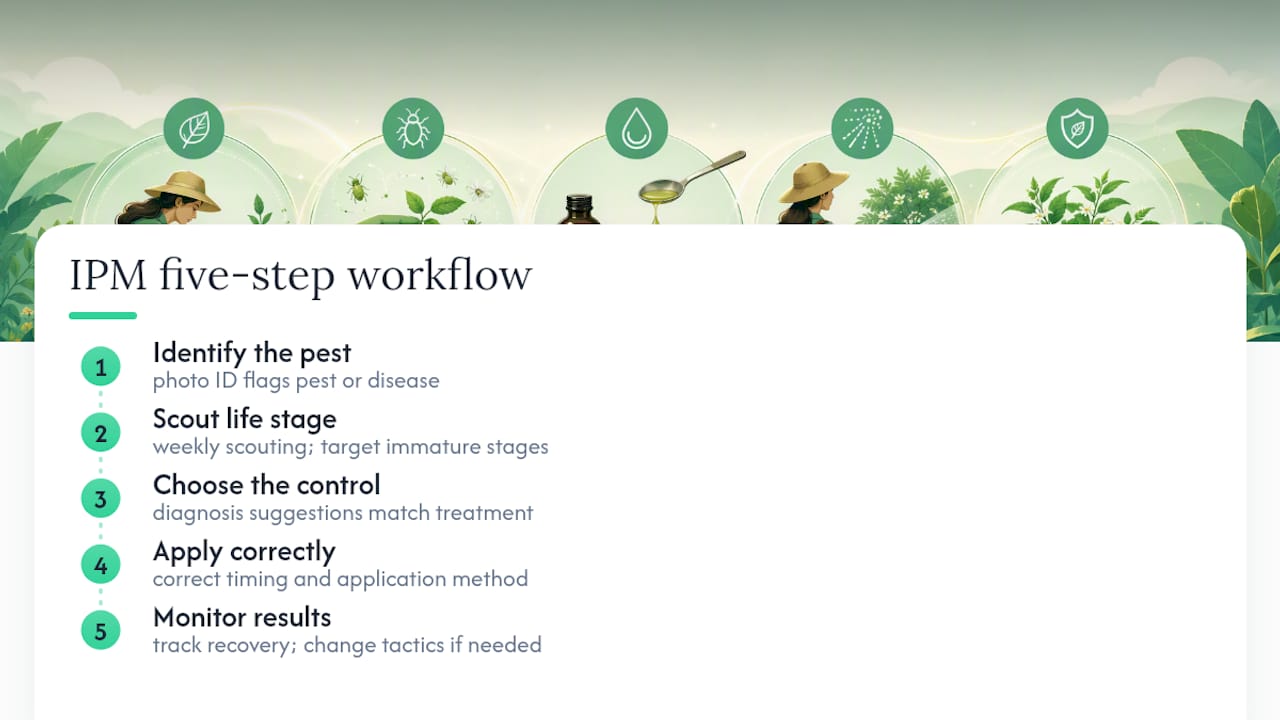
Timing against immature stages is the whole game here, which means scouting weekly rather than reacting after damage is obvious.
This is where a tool like Viridia earns its keep. Photo identification flags the pest or disease before you guess wrong, diagnosis suggestions match treatment to the actual problem, and recovery tracking shows whether the neem application is working or whether it’s time to change tactics.
Why Neem Oil Disappoints Some Gardeners
Most complaints about neem oil trace back to mismatched expectations, not a bad product. People spray mature pests, skip coverage on leaf undersides, or expect a single application to end an infestation that took weeks to build.
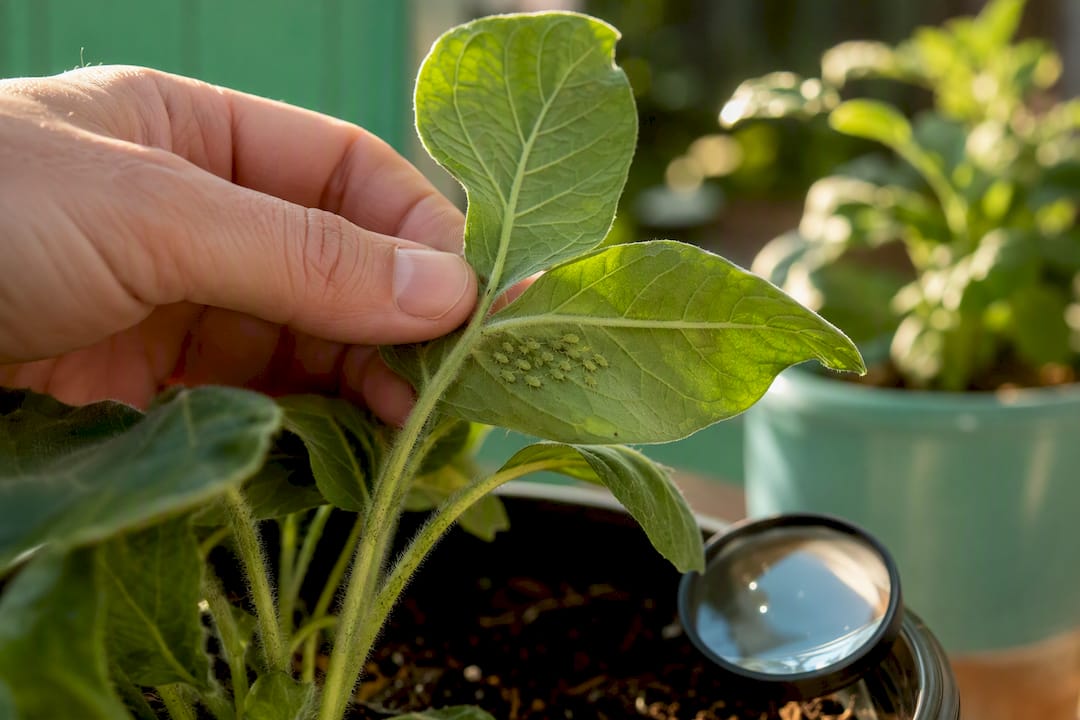
Give a correctly mixed application 5 to 7 days before judging results, and switch tactics if a second full application shows no improvement.
Pro Tip: Label your mixed sprayer with the date and dilution used. It’s the fastest way to catch a mixing mistake before it becomes a pattern.
A Cautious, Diagnosis-First Take on Neem Oil
Neem oil is one of the better tools in an organic gardener’s kit, but treating it as a universal cure is where good intentions go wrong. When a plant’s problem isn’t clear, lean on a diagnosis tool or your local extension office before spraying anything.
— Dan
Identify the Problem Before You Spray
Half the frustration gardeners feel with neem oil traces back to one thing: not knowing exactly what they’re fighting. Viridia’s photo identification pinpoints the pest or fungal issue on the spot, so you’re not guessing whether that leaf stippling is spider mites or nutrient stress.

Beyond diagnosis, Viridia tracks recovery after you treat, showing whether that neem application actually knocked back the aphid colony or whether it’s time to adjust your approach. Pair that with climate-specific care tips and a plant catalog covering thousands of species, including sensitive ones like lily of the valley, and you get a clearer picture than trial and error ever provides. Open the Viridia plant catalog and identify what’s actually happening in your garden before your next spray session.
Sources
- Neem Oil Fact Sheet
- US EPA, Pesticide Product Label, NEEM OIL, 04/08/2025
- What should neem be used for on plants? | UNH Extension
- Is neem oil safe for pets? — PetMD