4 Season Lavender Care: Pots, Winter, and AI for Home Gardeners
For reliable lavender, give it full sun, very free-draining soil around pH 6.5 to 8, and go easy on the water. Get roots established the first year with regular watering, then step back and let mature plants tolerate dry spells on their own. Prune every year, but never cut into the old, woody stems, and pick a species suited to your winters from the start.
TL;DR:
- Lavender requires well-draining, sandy or loamy soil with a pH between 6.5 and 8, and should be planted in a full sun location for optimal growth.
- English lavender is the most cold-hardy and suitable for various climates, while lavandin, Spanish, and French lavenders prefer milder conditions and are better in containers or as annuals in cold zones.
- Water established lavender only during extended dry periods using deep, infrequent soakings, and avoid overwatering to prevent root rot, especially in the first year.
- Proper pruning involves annual light cuts after flowering, steering clear of old woody stems, and is crucial for plant longevity and flower production.
- Transplant or propagate through cuttings in early summer for best results, and use a gritty, low-fertility mix in pots, ensuring good drainage and minimal winter insulation to prevent moisture buildup.
Table of Contents
- Which Lavender Type Fits Your Climate?
- When and Where Should You Plant Lavender?
- What Soil Does Lavender Actually Need?
- How Often Should You Water Lavender?
- How Do You Prune Lavender Without Killing It?
- What Does Lavender Need Each Season?
- How Do You Grow Lavender in Pots?
- How Do You Propagate Lavender From Cuttings or Seed?
- Why Is My Lavender Dying or Not Blooming?
- When Is the Best Time to Harvest Lavender?
- How Viridia Helps You Diagnose and Track Lavender Health
- What Home Gardeners Get Wrong About Lavender
- Let Viridia Take the Guesswork Out of Lavender Care
- Sources
- FAQ
Which Lavender Type Fits Your Climate?
The species you plant matters more than almost anything else you’ll do afterward. English lavender (Lavandula angustifolia) is the toughest of the bunch, reliably hardy down to USDA Zone 5 in many regions, with the sweetest, least camphor-heavy scent. That makes it the safe default for anyone planting in the ground and hoping the plant survives winter.
Lavandin (L. x intermedia) grows bigger and blooms with a stronger, more pungent fragrance, but it’s less cold hardy and better suited to milder climates or a protected spot. Spanish lavender (L. stoechas), recognizable by its rabbit-ear bracts, and French lavender (L. dentata) both bring showier flowers but far less winter tolerance. In cold regions, treat them as container plants you can shelter, or grow them as annuals.
- English lavender: best all-around choice for cold climates, culinary use, and reliable perennial growth.
- Lavandin: bigger plants, stronger scent, better for warmer zones or sheltered beds.
- Spanish and French lavender: showy but tender, best in pots or mild-winter gardens.
If you’re not sure which one is already growing in your yard, a photo scan through Viridia’s Lavandula angustifolia guide can confirm the species and flag which care rules apply.
When and Where Should You Plant Lavender?
Timing and placement decide more of lavender’s fate than most gardeners realize. Plant in spring once the threat of hard frost has passed, giving roots a full season to establish before winter. In milder climates, fall planting works too, as long as you give the plant several weeks of good root growth before cold weather sets in.
- Choose a spot that gets at least six hours of direct sun; less sun generally results in fewer blooms.
- Set the crown at the same level it sat in the nursery pot. Planting too deep invites crown rot.
- Space plants 2 to 3 feet apart so air moves freely between them and foliage dries quickly after rain.
- Skip low spots where water pools after storms. Lavender planted in a soggy corner rarely lasts more than a season or two.
- Take advantage of slopes, south-facing walls, or raised beds. These microclimates warm faster in spring and drain better year-round.
- Water thoroughly right after planting to settle soil around the roots, then hold off until the top few inches start to dry.
A south-facing bed against a stone or brick wall often outperforms an open, flat garden bed by several degrees of reflected heat, which matters more than people expect in a marginal zone.
What Soil Does Lavender Actually Need?
Lavender wants soil closer to what it gets on a rocky Mediterranean hillside than what most garden beds naturally offer. The target is sandy or loamy soil with a pH between 6.5 and 8.0, and it should drain fast enough that water never lingers around the roots. Rich, fertile soil actually works against you here. Lean, low-fertility conditions push the plant toward flowers instead of soft, floppy foliage.
If you’re working with clay, don’t fight it in place. Amend generously with coarse grit or perlite, roughly a third to half of the total soil volume, and mix in a little crushed limestone or crushed shell if your native soil runs acidic. For genuinely heavy ground, skip amendment altogether and build a raised bed or mound instead. A mound 12 to 18 inches high and a few feet across, filled with a gritty, fast-draining mix, solves drainage problems that no amount of digging into clay ever will.
- Sandy loam, amended with grit if needed, is the baseline target.
- Crushed limestone or shell raises pH in acidic soils.
- Raised beds or mounds are often the fastest fix for clay-heavy yards.
- Skip bark or wood mulch in wet climates. It holds moisture right against the crown, which is exactly what you’re trying to avoid.
Pro Tip: Test your drainage before you plant anything. Dig a hole a foot deep, fill it with water, and check it an hour later. If water is still standing, that spot needs a raised bed, not amendment.
How Often Should You Water Lavender?
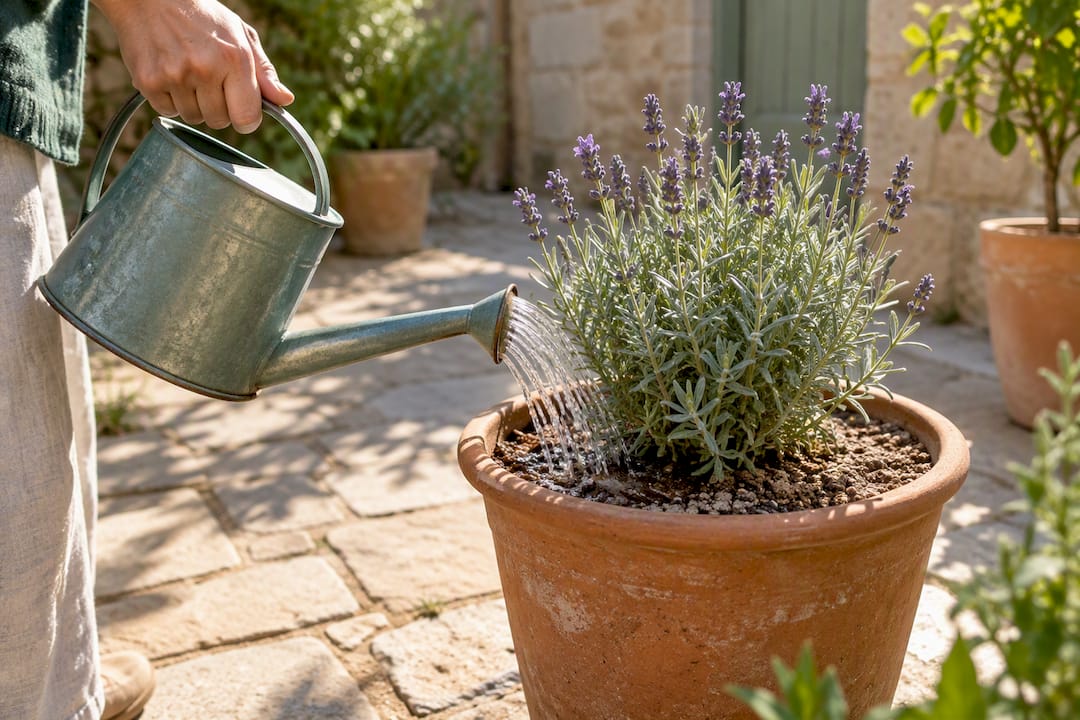
Watering habits change dramatically between year one and every year after, and mixing up the two schedules is probably the single most common way lavender dies. During the first year, water regularly especially in hot or windy weather, letting the top inches of soil dry out between waterings while roots establish.
Once established, lavender becomes fairly drought-tolerant and generally needs minimal watering. Water only during extended dry spells, and even then, aim for deep, infrequent soakings rather than frequent light sprinkles. Drip irrigation beats overhead watering by a wide margin here, since wet foliage sitting overnight invites the fungal issues that plague this plant far more than dry air ever does.
Overwatering is the most commonly cited cause of lavender decline in extension guidance, and yellowing leaves are the clearest early warning sign that roots are sitting in soil that’s too wet, too often.
If you spot yellowing, resist the urge to water more. Check the base of the plant instead. Mushy, dark stems at the crown usually mean rot has already set in, and the fix is drainage, not more moisture.
How Do You Prune Lavender Without Killing It?
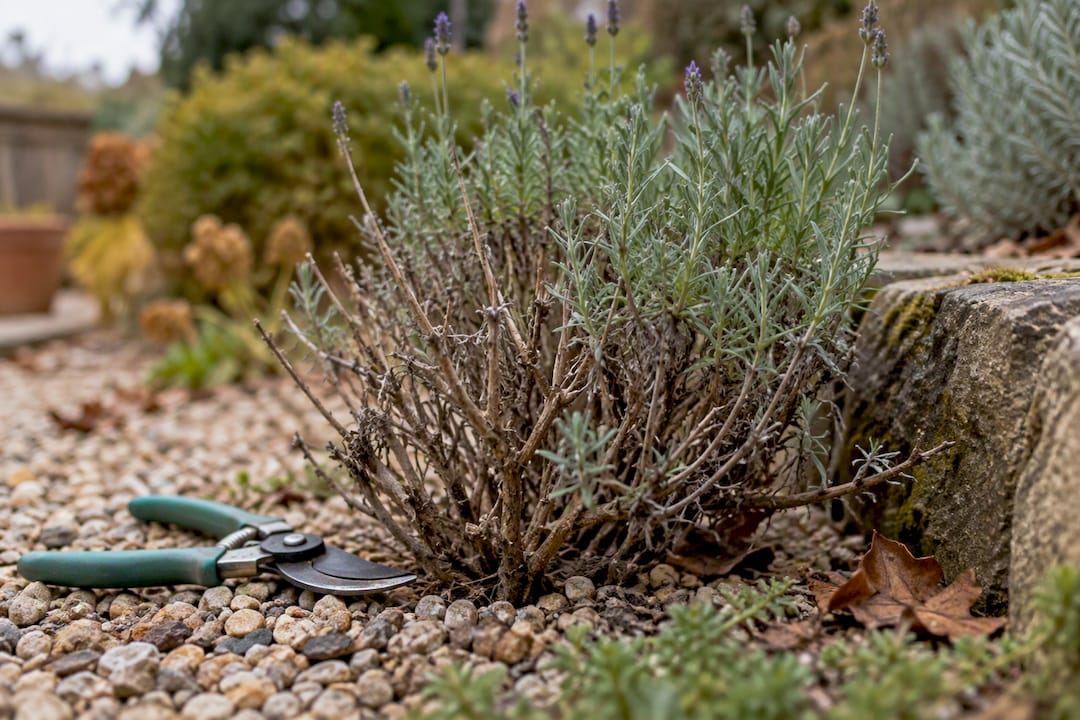
Pruning is where a lot of home gardeners either get too timid or too aggressive, and both mistakes shorten the plant’s life. The core rule: prune after the main flush of flowering, and again lightly in spring, but never cut into the old, woody, gray-brown wood at the base. Lavender doesn’t reliably resprout from old wood the way many shrubs do, so a cut that goes too deep can leave a bare, dead stub permanently.
- After bloom finishes, shear back roughly a third of the current season’s soft green growth to keep the plant compact.
- In early spring, shape lightly again, removing any winter-damaged tips, still staying within green growth.
- Deadhead spent flower spikes through the season to encourage a second, smaller bloom flush.
- Skip high-nitrogen fertilizer. It pushes leafy growth at the expense of flowers, which runs against everything you’re trying to achieve with lean soil.
Pro Tip: Keep a pair of dedicated shears just for lavender, and prune a little every year rather than a lot every few years. Annual light trims prevent the woody, hollow-centered look that makes rejuvenation pruning impossible later.
Once a plant has gone mostly woody with sparse leaves near the base, aggressive rejuvenation pruning rarely brings it back. At that point, replacing the plant is usually faster and more reliable than trying to save it.
What Does Lavender Need Each Season?
Lavender’s needs shift enough throughout the year that a single static routine won’t cut it. Breaking care down by season keeps you ahead of problems instead of reacting to them.
- Spring: Clean up winter debris, check the crown for rot or dieback, and do your light shaping prune once new growth starts.
- Summer: Deadhead regularly to keep blooms coming, and water moderately, leaning toward less rather than more once plants are established.
- Fall: Do a final light shape well before frost, cut back on water to let growth harden off, and avoid piling on heavy mulch in wet climates.
- Winter: In cold zones, a loose mulch of gravel or evergreen boughs around the base (never against the crown) helps insulate roots without trapping moisture.
Expect winter losses to vary a lot by species and zone. English lavender in a well-drained bed often shrugs off a hard winter, while lavandin or Spanish lavender in the same spot may not survive. In colder zones, many gardeners treat the less hardy types as container annuals rather than gambling on in-ground survival.
How Do You Grow Lavender in Pots?
Containers change the rules just enough to trip up gardeners who assume potted lavender behaves like garden lavender. Choose a pot wide and deep enough to provide adequate room for lavender’s root system to spread. Drainage holes are non-negotiable, and a saucer that lets water collect underneath the pot defeats the purpose entirely.
Fill with a gritty, low-fertility mix, roughly a loam-based potting compost cut with a generous portion of coarse grit or perlite. A top layer of gravel around the base keeps the crown dry and looks tidy besides. Potted plants dry out faster than in-ground lavender, so expect to water more often, checking soil moisture rather than following a fixed calendar.
- Repot every 2 to 3 years into fresh mix, since old potting soil compacts and loses its drainage over time.
- For winter, move pots somewhere cold but dry, like an unheated garage or a sheltered spot against a wall.
- Avoid bringing containers into a warm indoor room for winter. Lavender needs a real dormancy period, and warm indoor air combined with low light usually kills it faster than cold ever would.
How Do You Propagate Lavender From Cuttings or Seed?
Cuttings are the more reliable route if you want a plant that matches the parent exactly, and they root fast enough to reward patience within a matter of weeks. Seed works too, but it’s slower and less predictable, which matters if you’re growing a named cultivar you want to reproduce faithfully.
- In early summer, take 3 to 4 inch softwood cuttings from non-flowering side shoots, stripping the lower leaves.
- Dip the cut end in rooting hormone, then insert it into a well-draining mix of perlite and potting soil.
- Keep the medium lightly moist and humid until roots form, usually within three to six weeks.
- For seed, cold stratify for 2 to 4 weeks at around 40°F before sowing on the soil surface, since lavender seed needs light to germinate.
- Expect slow, uneven germination, often several weeks, and don’t transplant seedlings outdoors until they’ve built real root mass.
Cuttings preserve the exact traits of the parent plant. Seed-grown lavender can vary noticeably in scent, habit, and even hardiness, so save it for casual garden use rather than named cultivars you’re trying to match.
Why Is My Lavender Dying or Not Blooming?
Most lavender problems trace back to one of two things: too much water or not enough sun. Root and crown rot show up as blackened, mushy stems at the base and wilting foliage despite moist soil. If you catch it early, lift the plant, trim away any rotted roots, and replant it higher on a mound or in a pot with a much grittier mix. Left alone, crown rot is usually fatal.
Poor flowering has a shorter list of usual suspects: not enough direct sun, plants crowded too close together, or too much nitrogen from fertilizer or nearby lawn feed runoff. Fixing any one of those often brings blooms back within a season.
Extension research consistently points to excess moisture and poor airflow, not insects, as the leading cause of lavender decline, with pest pressure from aphids or spittlebugs staying minor by comparison.
- Root or crown rot: lift, trim rotted tissue, replant on a mound or in fresh, gritty mix.
- Weak blooming: check for shade, crowding, or excess nitrogen and correct accordingly.
- Aphids or spittlebugs: a firm blast of water usually knocks them off without needing a pesticide.
- Pollinator activity: leave some spent blooms standing through summer to keep bees and other pollinators coming back.
When Is the Best Time to Harvest Lavender?
Timing your harvest changes everything about the final scent and how long dried lavender holds its fragrance. For the strongest essential oil content and the best bouquet color, cut stems when about three-quarters of the buds on each spike are open, not fully bloomed out. Cut early in the morning after dew has dried, using long stems for bouquets or shorter cuts if you’re harvesting for culinary use.
To dry, gather stems into small bundles and hang them upside-down in a warm, dark, well-ventilated space for about 7 to 14 days. Store dried buds in an airtight container away from light to hold onto scent for months.
- Harvest at three-quarters bud-open for peak fragrance and color.
- Hang bundles upside-down, out of direct light, for 7 to 14 days to dry fully.
- For cooking, stick to English lavender varieties specifically labeled culinary grade.
- Skip Spanish lavender in the kitchen. Its higher camphor content gives food a medicinal, soapy taste rather than a pleasant floral note.
How Viridia Helps You Diagnose and Track Lavender Health
A photo is often faster than a guessing game. Snap a picture of an unfamiliar shrub and Viridia’s plant identification confirms whether you’re actually looking at English lavender, lavandin, or something else entirely, then surfaces the hardiness and care details specific to that species.
When something looks off, like yellowing foliage or a mushy crown, the health diagnosis feature helps narrow down whether you’re dealing with overwatering, rot, or a nutrient issue, and suggests a treatment path to aid plant recovery.
- Photo-based species identification tied to specific care recommendations.
- Health diagnosis for yellowing leaves, wilting, or crown issues, with recovery tracking over time.
- Weather-linked reminders that adjust watering and pruning suggestions to your actual climate.
- Community garden features for comparing notes with other gardeners growing lavender in similar conditions.
What Home Gardeners Get Wrong About Lavender
Most lavender disappointment comes down to one mismatch: treating a Mediterranean, drought-built plant like a typical garden perennial that wants regular water and rich soil. It doesn’t. Container growers especially underestimate how much drainage and dormancy matter, then wonder why a plant that looked great in July is mush by February.
The fix isn’t complicated. Start with one plant, in a spot you’re confident gets six hours of sun, in soil you’ve actually tested for drainage. Skip the fertilizer. Iterate from there.
— Dan
Let Viridia Take the Guesswork Out of Lavender Care
Viridia gives you something a plant tag never can: a care plan built around your actual yard, not a generic label. Snap a photo of a new lavender start, and the app confirms the species, then builds a watering and pruning schedule based on your local climate and soil rather than a one-size-fits-all guideline.
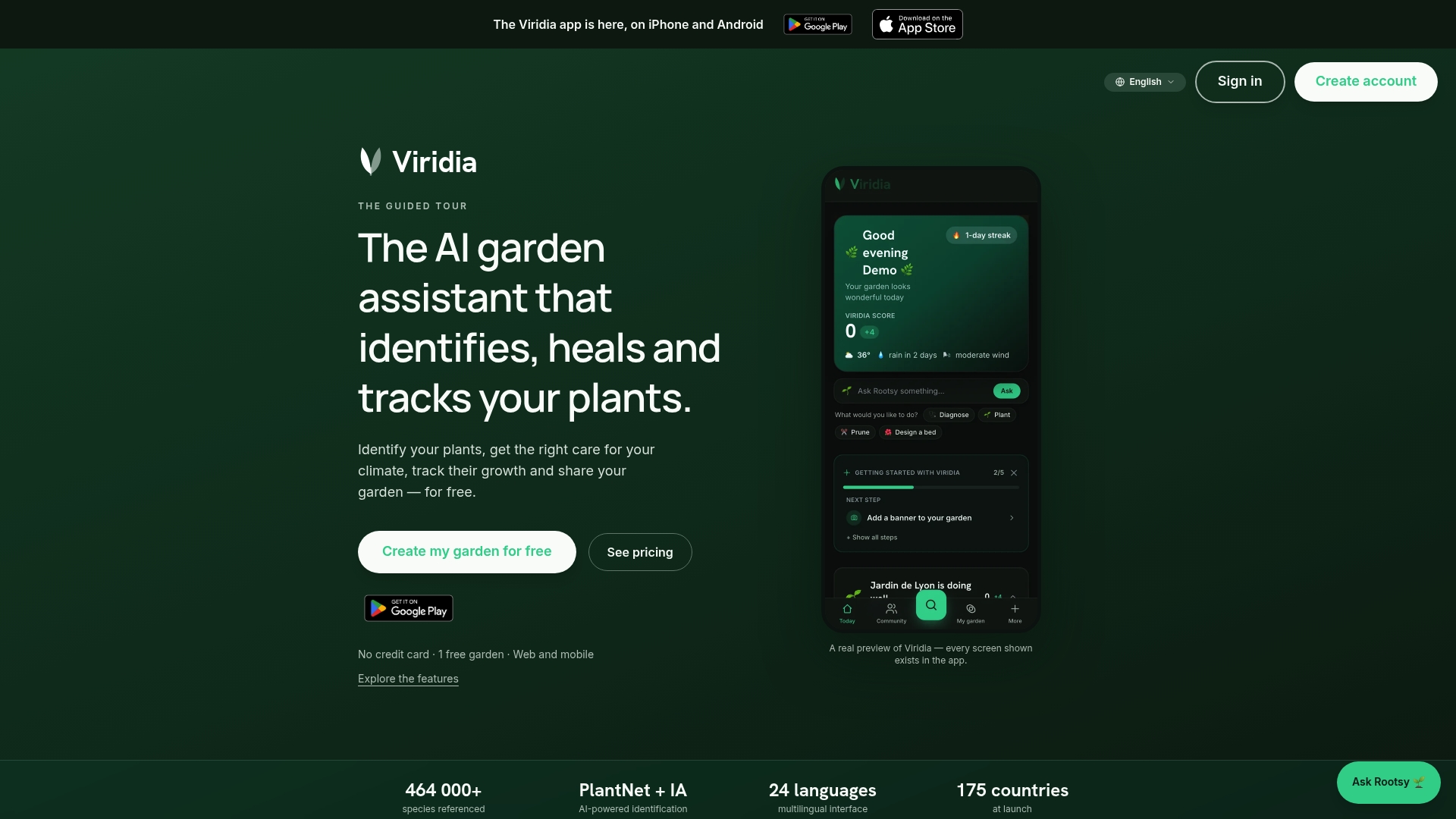
From there, Viridia sets weather-linked reminders so you’re watering on the schedule your plant actually needs during that first tricky establishment year, not on a guess. If leaves start yellowing or a crown looks off, the health diagnosis feature helps you figure out whether it’s overwatering, rot, or something else, and supports tracking recovery after treatment. For a deeper look at species-specific care, the Lavandula angustifolia guide breaks down hardiness and maintenance in more detail than a general guide can. The free tier covers basic identification and tips, while Viridia Premium runs $48 per year for expanded diagnosis tools, personalized care calendars, and full garden tracking. Start with a photo of your own lavender and see what the app recommends for your yard.
Sources
- English lavender in the garden — Utah State University Extension
- Growing lavender in Michigan — Michigan State University Extension
- Cultural tips for growing lavender — UC IPM
- Growing lavender in Iowa — Iowa State University Extension
FAQ
What Is the 8 8 8 Rule for Lavender?
The “8 8 8 rule” isn’t a standard extension recommendation, and definitions of it vary widely across gardening sites. A safer guideline backed by research is simpler: water new plants every 4 to 5 days during hot weather for the first year, then let established plants rely on natural rainfall except during extended droughts.
How Do You Maintain a Lavender Plant Long Term?
Long-term maintenance comes down to sun, drainage, and restraint. Keep it in at least six hours of direct sun, avoid fertilizing since lavender performs best in lean soil, and prune lightly every year after flowering without cutting into old wood.
What Are the Most Common Mistakes When Growing Lavender?
The biggest mistakes are overwatering, planting in rich or heavy soil, and pruning into old woody stems that won’t resprout. Fertile, moisture-retentive soil is often the root cause of root rot, the leading killer of home-grown lavender.
Does Lavender Prefer Sun or Shade?
Lavender needs full sun, ideally at least six hours of direct light a day, to bloom well and stay compact. In shade, plants stretch out, flower poorly, and become more prone to fungal problems from lingering moisture on the foliage.
Can Viridia Help Me Figure Out Why My Lavender Isn’t Blooming?
Yes. Viridia’s health diagnosis feature can help narrow down whether poor blooming traces to insufficient sun, overcrowding, or excess nitrogen, and it tracks the plant’s recovery once you make adjustments.