Deadhead Flowers in Two Minutes: Quick Routine for Busy Gardeners
Deadheading is the simple act of removing faded or spent flowers, and on most annuals and many repeat-flowering perennials, it triggers another round of blooms by cutting off seed production before it starts. Annuals like petunias and zinnias respond fast. Self-cleaning varieties and plants grown for seed heads don’t need the treatment at all.
TL;DR:
- Deadheading frequently encourages more blooms in annuals but has variable effects on perennials depending on the species and season.
- Using proper tools and techniques, such as pinching soft stems or cutting just above the next leaf or bud, minimizes damage and promotes healthier regrowth.
- Not all plants benefit from deadheading; self-cleaning varieties and those grown for seed heads should be left untouched to support wildlife or maintain display.
- Timing of deadheading depends on weather conditions, with more frequent attention needed during hot summer periods and less in late fall.
- An AI plant identification app can help determine whether a plant needs deadheading and guide proper care, reducing guesswork and preventing mistakes.
Table of Contents
- How to Deadhead Flowers Without Damaging the Plant
- When and How Often Should You Deadhead?
- Which Flowers Actually Need Deadheading?
- What Tools Do You Actually Need?
- When Should You Stop Deadheading for the Season?
- Fixing Common Deadheading Mistakes
- Deadheading as Your Weekly Garden Check-In
- Let Viridia Tell You What to Snip and When
- Sources
- FAQ
How to Deadhead Flowers Without Damaging the Plant
Good deadheading comes down to finding the right spot and using the right amount of force. Before you cut anything, look just below the dead bloom for a new bud or a side shoot starting to form. Cutting blind is how buds get lost by accident.
Here’s the basic workflow most gardeners can use on nearly anything in the yard:
- Scan the plant for flowers that are browning, curling, or dropping petals.
- Check below the bloom for a leaf node, bud, or branching point.
- Pinch soft stems between your thumb and forefinger, right above the nearest healthy leaf set. This works well on petunias, marigolds, and other bedding plants with tender growth.
- Snip tougher stems with floral scissors or bypass secateurs when a pinch won’t do the job cleanly, which is the case for roses and most woody-stemmed perennials.
- Cut whole spikes when the display is finished. Delphiniums and other spike bloomers do best when you pinch individual spent flowers early in the season, then remove the entire spike down to a lower bud once the whole thing is done flowering, according to the RHS.
Roses reward a slightly different touch. Snapping off a single spent flower just under the head, rather than cutting far down the stem, often speeds up the next flush, though clustered shrub roses do better with a clean cut using secateurs, per one expert gardener’s breakdown. Petunias just need a pinch behind the flower head every few days. The rule across nearly every species: pinch or cut just above the next healthy leaf set or bud, never lower than necessary.
When and How Often Should You Deadhead?
Timing depends on the weather more than the calendar. Hot, fast-growing summer stretches push bedding annuals to bloom and fade quickly, so they need more frequent attention than perennials.
- Summer bedding plants: check every day or two during peak heat.
- Border perennials: a weekly pass usually keeps things tidy, per RHS guidance.
- After heavy rain or a heat wave: do an extra check. Storm-battered petals fade fast and can rot on the plant if left.
- Late summer into early fall: ease off. Pushing plants for one more flush can produce tender new growth that frost kills, according to Iowa State Extension.
Annuals respond to deadheading almost every time, since their entire biological goal is to set seed before dying, and removing flowers just delays that. Perennials are less predictable. Some throw a real second flush; others just grow fresh foliage with no more flowers this season.
Which Flowers Actually Need Deadheading?
Not every plant in your bed benefits from the scissors. Some varieties are bred to drop their own spent blooms, and a few are worth leaving alone entirely for the display or the birds.
Plants that typically respond well to deadheading:
- Zinnias, marigolds, and snapdragons
- Roses and dahlias
- Delphiniums, salvia, and coreopsis
- Geraniums and garden phlox
Geraniums, coreopsis, marigolds, snapdragons, roses, delphiniums, and zinnias top the list of species that commonly reward the effort with more flowers, according to Kansas State University Extension.
Self-cleaning varieties that don’t need deadheading:
- Sedum ‘Autumn Joy’
- Many modern petunia and calibrachoa hybrids
- Angelonia and most begonias
Plants worth leaving for seed heads or wildlife:
- Echinacea and Rudbeckia (goldfinches love the seed)
- Nigella and Chinese lanterns, prized for their dried seed pods
If you’re not sure which category a plant falls into, look it up. A species-specific care page will usually tell you outright whether deadheading helps or is a waste of time.
What Tools Do You Actually Need?
You don’t need a shed full of gear. Most deadheading gets done with your fingers or one pair of sharp, clean scissors.
- Finger pinch: free, fast, and the right call for soft annual stems.
- Floral snips: small, precise, good for delicate perennials.
- Bypass secateurs: best for roses, woody shrubs, and anything with real resistance.
- Gloves: worth wearing around thorny roses or anything with irritating sap.
Keep the blades sharp. A clean cut heals faster and gives disease less of an opening than a crushed or torn stem. Wipe tools with isopropyl alcohol between plants if you suspect anything is diseased, since dirty blades can spread pathogens from one plant to the next.
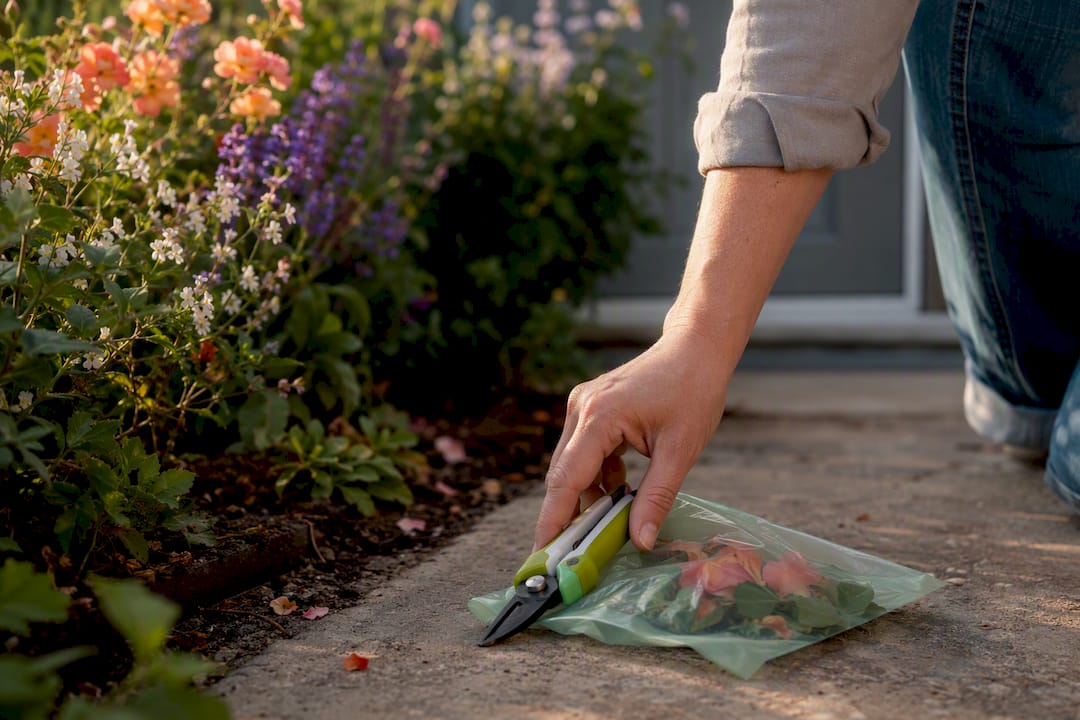
Pro Tip: Keep a small pair of snips and a plastic bag in your pocket or by the back door. A two-minute pass through the garden on your way to get the mail catches spent blooms before they turn to seed, and you’ll never have to make a special trip for it.
When Should You Stop Deadheading for the Season?
Ease off routine deadheading in late summer or early fall on most perennials and roses. Letting a few faded blooms turn to seed or hip signals the plant to slow down and harden off before frost, per Iowa State Extension.
- Leave Echinacea and Rudbeckia seed heads standing for winter bird food.
- Skip deadheading on rose varieties you want hips from.
- If any spent bloom shows spots, mold, or rot, bag it and throw it away. Never toss diseased material in the compost.
- Do one final cleanup pass before the first hard frost to remove anything obviously rotting.
Fixing Common Deadheading Mistakes
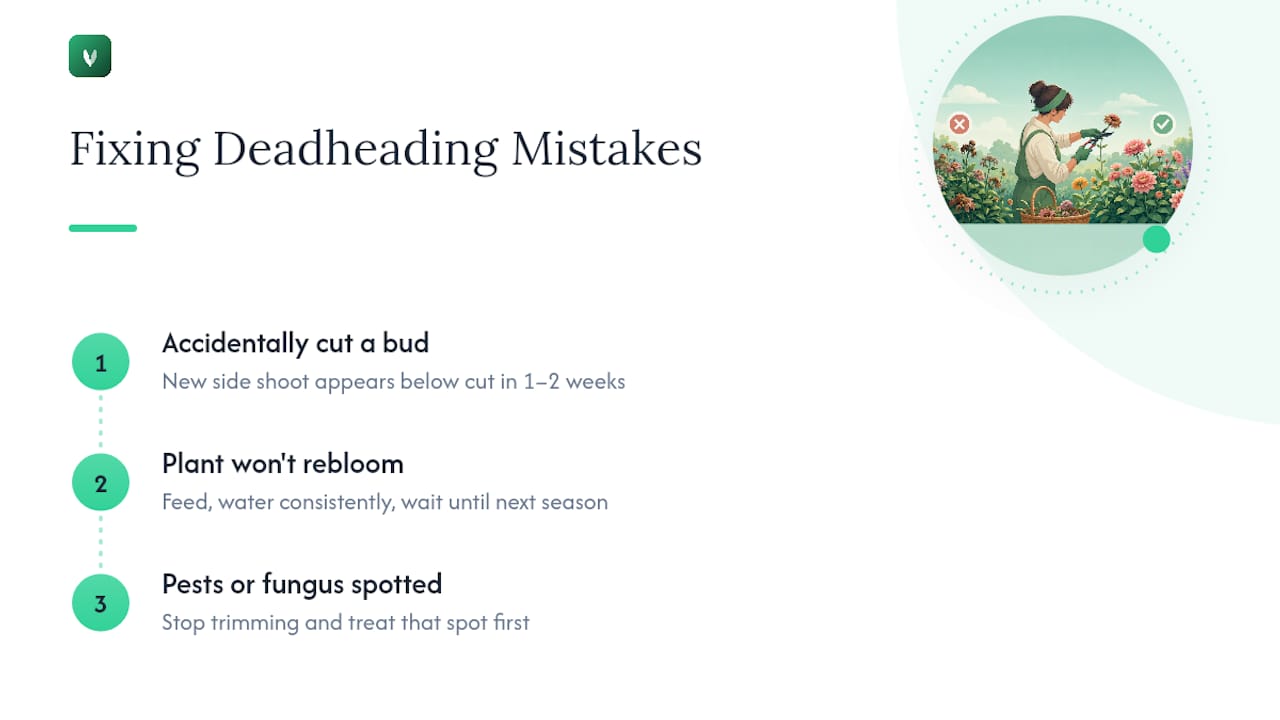
Cut off a bud by accident? The stem usually pushes out a new side shoot below the cut within a week or two, just delayed. If a plant refuses to rebloom at all after repeated deadheading, that’s often just its nature. Not every perennial gives a second flush. Feed it, water consistently, and wait for next season rather than assuming you did something wrong. Some geraniums and campanulas do reflower after a hard shear back, while others simply grow fresh leaves instead, so results vary by species. If you spot pests or fungus while trimming, stop and treat that spot before continuing so you don’t spread it plant to plant.
Deadheading as Your Weekly Garden Check-In
Deadheading rewards patience more than muscle, and the habit does double duty: every snip is also a chance to spot a curling leaf, a sticky aphid cluster, or a wilted stem before it becomes a real problem, highlighting the benefits of Integrated Pest Management. Extension horticulturists have long noted that gardeners who deadhead regularly catch pest and disease issues earlier, simply because they’re already up close to every plant.
Breeders keep pushing more “self-cleaning” varieties onto nursery shelves, which cuts down on the scissors work but never replaces the value of walking your beds with your own eyes. An AI plant-ID tool can shortcut the guessing, telling you in seconds whether that geranium in your border is a deadhead-and-reward type or a self-cleaner you can leave alone.
— Dan
Let Viridia Tell You What to Snip and When
An AI plant-ID tool is the fastest way to stop guessing whether a plant needs the scissors. Snap a photo, and an app can identify the species and show care guidance based on your climate and soil, including whether that plant is a deadhead-and-rebloom type or one you should leave alone.

Some advanced apps include a health diagnosis feature that can flag whether a bloom’s appearance is normal fading or a sign of disease, mold, or pest damage, and suggest treatments. Some apps let you set weather-based reminders so you don’t miss daily plant care checks during heat waves or the late-season cutoff before frost. Browse the plant catalog to look up a species you’re unsure about, or check the butterfly bush care page as an example of how detailed the species guidance gets. Start with a free scan of whatever’s blooming in your yard right now at Viridia.
Sources
- Deadheading Plants: How and Why | K-State
- To Deadhead or Not? Your Final Answer is… | Penn State Extension
- Deadheading plants: How and why | RHS
- Deadheading: more blooms | University of Illinois Extension
FAQ
Where do you cut when deadheading?
Cut or pinch just above the next healthy leaf set, side shoot, or bud below the spent flower. For spike bloomers like delphiniums, remove the whole spike down to a lower bud once flowering finishes.
What flowers should not be deadheaded?
Self-cleaning varieties like sedum ‘Autumn Joy’, many modern petunias, and angelonia don’t need it. Plants grown for seed heads or winter bird food, like Echinacea, Rudbeckia, and Nigella, are best left alone too.
What is the proper way to deadhead flowers?
Pinch soft, tender stems between your thumb and forefinger; use sharp scissors or bypass secateurs on tougher, woody stems. Always check for a bud beneath the flower first so you don’t cut it off by mistake.
What happens if you don’t deadhead?
The plant channels its energy into seed production instead of new flowers, so many annuals and repeat-blooming perennials slow down or stop flowering earlier in the season. Some plants, like echinacea, are fine left this way since the seed heads feed birds through winter.