
6 Step Season Plan to Beat Black Spot on Roses for Home Gardeners
Black spot is a fungal disease, caused by the pathogen Diplocarpon rosae, that produces dark, feathered-edge lesions on rose foliage and triggers rapid yellowing and leaf drop. Once a leaf shows spots, that leaf is not going to heal, so the immediate move is to strip and destroy infected foliage and cut back on anything that keeps leaves wet. From there, managing black spot roses is a season-long project built on sanitation, airflow, and, when needed, protectant fungicides applied on schedule.
TL;DR:
- Preventing black spot involves removing fallen leaves and infected canes to eliminate overwintering spores and reduce infection sources.
- Applying fungicides only protects new growth, so starting treatments at bud break and rotating active ingredients is key to managing resistance.
- Good cultural practices like proper spacing, watering at the base, and mulching can significantly reduce leaf wetness duration, decreasing infection chances.
- Once leaves are infected, they cannot recover; focus on sanitation, timely pruning, and environmental management for long-term control.
- Using photo diagnosis and season-long reminders can help gardeners maintain consistent prevention efforts and catch problems early.
Table of Contents
- What Does Black Spot on Rose Leaves Look Like?
- Why Does Black Spot Keep Coming Back Every Year?
- How Do You Prevent Black Spot on Roses?
- Do You Need Fungicide for Black Spot on Roses?
- What’s the Recovery Plan for a Rose Covered in Black Spot?
- How Viridia Helps You Stay Ahead of Black Spot
- Managing Black Spot Is a Long Game, Not a Fix
- Try Viridia for Diagnosis and Season-Long Reminders
- Where to Verify Label and Regional Guidance
- Sources
- FAQ
What Does Black Spot on Rose Leaves Look Like?
Black spot on rose leaves starts small: circular lesions roughly 1/10 to 1/2 inch across, black to purplish in color, with edges that look feathered or fringed rather than crisp. A yellow halo often rings each spot, and as the infection advances, entire leaves turn yellow and drop, usually starting on the lower, older growth first.
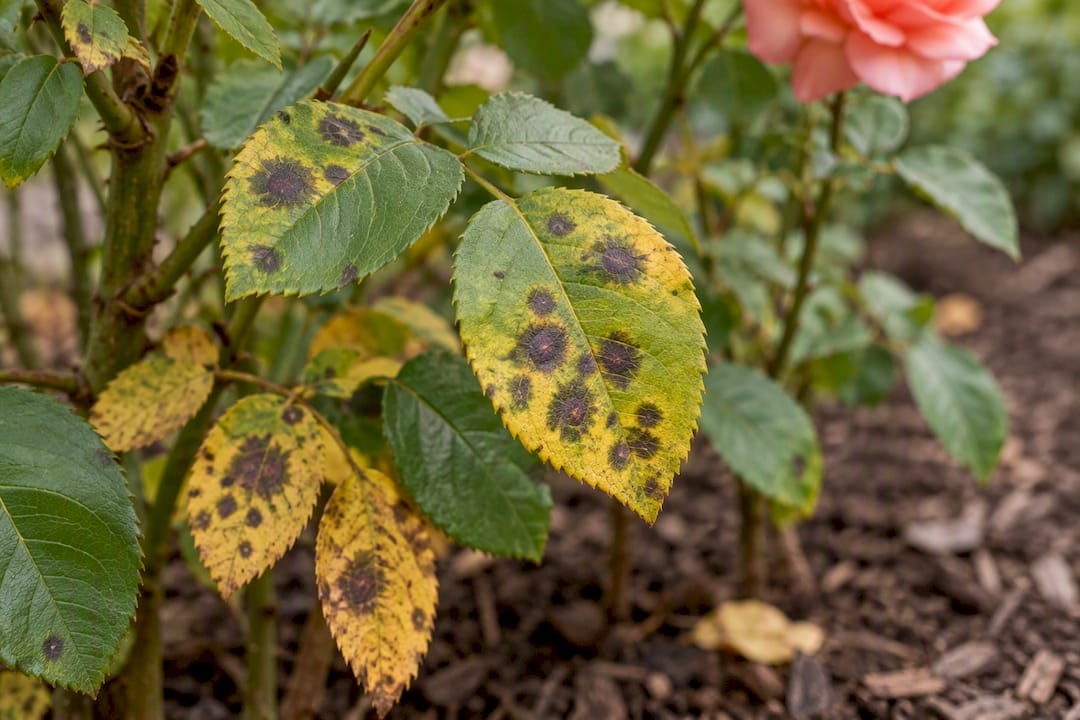
That defoliation pattern is diagnostic on its own. Rose black spot climbs a plant from the bottom up, stripping older leaves while newer growth at the top hangs on longer. Cercospora leaf spot, by contrast, tends to produce smaller, more uniform gray-centered spots without the same feathered black margins, and it rarely causes the same speed of leaf drop.
Before you treat anything, check these details:
- Spot color: black or deep purple, not tan or gray.
- Margin texture: irregular, feathery edges rather than smooth circles.
- Location: concentrated on lower and older leaves first.
- Surrounding tissue: yellowing halo around each lesion.
- Pattern over time: leaves yellow fully and drop within days of infection.
Pro Tip: Photograph a few affected leaves against a plain background before you prune anything. If the disease returns next season, comparing photos helps you spot whether it’s the same infection resurfacing or a new problem entirely.
Why Does Black Spot Keep Coming Back Every Year?
The fungus survives winter in two places: fallen leaves left on the ground and infected canes still on the plant. Once spring weather warms, spores from that overwintering tissue splash onto new growth during rain or overhead watering, and the cycle restarts.
Infection has a strict requirement: spores need at least seven continuous hours of leaf wetness to germinate. Skip that wet window and the spore simply doesn’t take hold, which is why watering timing matters as much as watering amount. Once infection occurs, new fruiting bodies (called acervuli) form inside the lesions and can release a fresh round of spores in as few as 11 days, with the full cycle running out to roughly a month under cooler conditions.
| Condition | Effect on black spot |
|---|---|
| Leaf wetness duration | Infection requires roughly 7+ continuous hours |
| Temperature range | Disease develops between about 50°F and 80°F, with peak activity near 65°F |
| Rain or overhead irrigation | Splashes spores from soil and lower leaves onto new foliage |
| Dense planting, poor airflow | Extends how long leaves stay wet after rain or watering |
Humid regions and rainy stretches simply hand the fungus more of what it needs. That’s the entire reason cultural controls focus so heavily on drying leaves out faster, not on killing spores directly.
How Do You Prevent Black Spot on Roses?
Prevention beats treatment here, mostly because there is no treatment that reverses existing damage. Work through these in order of impact:
- Clean up fallen leaves. Rake and destroy dropped foliage under every rose through the growing season and especially at fall cleanup, since spores overwinter there.
- Prune out infected canes. In late winter, cut back any canes showing lesions, and wipe pruners with rubbing alcohol between cuts so you don’t spread spores plant to plant.
- Space and thin for airflow. Give roses enough room that foliage dries within a couple of hours of rain, and thin dense canopies so light and air reach the interior.
- Water at the base, early in the day. Ground-level watering in the morning lets any wet foliage from splash or dew dry quickly, cutting the wetness window well under that 7 hour threshold.
- Mulch 2 to 3 inches deep. A mulch layer limits soil splash that carries spores up onto lower leaves. Skip tossing heavily infected leaves into a home compost pile. Backyard piles often don’t get hot enough to kill the fungus, so bagging and curbside disposal is the safer route for bad infections.
- Choose resistant varieties when replacing plants. Cultivars such as Knock Out, ‘Carefree Beauty’, and ‘Bonica’ tolerate black spot far better than many heirloom hybrid teas, which makes them worth planting if a spot has a history of chronic infection.
Pro Tip: If one bed keeps getting hit every year regardless of what you do, the airflow around it, not the rose variety, is usually the real problem. Walk the space after a rain and time how long leaves stay wet.
Do You Need Fungicide for Black Spot on Roses?
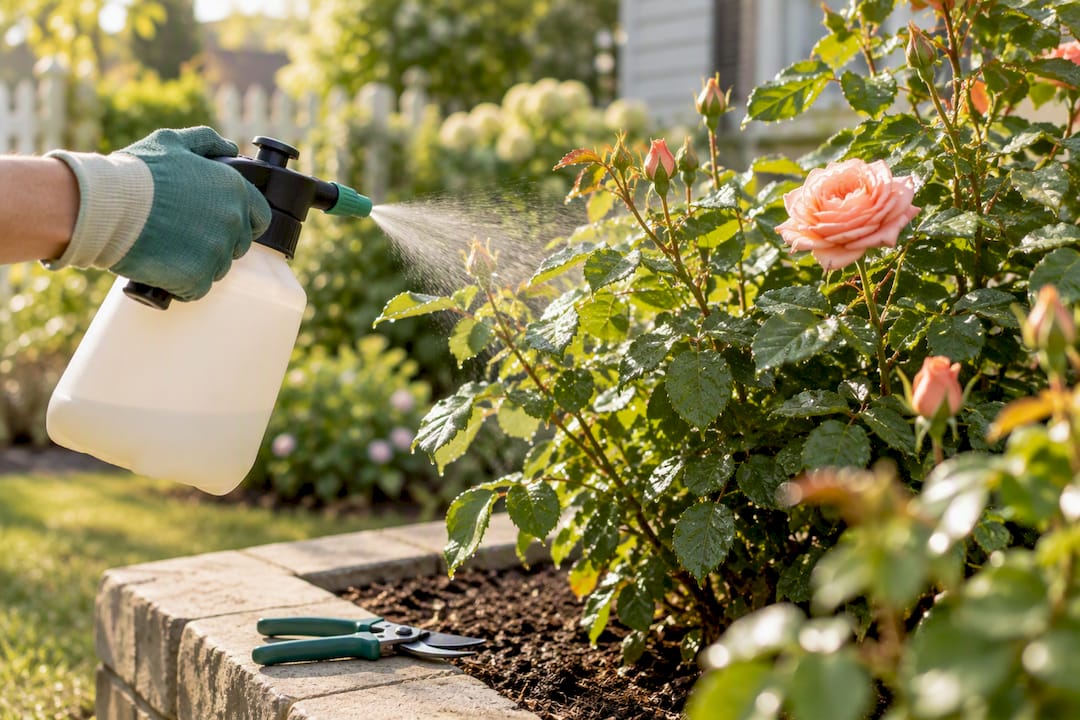
Fungicides for black spot work as protectants, not cures. They coat healthy tissue and block new spore germination. They do nothing for a leaf that’s already spotted. That distinction changes how you should time applications: start at bud break, before symptoms appear, rather than waiting until you spot the first lesion.
Reapply every 7 to 14 days, and always reapply after rain or heavy overhead watering, since that washes off most protectant coverage. Home gardeners typically reach for one of these active ingredients:
- Chlorothalonil — a broad-spectrum synthetic fungicide, widely available and effective as a preventive.
- Sulfur — an older, low-toxicity option that works best applied before disease pressure builds.
- Neem oil — an organic choice with modest preventive effect, best paired with strong sanitation rather than used alone.
- Potassium bicarbonate — another organic option that alters leaf surface pH to discourage germination.
Rotate between different modes of action rather than spraying the same product all season. Repeated use of one active ingredient pushes the fungus toward resistance, and once a population develops resistance to a given mode of action, that product stops working even at full label rate. Rotating chemical classes, sometimes called FRAC groups, keeps any single product effective longer. Always follow label rates and local registration status, and when in doubt about what’s approved in your area, extension plant clinics are the reliable place to check.
What’s the Recovery Plan for a Rose Covered in Black Spot?
A rose that’s lost most of its leaves to black spot isn’t dying, but it needs an ordered response, not a scattershot one.
- Strip and bag infected leaves now. Remove everything showing spots and bag it for disposal rather than composting it, especially with a heavy infestation.
- Wait for late winter to prune canes. Cut infected canes back to clean, healthy wood, sterilizing shears between every cut with rubbing alcohol.
- Layer on a protectant fungicide schedule. Once new growth starts, begin fungicide applications to protect the clean foliage that’s emerging, since it’s still vulnerable to reinfection from any spores left in the soil or on nearby plants.
- Track new growth for two to three weeks. Healthy new leaves that stay clean through a couple of rain events are the sign your sanitation and spacing changes are working. If fresh growth starts spotting again quickly, the wetness or airflow problem hasn’t actually been fixed yet.
How Viridia Helps You Stay Ahead of Black Spot
Catching black spot early, and staying consistent with the schedule after that, is where most gardeners fall short, not the diagnosis itself. Some gardening apps offer photo-based health diagnosis to help identify black spot and can provide reminders for sanitation rounds, pruning, and fungicide applications based on local weather, including rain events that wash off protectant coverage. Recovery tracking and community input can aid gardeners in managing recurring problems.
Managing Black Spot Is a Long Game, Not a Fix
Every gardener wants the product that makes black spot disappear for good. It doesn’t exist. What actually moves the needle is unglamorous: raking leaves, pruning in winter, watering at the right time of day, and sticking with a fungicide rotation instead of grabbing whatever’s on the shelf. Keep loose notes on when symptoms show up each year, because a bed that flares in the same week every June is telling you something about airflow or a neighboring infected plant that’s worth investigating before next spring.
— Dan
Try Viridia for Diagnosis and Season-Long Reminders
Viridia is built for exactly the kind of ongoing work black spot demands: photo diagnosis when you spot a suspicious lesion, reminders for the pruning and sanitation windows that actually break the infection cycle, and recovery tracking so you can see whether a treatment is working over weeks, not guess at it.

None of that replaces good sanitation habits or reading a fungicide label carefully. It’s meant to help you keep up with the schedule that prevention actually requires. The Free plan lets you try photo diagnosis and basic reminders, and Viridia Premium runs $48 per year for expanded tracking and personalized care alerts tied to your climate. If you’d rather commit once, Founding member access is a $99 one time purchase. Head to Viridia to start diagnosing your roses and set up your first reminder.
Where to Verify Label and Regional Guidance
For deeper detail or local product registration, check the University of Florida IFAS black spot factsheet, the PNW Plant Disease Handbook entry on rose black spot, the Texas Plant Disease Diagnostic Lab factsheet, or RHS guidance on rose black spot. Your local extension office or state pesticide database will have current label and registration specifics.
Sources
- Black spot of roses (PP-268) — University of Florida IFAS
- Texas Plant Disease Diagnostic Lab — Black spot of roses
- RHS — Rose black spot: Symptoms & control
FAQ
How do you cure black spot on roses?
You can’t cure it on leaves that already show lesions. The realistic goal is stopping new infections by removing infected foliage and canes, cutting leaf wetness time, and applying a protectant fungicide starting at bud break.
Should you cut back roses with black spot?
Yes, but timing matters. Remove badly infected leaves right away, and save cane pruning for late winter, cutting back to clean wood and sterilizing your tools between cuts to avoid spreading spores.
What can you spray on roses to get rid of black spots?
Chlorothalonil, sulfur, neem oil, and potassium bicarbonate are common options, applied every 7 to 14 days starting at bud break. None of them remove existing spots; they protect new growth from getting infected.
Does black spot ever go away?
The spots on an already-infected leaf never clear up, and that leaf typically yellows and drops on its own. The disease itself can be kept under control long term through sanitation, pruning, airflow, and fungicide rotation, but it tends to return if conditions turn wet again.