Grow Acid Loving Plants in a Year: Raised Beds for Home Gardeners
Most acid-loving plants need soil with a pH between roughly 4.5 and 5.5, and the fastest path to healthy growth starts with a soil test, not a bag of fertilizer. Once you know your number, you either pick species suited to that native pH or build acidic conditions yourself with a raised bed or an amended planting mix. Changing pH across an entire yard takes months to years, so don’t count on a quick chemical fix to bail you out before spring planting.
TL;DR:
- Adjusting soil pH is a slow process that requires testing and targeted amendments, especially for maintaining acidity in challenging clay or limestone soils.
- The ideal soil pH for acid-loving plants like rhododendrons and blueberries is between 4.5 and 5.5, with iron solubility dropping significantly above this range.
- Building raised beds with acidic mixes offers a more reliable and quicker solution for planting in soils with high pH, rather than repeatedly amending native soil.
- Consistent maintenance, including mulching with organic acids and careful watering, is essential to keep soil pH stable and prevent toxicity or deficiencies.
- Using lab testing instead of home kits ensures accurate pH readings, and proper plant pairing with pH-appropriate species minimizes the need for chemical corrections.
Table of Contents
- What Makes a Plant “Acid Loving,” and Why Does pH Matter?
- Common Acid-Loving Plants and Where They Fit in Your Garden
- How Do You Test Soil pH Before Planting?
- How Do You Lower Soil pH and Keep It There?
- Planting and Caring for Acid-Loving Plants Season to Season
- Troubleshooting Yellow Leaves and Other pH Symptoms
- How Viridia Helps You Identify and Manage Acid-Loving Plants
- Managing Pests and Disease on Acid-Loving Plants
- Building Companion Plantings Around Acid-Loving Species
- How Climate and Microclimate Affect Acid-Loving Plants
- A Gardener’s Case for Working With Your Soil, Not Against It
- Get Plant-Specific Care Without Guessing at Soil Chemistry
- Where to Learn More About Soil pH and Acid-Loving Plants
- Sources
- FAQ
What Makes a Plant “Acid Loving,” and Why Does pH Matter?
Gardeners use the term “acid loving” loosely, but horticulturists have a more precise word for it: calcifuge, meaning a plant that avoids lime and struggles in alkaline soil. You’ll also hear “ericaceous,” a nod to the heath family (Ericaceae), which includes classic acid lovers like azaleas, rhododendrons, and blueberries. Most calcifuge species come from a handful of plant families, including Ericaceae, some conifers, and certain oaks and magnolias.
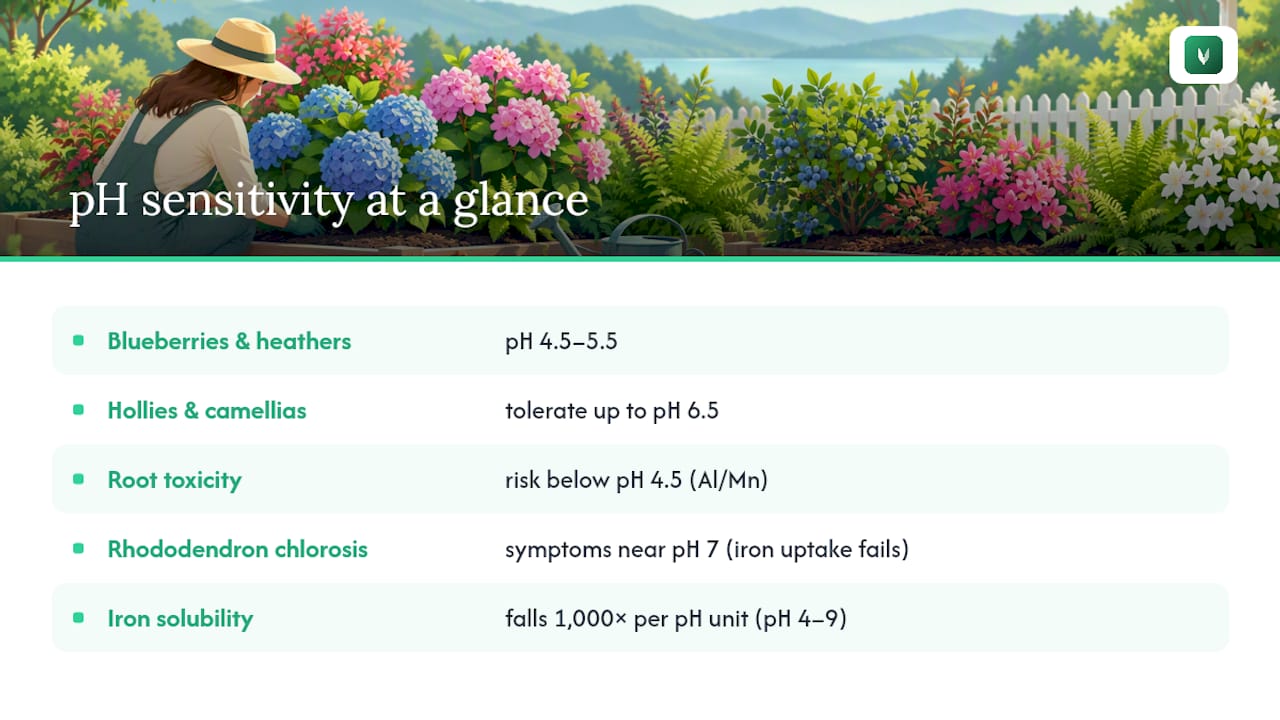
The reason pH matters comes down to chemistry, not preference. Soil pH controls how soluble certain minerals are, and iron is the big one. As pH climbs, iron becomes locked into forms roots can’t absorb, and the solubility of iron drops by a factor of 1,000 for every one-unit increase in pH between 4 and 9. That’s not a small effect. It’s why a rhododendron planted in soil with a pH of 7 often develops interveinal chlorosis: yellow leaf tissue between dark green veins, a textbook sign that the plant can see iron in the soil but can’t take it up.
The effect goes deeper than simple mineral solubility. A pH shift from 5.5 to 7.0 triggers broad changes in gene expression tied to iron acquisition and a plant’s own coumarin production, the compounds some species release to help pull iron out of stubborn alkaline soil. That’s according to transcriptomic research tracking how ambient pH reshapes plant physiology at the molecular level. A change that looks small on a soil test can mean the difference between a plant that thrives and one that limps along, chronically pale, for years.
Go too far the other direction and you create a different problem. Soil below pH 4.5 can release too much aluminum and manganese, both of which turn toxic to roots at high concentrations. Most acid-loving species have a sweet spot, not a “lower is always better” relationship with pH. Some, like certain hollies and camellias, tolerate up to pH 6.5, while blueberries and heathers get fussy outside a narrower 4.5 to 5.5 window.
Common Acid-Loving Plants and Where They Fit in Your Garden
Once you understand the pH mechanics, the plant list makes a lot more sense. Here’s a working roster organized by the role each plant plays in a landscape, with quick notes on light, target pH, and best use.
Flowering shrubs
- Azalea and rhododendron: pH 4.5–5.5; part shade to dappled woodland light; best as woodland borders or foundation plantings where they get protection from harsh afternoon sun.
- Camellia: pH 5.0–6.5; part shade; a strong choice near entryways or in courtyard beds where winter blooms get noticed.
- Hydrangea (big leaf types): pH 5.0–5.5 for the deepest blues, pH 6.0 and above shifts blooms toward pink; morning sun with afternoon shade; works well as a mixed border anchor. The Hydrangea macrophylla care guide covers how to read and adjust that bloom color response over a season.
Evergreens and hedging
- Holly (Ilex species): pH 5.0–6.5; full sun to part shade; reliable as a hedge or privacy screen, and tolerant of a wider pH band than most calcifuge plants.
- Mountain laurel (Kalmia latifolia): pH 4.5–5.5; part shade; suited to woodland edges, not open lawns, since it resents heat and wind exposure.
- Pieris: pH 4.5–5.5; part shade; a good companion shrub for azaleas since both want the same soil and light.
Trees and accent plants
- Dogwood (Cornus florida): pH 5.0–6.0; part shade; a strong single-specimen tree for a woodland-edge yard.
- Japanese maple: pH 5.5–6.5; part shade with shelter from wind; works as a container specimen or a focal point near a patio.
Edible plants
- Blueberry: pH 4.5–5.5, among the strictest requirements of any common garden plant; full sun; needs amended, high-organic, well-drained soil, and most cultivars produce better fruit set when you plant two different varieties for cross-pollination.
- Cranberry: pH 4.0–5.5; full sun; needs consistently moist, boggy conditions, making it a poor fit for standard garden beds without a dedicated wet area.
Groundcovers
- Heather (Calluna and Erica): pH 4.5–5.5; full sun; excellent for slopes or rock gardens where drainage is already sharp.
- Wintergreen (Gaultheria): pH 4.5–5.5; part to full shade; a low, spreading option under acid-loving shrubs where you want year-round green cover.
Pollination matters more than most gardeners expect with edible acid lovers. Blueberries set noticeably better fruit with a second, genetically distinct cultivar nearby, and even ornamental hollies need both a male and female plant in range if you want the classic red winter berries. Check tags or ask before you buy a single specimen expecting fruit.
How Do You Test Soil pH Before Planting?
Testing comes before buying plants, not after. A pH number tells you whether you’re working with the soil you have or building something new.
- Collect from multiple spots. Take 8 to 10 soil cores from the planting area, spaced evenly, at a 4 to 6 inch depth for most shrubs and trees, or deeper for anything with an established root zone.
- Mix the cores together. Combine them in a clean bucket, break up clumps, and remove rocks, roots, and mulch before pulling your test sample from the blend.
- Choose your test method. A university or private soil testing lab gives the most reliable reading, usually for under $20 with results in one to two weeks, and it often reports texture and nutrient levels along with pH. Home probe meters and color-based kits are faster but notoriously inconsistent, and visual leaf color alone is an unreliable way to diagnose soil problems without a lab number to back it up.
- Read the number against your target. A reading of 6.5 or higher on a bed meant for blueberries or azaleas tells you to amend before planting or switch to a raised bed. A reading already in the 5.0 to 5.5 range means you likely just need to maintain it.
- Retest on a schedule. Check pH once a year during active amendment, and every two to three years once your soil has stabilized near the target range.
Lab tests beat home kits for one simple reason: they catch trends home kits miss, like a soil that’s drifting alkaline from irrigation water or nearby concrete. If you’ve amended and you’re still seeing chlorosis, that’s the point to send a fresh sample rather than guess again.
How Do You Lower Soil pH and Keep It There?
Elemental sulfur is the standard long-term tool for acidifying soil, but it works through soil bacteria, not instant chemistry, so patience is part of the plan.
Soil microbes convert elemental sulfur to sulfuric acid gradually, which is why extension guidance recommends fall application for spring planting rather than a same-season fix. The amount you need depends heavily on your soil’s texture and cation exchange capacity: sandy soils shift pH faster with less sulfur, while clay-heavy soils resist change and need considerably more product spread across multiple seasons. Extension application tables show that correcting several pH points in clay soil can require hundreds to over a thousand pounds of sulfur per acre, applied incrementally rather than all at once, so always follow your region’s extension rate table and the product label rather than a flat rule of thumb.
If you want a faster or gentler nudge, a few other tools help:
- Peat moss worked into the planting hole adds organic acidity and improves drainage, though its effect fades over a few years as it breaks down.
- Ammonium sulfate, an acid-forming fertilizer, lowers pH only slightly: about 0.1 to 0.2 units per year at a rate of 3.5 pounds of nitrogen per 1,000 square feet, which makes it a maintenance tool, not a correction strategy.
- Aluminum sulfate works faster than elemental sulfur but risks aluminum toxicity at high doses, so it’s better suited to containers than broad garden beds.
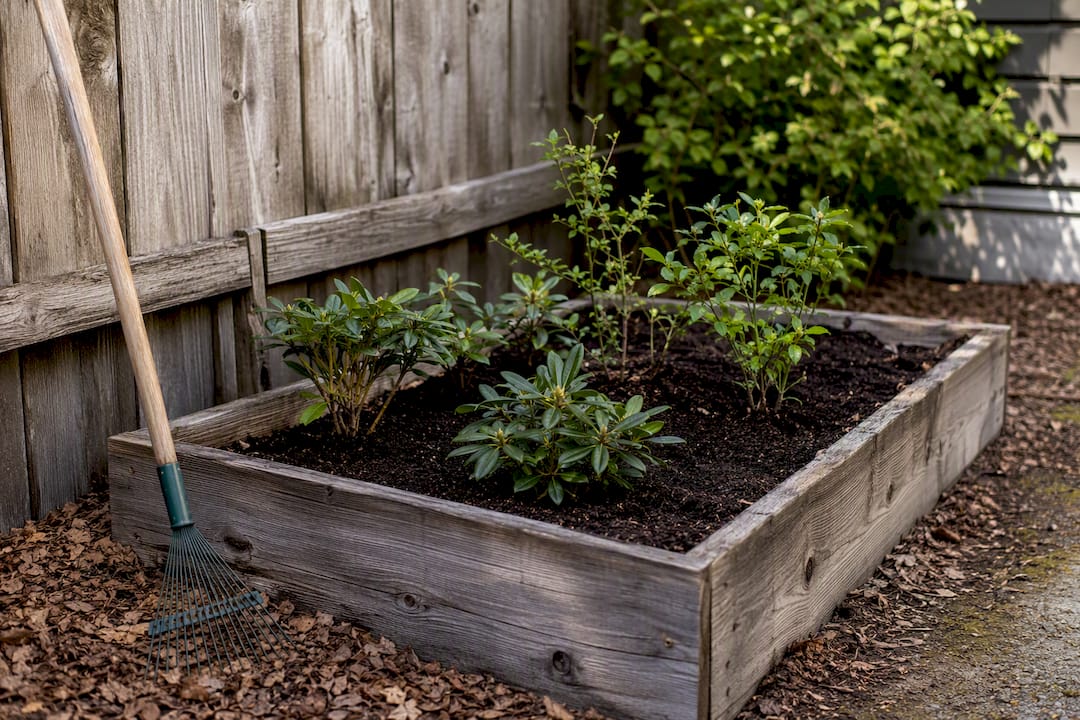
Pro Tip: If your native soil sits above pH 7 and you want blueberries or azaleas within a year, skip the sulfur math entirely and build a raised bed filled with an acidic mix of peat, pine bark fines, and compost. It’s faster, more predictable, and a lot less frustrating than fighting alkaline clay.
That raised bed approach isn’t a shortcut for the impatient. It’s genuinely the better long-term strategy in a lot of yards. University extension horticulturists routinely recommend matching plants to the site or building a raised bed over repeatedly dosing native soil with acidifying chemicals, especially where the underlying soil sits on limestone bedrock that keeps buffering pH back upward no matter how much sulfur you add.
A few cautions apply no matter which method you choose. Overapplying sulfur can stall soil biology and, in waterlogged or cold soil, sulfur conversion slows or stops and can produce harmful byproducts under low-oxygen conditions. And don’t forget your irrigation water: hard tap water carrying dissolved calcium and bicarbonate will slowly push pH back up even after you’ve corrected it, which is why some serious blueberry growers switch to rainwater or filtered water for their beds.
Planting and Caring for Acid-Loving Plants Season to Season
Getting the pH right is only half the job. How you plant and maintain acid-loving species determines whether that soil chemistry actually sticks.
- Amend the whole bed, not just the hole. Digging a single acidic hole in alkaline clay creates a bathtub effect where roots eventually hit unmodified soil and stall. Amend a wide area, ideally the full root zone’s future spread, not a narrow pocket.
- Set the root ball at grade. Acid lovers like rhododendrons and blueberries have shallow, fibrous roots that suffocate if planted too deep. Keep the top of the root ball level with or slightly above the surrounding soil line.
- Mulch with acidic organic material. Pine bark, pine needles, and oak leaf mold all break down slightly acidic and help maintain your target pH over time. Keep mulch 2 to 3 inches deep and pulled back from the trunk or stems to avoid rot.
- Fertilize with acid-forming, slow-release products. Ammonium sulfate or specialty “azalea and camellia” fertilizers work well, applied in early spring as new growth starts and again in early summer, never late in the season when new growth won’t harden off before frost.
- Water consistently, not heavily. Acid-loving plants generally want evenly moist, well-drained soil. Waterlogging causes root rot and can trigger anaerobic sulfur byproducts in amended beds, while irregular deep watering with hard water can slowly raise pH over several seasons.
- Prune and retest on a seasonal rhythm. Prune spring-flowering shrubs like azaleas right after bloom, not in fall, since they set next year’s flower buds during summer. Retest soil pH once a year while a bed is actively being maintained near its acidic target.
Winter brings its own consideration for many calcifuge shrubs: broadleaf evergreens like rhododendron and holly benefit from a wind-sheltered planting site, since winter desiccation looks a lot like nutrient stress but has nothing to do with pH at all.
Troubleshooting Yellow Leaves and Other pH Symptoms
Interveinal chlorosis, yellow leaf tissue with green veins staying intact, is the classic pH-related symptom in acid-loving plants. But it’s not the only thing that produces yellow leaves, and treating the wrong cause wastes a season.
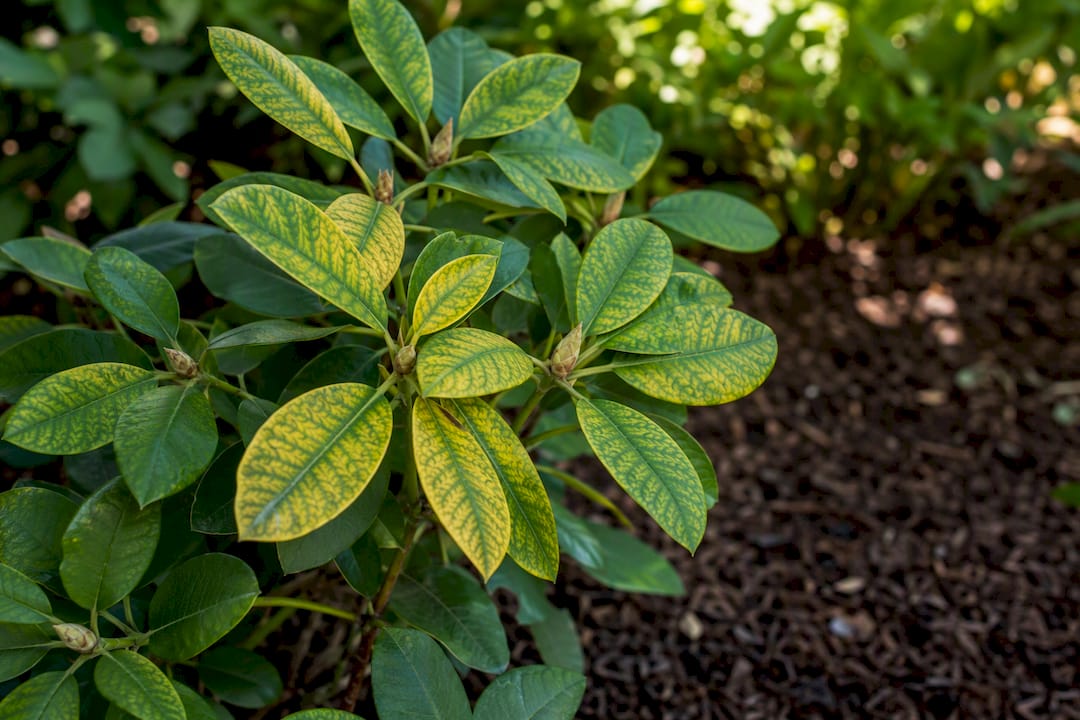
Before you blame pH, rule out drainage problems and salt injury. Extension diagnostic guidance points out that visual symptoms alone are unreliable and that root zone inspection matters as much as leaf color. Waterlogged roots and overfertilized soil can both mimic iron chlorosis closely enough to fool an experienced gardener.
If a soil test confirms high pH is the culprit, here’s how to prioritize fixes:
- Foliar iron spray or chelated iron soil drench gives the fastest visible greening, often within one to two weeks, but it’s a patch, not a cure. The plant will yellow again once the spray wears off unless you address pH.
- Chelated iron worked into the root zone lasts longer than foliar spray and buys time while sulfur amendments take effect underground.
- Elemental sulfur remains the actual long-term fix, on the months-to-a-year timeline discussed earlier.
Occasionally the opposite problem shows up: soil that’s overcorrected below pH 4.5, producing stunted growth and root damage from aluminum or manganese toxicity. That calls for a light application of dolomitic lime to nudge pH back up, done cautiously and retested a season later. Any time a fix doesn’t resolve symptoms within a full growing season, or you suspect toxicity rather than deficiency, send a fresh sample to a lab or contact your county extension office or Master Gardener program. They see regional soil quirks you won’t find in a general guide.
How Viridia Helps You Identify and Manage Acid-Loving Plants
Confirming a species before you commit soil and money to it saves a lot of frustration. Viridia’s photo identification feature lets you snap a picture of a plant you’re eyeing at the nursery, or one already struggling in your yard, and get back its species along with the pH range it actually needs.
From there, the app builds care guidance around your specific climate and soil conditions rather than generic advice, so an azalea grower in humid clay gets different watering and fertilizing cues than one in sandy, arid soil. If you’re mid-amendment with sulfur or watching a chlorotic shrub recover after a chelated iron treatment, Viridia’s health diagnosis feature tracks that recovery over time, flags when a treatment isn’t working, and suggests the next step instead of leaving you to guess whether three weeks is long enough to expect green leaves again.
Managing Pests and Disease on Acid-Loving Plants
Acid-loving shrubs come with their own pest and disease patterns, largely tied to the same moist, shaded, organic-rich conditions they need to thrive. Root rot from fungi like Phytophthora is the most serious threat to rhododendrons, azaleas, and blueberries, almost always triggered by poor drainage rather than the acidic soil itself. Good bed prep with organic matter for drainage does double duty here: it maintains acidity and reduces root rot risk at the same time.
Lace bugs and azalea bark scale target azaleas and rhododendrons specifically, showing up as stippled, bronzed foliage on the upper leaf surface. Blueberries face fruit-specific pressure from spotted wing drosophila, which lays eggs in ripening fruit and requires timely harvest and, in bad years, targeted insecticide application right as fruit colors.
Fungal leaf spot diseases thrive in the same humid, shaded microclimates that many calcifuge plants prefer, so good airflow between shrubs matters more than most gardeners assume. Space plants according to their mature size rather than how small they look at planting, and avoid overhead watering late in the day, which leaves foliage wet overnight and invites fungal problems regardless of soil pH.
Building Companion Plantings Around Acid-Loving Species
Grouping acid-loving plants together does more than look tidy. It keeps your amendment work concentrated in one bed instead of scattered across a yard, which makes both sulfur applications and mulching far more efficient.
Azaleas, rhododendrons, and Pieris pair naturally since they share the same pH target, part-shade preference, and shallow root systems. Underplant that group with Gaultheria or heather as a groundcover, and you’ve built a self-reinforcing acidic zone where fallen leaves and needle mulch keep replenishing the soil chemistry with minimal intervention. Dogwoods and Japanese maples work well as the taller canopy layer above that same bed, since both tolerate similar shade and moisture without competing directly for the same soil depth.
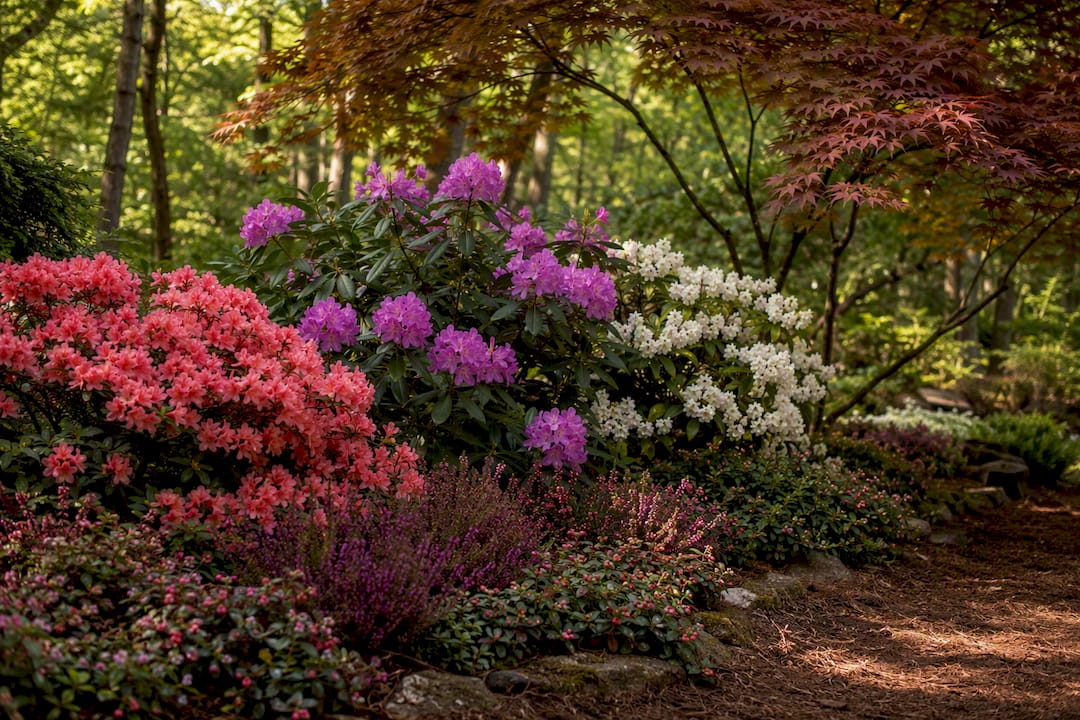
For edible gardens, blueberries do best isolated from vegetable beds that need a neutral pH, but they pair reasonably with cranberries in a dedicated boggy corner if your site allows it. Avoid mixing acid lovers with lime-loving plants like lilac or clematis in the same bed. You’ll end up fighting two opposing pH targets in soil that’s only a few feet apart, and neither plant group will get what it needs.
How Climate and Microclimate Affect Acid-Loving Plants
Regional climate sets the baseline, but the microclimate inside your own yard often matters more for acid-loving species. A north-facing slope holds moisture longer and stays several degrees cooler than a south-facing bed, which suits woodland shrubs like rhododendron far better than open, sun-baked exposure.
Wind exposure hits broadleaf evergreens especially hard. Rhododendrons and hollies planted against an exposed fence line in a cold region often show winter leaf scorch that has nothing to do with soil pH but gets misdiagnosed as a nutrient problem anyway. A hedge, fence, or building on the windward side solves that issue without touching the soil at all.
Rainfall patterns interact with pH management too. Regions with naturally acidic rainfall and sandy, well-drained soil, much of the coastal Pacific Northwest and parts of the Southeast, tend to hold acidic amendments far longer than arid regions with alkaline groundwater and heavy irrigation demand. If you garden somewhere hot and dry, expect to retest and reamend more often, since evaporation concentrates dissolved minerals and irrigation water does more of the work pushing pH back upward.
A Gardener’s Case for Working With Your Soil, Not Against It
Chasing a perfect pH number across an entire yard is usually a losing fight, and it’s worth saying plainly: matching plants to the site you already have will save you more frustration than any amount of sulfur.
If your native soil sits comfortably in the 5.5 to 6.5 range, you have more flexibility than most gardening forums suggest, and a lot of “acid loving” plants will tolerate that without heroic intervention. But if you’re on limestone-derived clay pushing pH 7.5, don’t spend three years fighting it acre by acre. Build a raised bed or a dedicated planting mix, put your blueberries and azaleas there, and grow lime-tolerant species everywhere else.
The bigger mistake I see is treating every yellow leaf as a pH emergency. Test first. Rule out drainage and salt injury before you reach for chelated iron. Adjust based on what the soil actually tells you, not what a single symptom seems to suggest.
— Dan
Get Plant-Specific Care Without Guessing at Soil Chemistry
Matching a plant to the right pH starts with knowing exactly what you’re growing, and that’s the piece most gardeners skip. Viridia’s photo identification confirms species on the spot, then builds care steps around your actual climate and soil, so you’re not applying generic azalea advice to a plant that needed a different pH target entirely.

Once you’ve identified a plant and started amending its bed, the harder part is tracking whether it’s actually working. Viridia’s health diagnosis feature logs your plant’s condition over time and flags when a treatment, like a chelated iron drench or a fall sulfur application, isn’t producing the recovery it should. If you’re planning a bed of hydrangeas and want to track how pH shifts affect bloom color season to season, the Hydrangea macrophylla care page is a good place to start, and for broader landscape layout thinking before you dig, Roberto’s Stump Grinding has a solid landscape planning guide worth reading first.
Viridia’s free tier lets you identify plants and pull basic care tips at no cost, while Premium, priced at $48 per year, unlocks deeper health tracking and personalized alerts tied to your specific soil and climate. A Founding member option is also available as a $99 one-time purchase. Download the app and start with your first photo ID today.
Where to Learn More About Soil pH and Acid-Loving Plants
For deeper reading on application rates, species-specific pH tables, and regional soil quirks, these extension resources go further than any single article can:
- MU Extension: Soil pH and nutrient availability
- MSU Extension: Reducing soil pH in landscapes
- MSU Extension: Lowering the soil pH with sulfur (handout)
- UMN Extension: Growing blueberries in the home garden
- UW Extension: Do soils need limestone or sulfur?
Your county extension office or a local Master Gardener program will know your region’s soil quirks better than any national guide, especially around bedrock, groundwater alkalinity, and which sulfur rates actually work locally.
Sources
- MU Extension: Soil pH and nutrient availability
- MSU Extension: Reducing soil pH in landscapes
- MSU Extension: Lowering the soil pH with sulfur (handout)
- UMN Extension: Growing blueberries in the home garden
- PMC: Ambient pH and iron acquisition — transcriptomic evidence
FAQ
Which Plants Do Not Like Acidic Soil?
Plants that prefer neutral to alkaline soil include lilac, clematis, lavender, boxwood, and most brassica vegetables like cabbage and broccoli. Planting these near acid-loving shrubs in the same bed usually leads to nutrient deficiencies on one side or the other, since their pH targets sit on opposite ends of the scale.
Which Plants Grow Better in Acidic Soil?
Azaleas, rhododendrons, camellias, blueberries, and heathers all grow noticeably better in acidic soil, generally in the pH 4.5 to 5.5 range. Outside that range, many of these species develop iron chlorosis and weaker flowering or fruiting, even when other nutrients and water are adequate.
Do Coffee Grounds Help Acid-Loving Plants?
Used coffee grounds are only mildly acidic once brewed, and their effect on soil pH is small and short-lived compared to elemental sulfur. They can add minor organic matter and nitrogen, but they’re not a reliable substitute for a proper amendment plan if you need a real pH shift.
Does Epsom Salt Make Soil Acidic?
No. Epsom salt is magnesium sulfate, and it doesn’t meaningfully lower soil pH, despite popular garden advice suggesting otherwise. It can correct a magnesium deficiency in some plants, but if your goal is acidifying soil, elemental sulfur or an acid-forming fertilizer like ammonium sulfate is the appropriate tool.